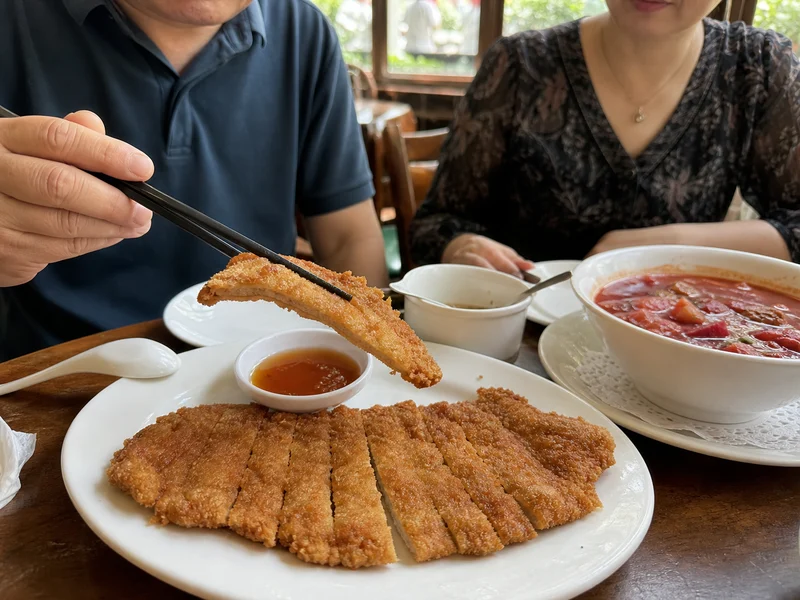
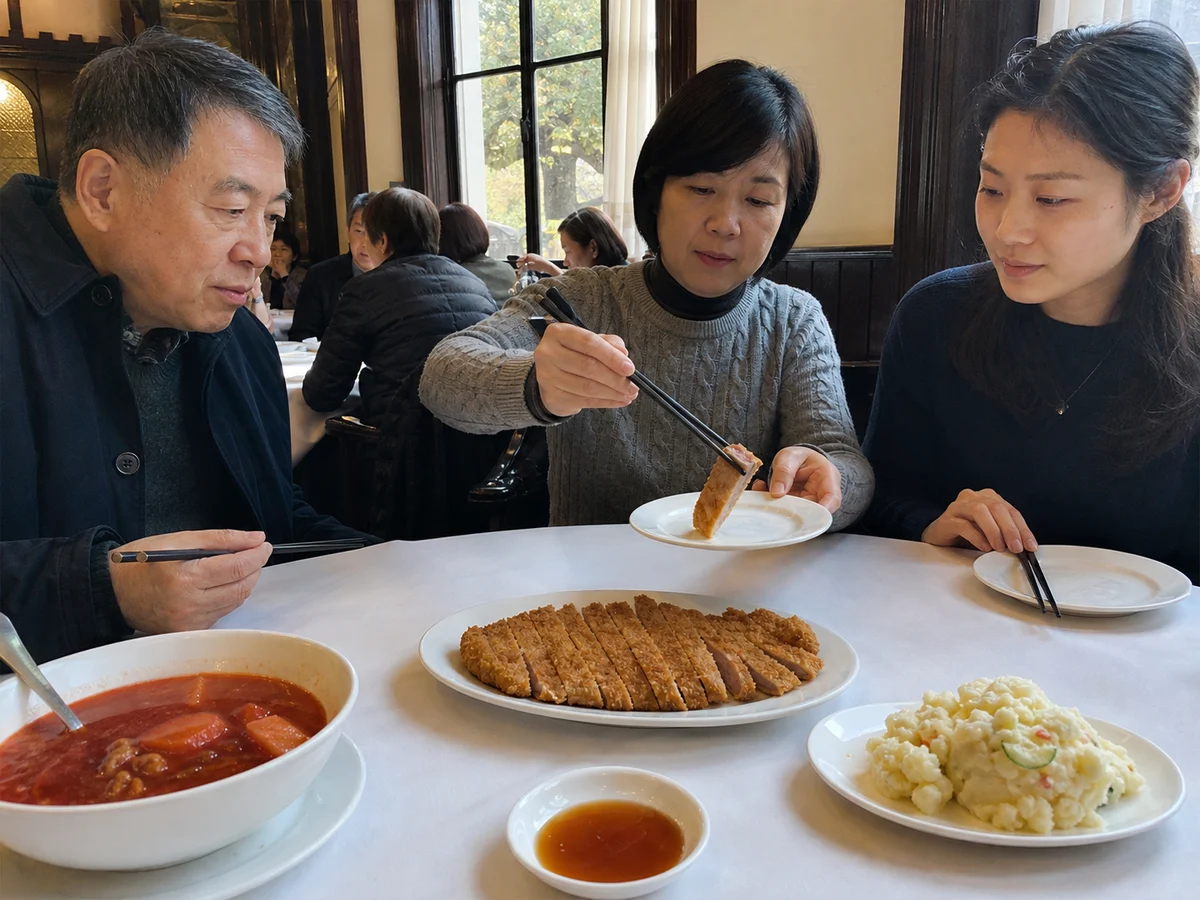
Shanghai deep-fried pork chop looks simple when it reaches the table: one broad golden cutlet, usually sliced into strips, with a small dish of brown sauce nearby. The details matter, however. The pork has been pounded thin, the coating should stay crisp without becoming hard, and the sauce is meant to sharpen the flavor rather than bury it.
This is also a useful doorway into Haipai cuisine, Shanghai's local tradition of adapting Western food with Chinese ingredients and habits. The pork chop can appear in a nostalgic Western restaurant, but it is equally at home beside noodles or wontons in a neighborhood shop.
What Zha Zhu Pai Means in Shanghai
Zha zhu pai simply means fried pork chop, but the Shanghai version has a recognizable place in the city's food culture. In early Haipai cooking, local kitchens adjusted European-style cutlets for familiar seasonings, affordable preparation, and chopstick-friendly serving. The cutlet was pounded thin, fried, and often cut before it reached the diner.
In old-style Shanghai Western restaurants, deep-fried pork chop, Shanghai borscht, and potato salad became a familiar trio. You do not need to order all three, but seeing them together explains the meal's balance: crisp fried meat, a sweet-tangy tomato soup, and a cool creamy side.
Why the Pork Chop Is Thin
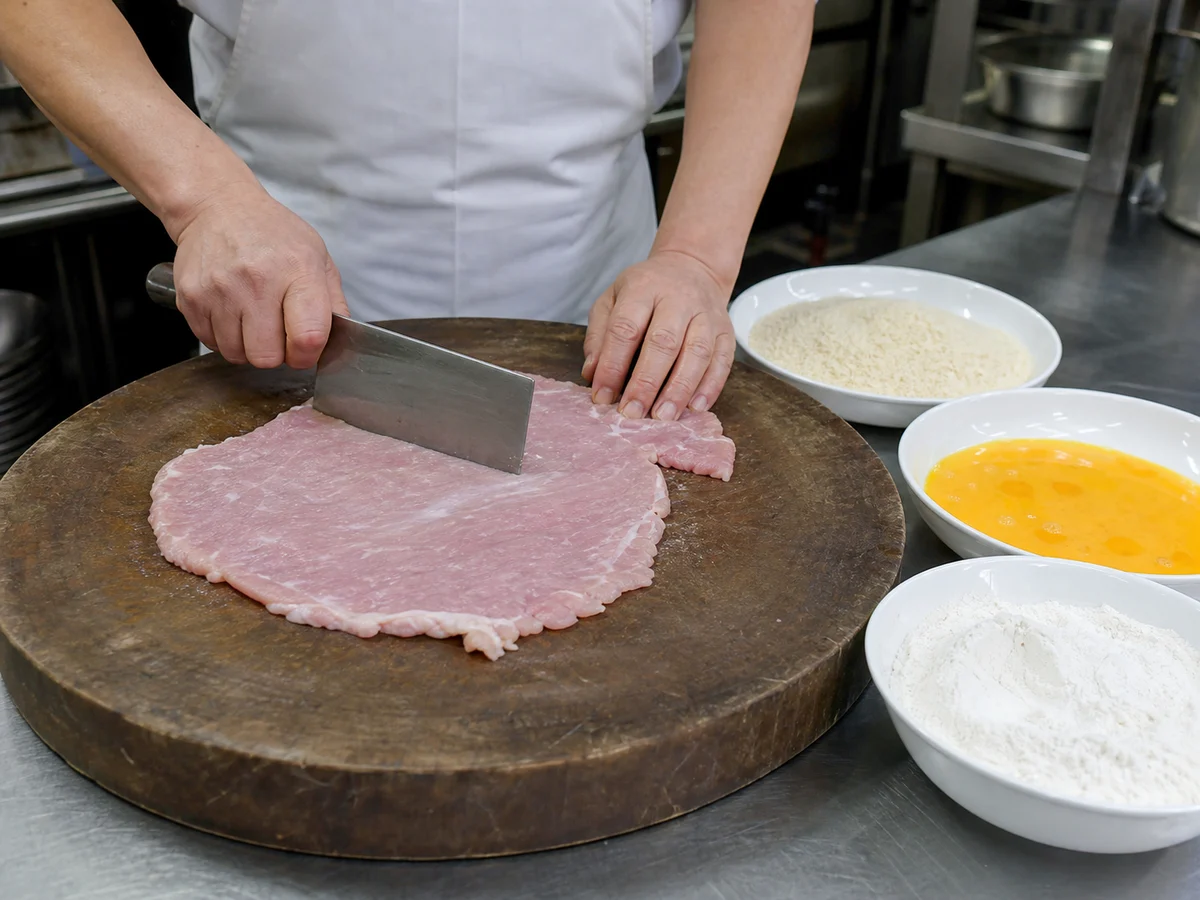
Before marinating, cooks repeatedly tap both sides of the pork with the back of a knife or cleaver. This loosens the muscle fibers and spreads the chop into a broad, even piece. A few small cuts around the fatty edge can also stop it curling tightly in the oil.
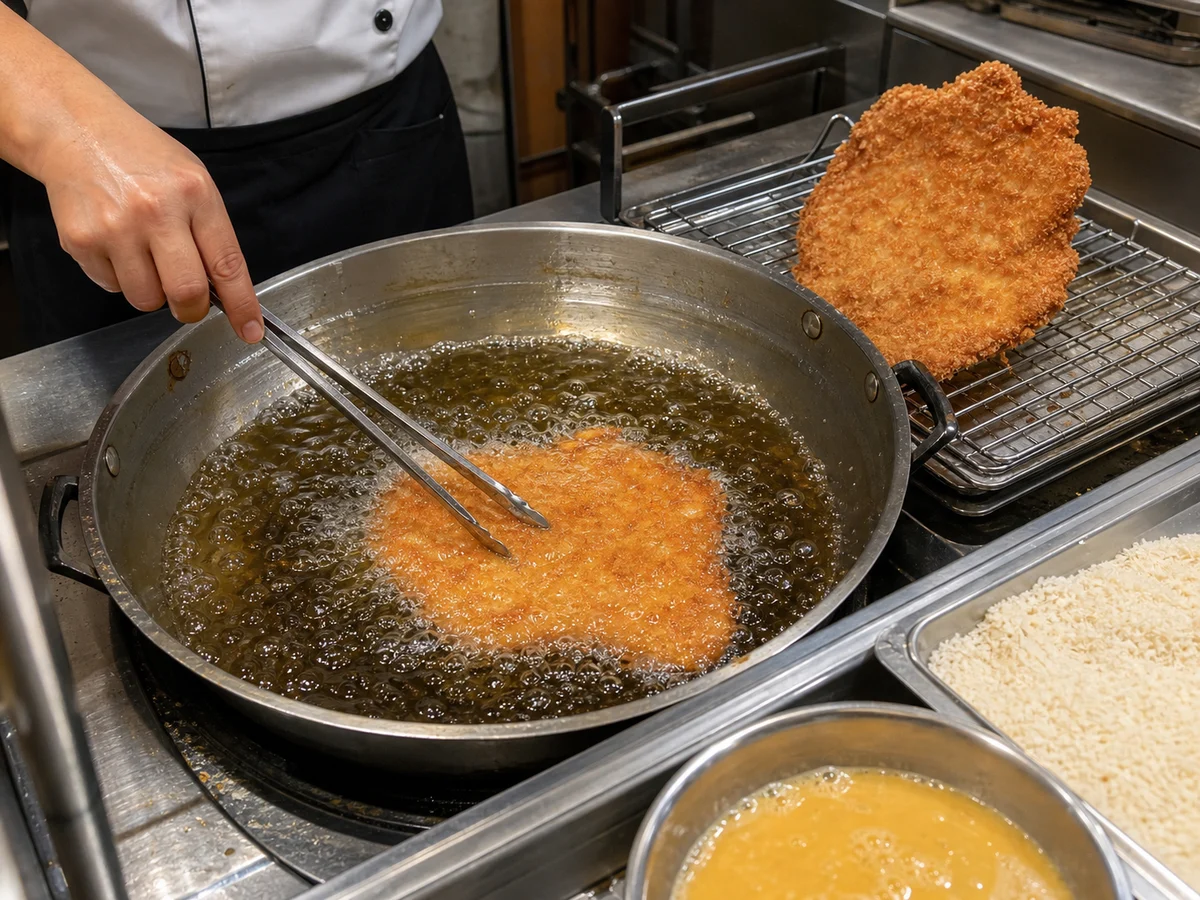
The pork may be seasoned with scallion- and ginger-infused water, cooking wine, salt, and light soy sauce. It then moves through flour, egg, and breadcrumbs. Fine crumbs create the compact, evenly golden crust associated with many old Shanghai eateries; coarse crumbs give a rougher and drier crunch.
How to Judge the Crust and Meat
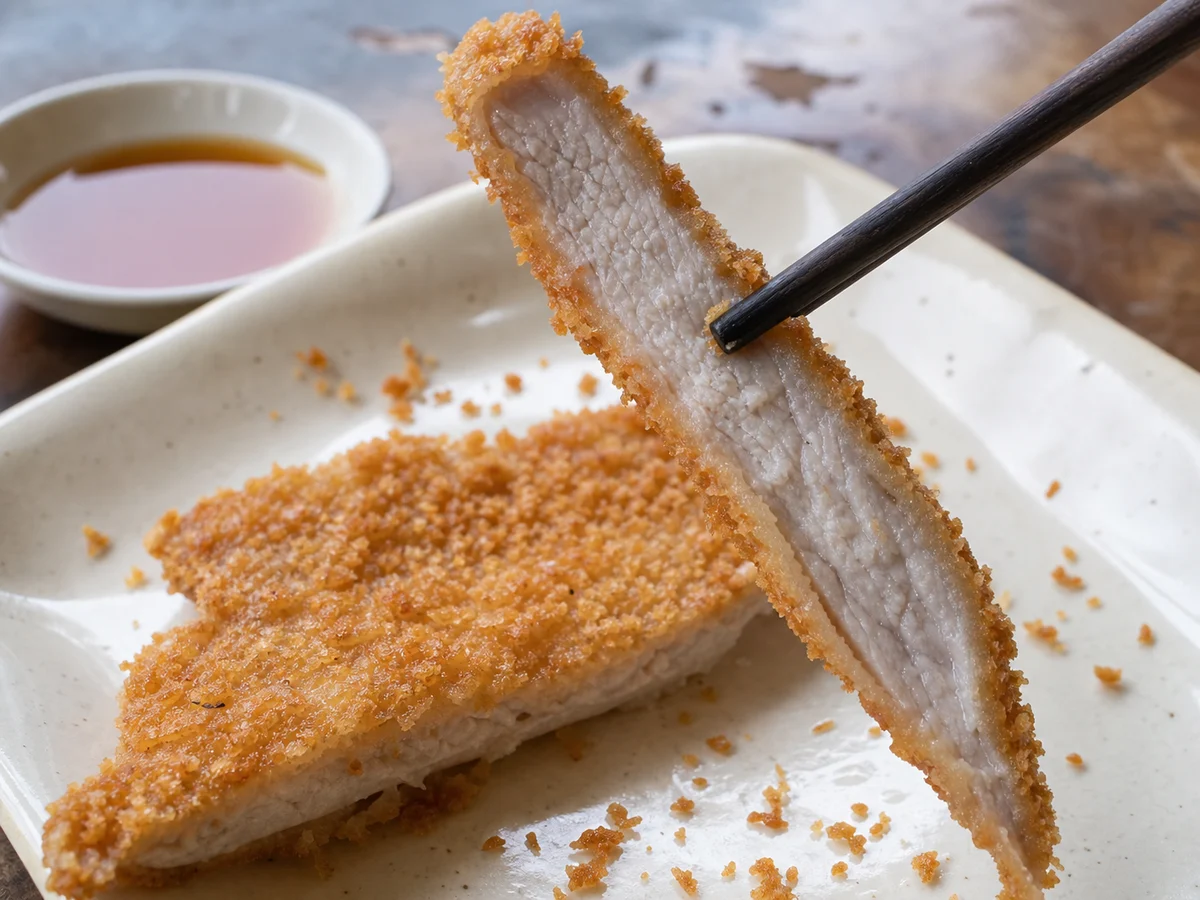
- Shape: broad and fairly flat, not a thick puck or a tightly curled piece.
- Color: deep golden and even, without burnt corners or pale wet patches.
- Crumb: crisp enough to crack lightly, but not so hard that it separates from the meat.
- Pork: fully cooked, moist, and tender, with visible meat fibers rather than a processed texture.
- Plate: a few crumbs are normal; a pool of oil or a soggy underside is not.
La Jiang You Is Not Soy Sauce
The expected condiment is la jiang you (辣酱油), Shanghai's local Worcestershire sauce. The literal translation, "spicy soy sauce," is misleading. The liquid is thin, tangy, mildly sweet, and only faintly spicy. It should brighten fried pork in the same way a little vinegar or pickle can refresh a rich bite.
Try one strip without sauce first. Then dip just the edge of the next strip. A light dip keeps the crumb crisp; pouring sauce across the whole chop softens it and gives a stronger sweet-sour flavor. Neither method is wrong, but starting gradually lets you understand both textures.
Deep-Fried Pork Chop or Paigu Niangao
These dishes share pork chop but should not be treated as interchangeable. The version served with Shanghai rice cakes is commonly coated in a thinner batter, fried to a softer surface, and served with chewy nian gao and sweet sauce. The standalone pork chop usually has breadcrumbs and puts crispness first.
If you want a snack-shop plate with starch and sauce, choose paigu niangao. If you want to compare crumb, pork tenderness, and la jiang you, order the deep-fried pork chop. It is also a much sharper textural contrast to slow, glossy dishes such as Shanghai braised pork belly.
What to Order With It
In a Haipai restaurant, Shanghai-style borscht is the classic partner. Its tomato sweetness and acidity help reset the palate between bites. Potato salad adds historical context, but ordering both sides can make a solo meal larger than expected.
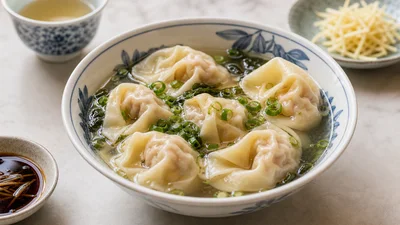
At a noodle or wonton shop, one pork chop can work as a shared extra beside a light bowl of clear-broth wontons. For a larger family table, keep the rest restrained: a cool plate of sixi kaofu, plain greens, and perhaps a clean-tasting dish such as crystal shrimp provide more contrast than another fried main.
How to Order It
Ask for zha zhu pai or show the characters 炸猪排. Confirm that it is the breadcrumb-coated standalone pork chop if a menu also lists paigu niangao. Ask for la jiang you on the side; an English menu may call it Worcestershire sauce or Shanghai spicy sauce.
One chop is often suitable for one hungry diner or for two people to share as part of a larger meal. It is best eaten soon after frying. For takeaway, keep the sauce separate and open the container briefly when practical so trapped steam does not immediately soften the crumb.
Dietary and Allergy Notes
The dish contains pork and commonly uses wheat flour, breadcrumbs, and egg. The marinade may include soy sauce, and Worcestershire-style sauces can contain several fermented or allergenic ingredients depending on the brand. Ask the restaurant if you avoid wheat, egg, soy, fish-derived seasonings, or other ingredients, and expect cross-contact in a shared fryer.
Common Ordering Mistakes
- Expecting Japanese tonkatsu with cabbage, rice, and thick dark sauce.
- Confusing the crisp breadcrumb version with the softer pork chop in paigu niangao.
- Pouring all the sauce at once before tasting the fresh crust.
- Leaving the fried chop sealed in a takeaway box until steam makes it soft.
- Ordering several fried sides when soup or greens would give the meal better contrast.
Comments (0)