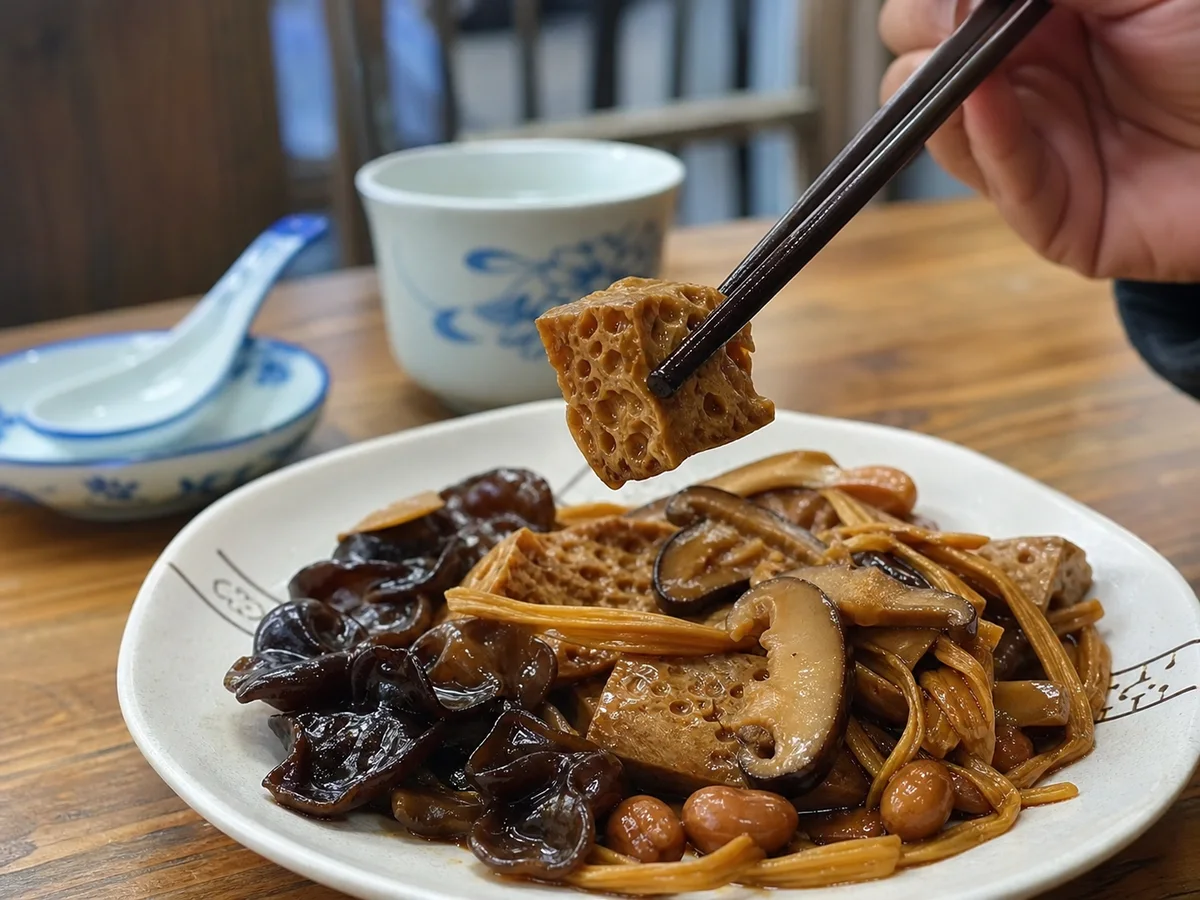
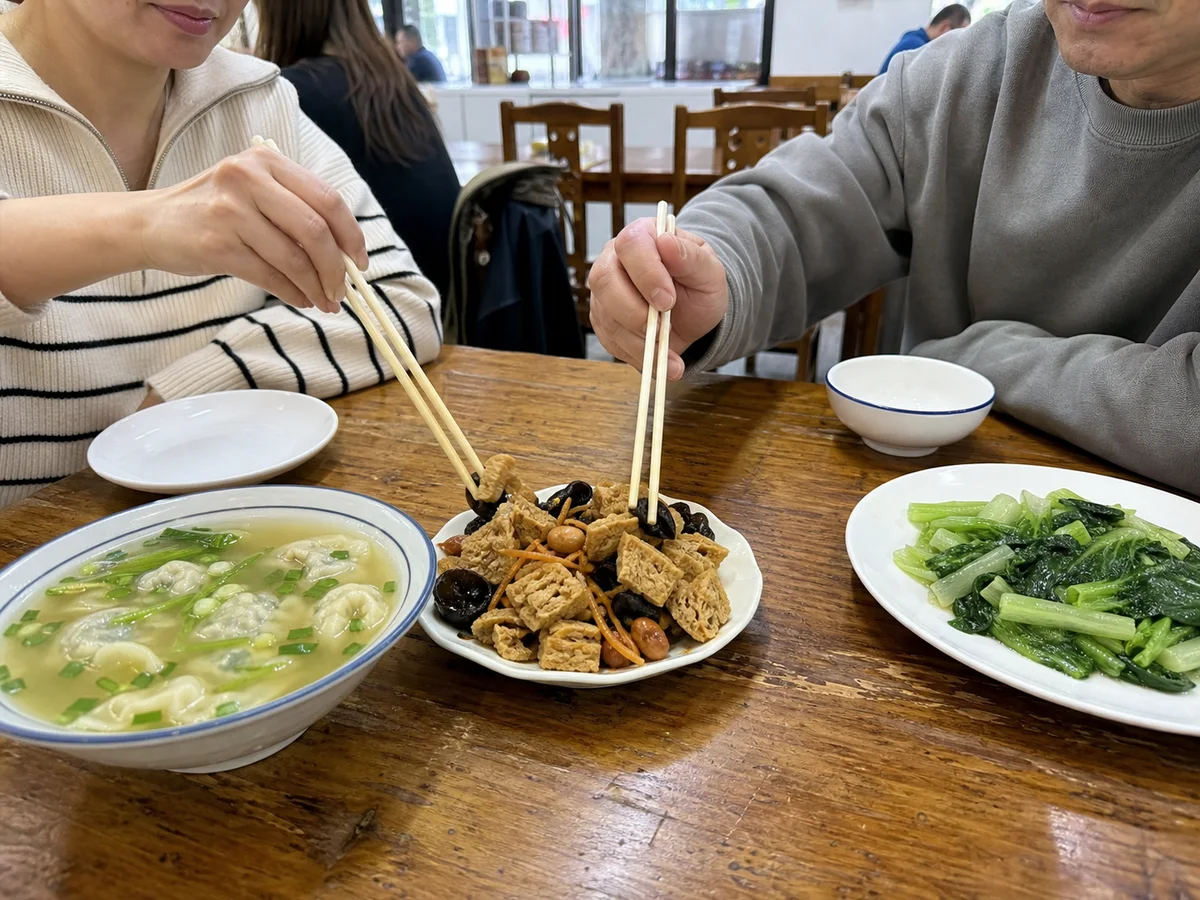
Shanghai kaofu can look puzzling on a cold-dish counter. The brown cubes resemble tofu at first glance, but the honeycomb interior tells a different story. Kaofu is wheat gluten: its open structure is meant to absorb braising liquid, so sauce is carried through each piece rather than sitting only on the surface.
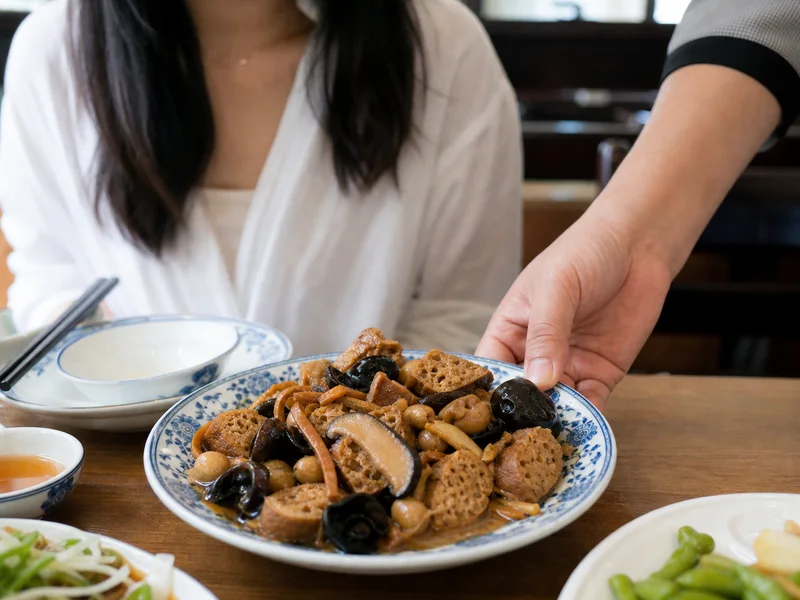
In sixi kaofu, those cubes usually share the plate with shiitake mushrooms, wood ear, dried daylily buds, and peanuts. The result is sweet-savory and gently soy-rich, with a deliberate sequence of textures. It is a composed appetizer, not just a pile of gluten in brown sauce.
What Sixi Kaofu Actually Is
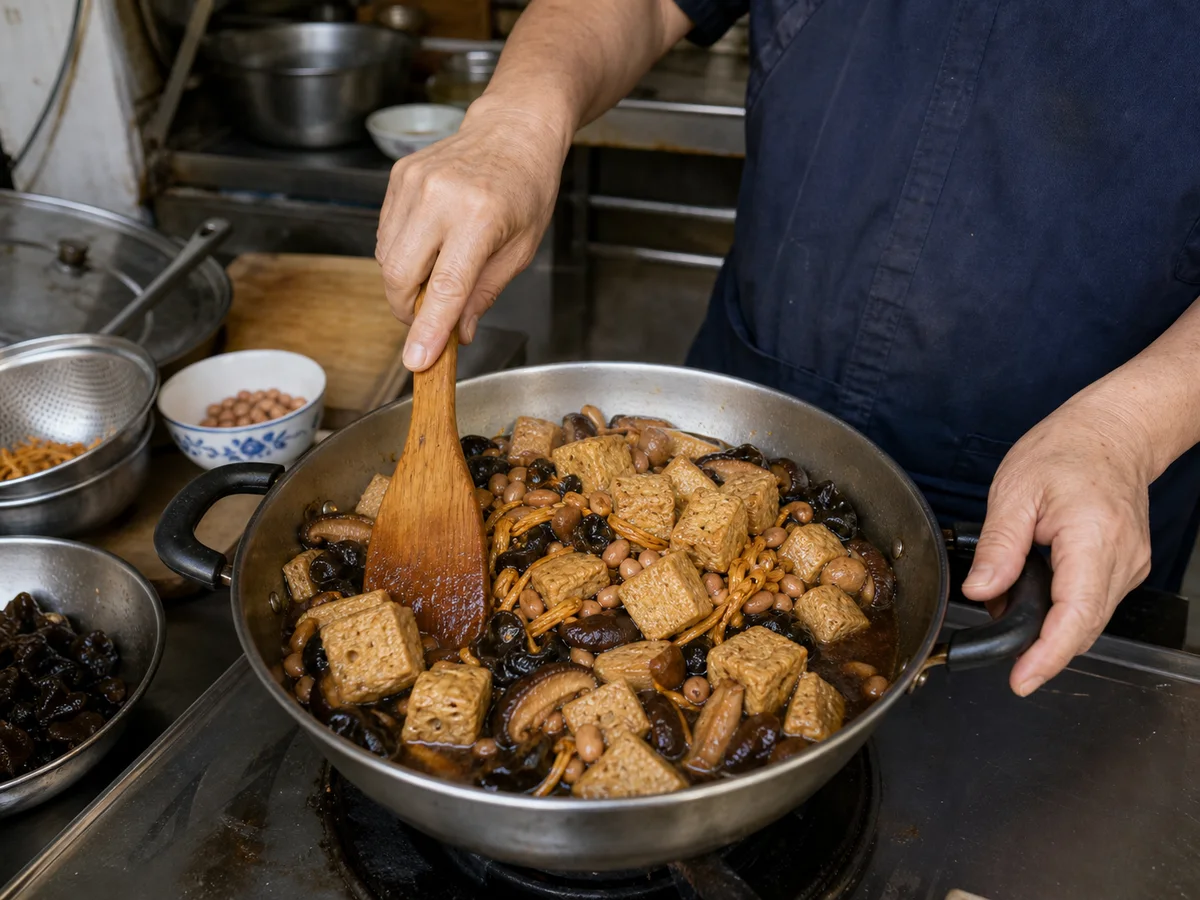
Kaofu begins with wheat gluten that has been leavened or fermented into a light, porous block, then cut into pieces. During braising, the holes take in soy sauce, sugar, aromatics, and the liquid released by the mushrooms. Shanghai versions often lean sweeter than visitors expect, although a good plate still has enough salt and mushroom depth to keep the sweetness in balance.
The word sixi means "four happinesses," but restaurant recipes are not completely fixed. Shiitake, wood ear, daylily buds, and peanuts are a common combination; another kitchen may adjust the mix or proportions. Judge the plate by the quality of its gluten and the balance of ingredients rather than by counting exactly four visible items.
Why the Gluten Looks Spongy
The small holes are the point of the dish. A dense cube cannot absorb much braising liquid, while an overly soft one collapses and turns pasty. Good kaofu keeps a springy bite and distinct edges even after it has taken in sauce. When you lift a piece, the interior should still look open rather than compressed.
This texture is different from the chew of Shanghai rice cakes. Rice cakes resist the teeth and become smoother as you chew; kaofu yields quickly, then releases the sauce held inside its pores. Trying both is a useful way to see how Shanghai dishes build interest from contrasting textures.
What the Supporting Ingredients Add
Shiitake mushrooms echo the soy-rich braise with a deeper earthy aroma. Wood ear contributes a clean, slightly crisp snap. Dried daylily buds are slender and fibrous, while peanuts stay firmer and add a roasted note. A satisfying plate distributes these ingredients throughout instead of placing all the gluten in one area and the garnishes in another.
The sauce should coat everything with a light gloss. If it is watery, the gluten may taste weak inside. If it is syrupy, the sugar can hide the mushroom and soy flavors. The most enjoyable versions feel juicy without leaving a thick puddle at the bottom of the plate.
Why It Is Usually Served Cool
Sixi kaofu is commonly treated as a liangcai, an opening cold dish. Cooling gives the braising liquid time to settle into the porous gluten and makes the different textures easier to notice. "Cold" does not always mean refrigerator-cold; many restaurants serve it cool or near room temperature.
This puts it in the same part of the meal as Shanghai smoked fish, but the experience is quite different. Smoked fish is crisp-fried and dense, with bones to navigate, while kaofu is soft, meat-free in its main ingredients, and easy to share one bite at a time.
How to Judge a Good Plate
- Look at the pores: the gluten should appear airy and intact, not compressed into dense blocks.
- Check the mix: mushrooms, wood ear, daylily buds, and peanuts should be distributed across the plate.
- Notice the sauce: a clear gloss is better than a watery pool or a sticky syrup.
- Taste beyond sweetness: soy, mushroom, and toasted-peanut notes should remain recognizable.
How to Order and Share It
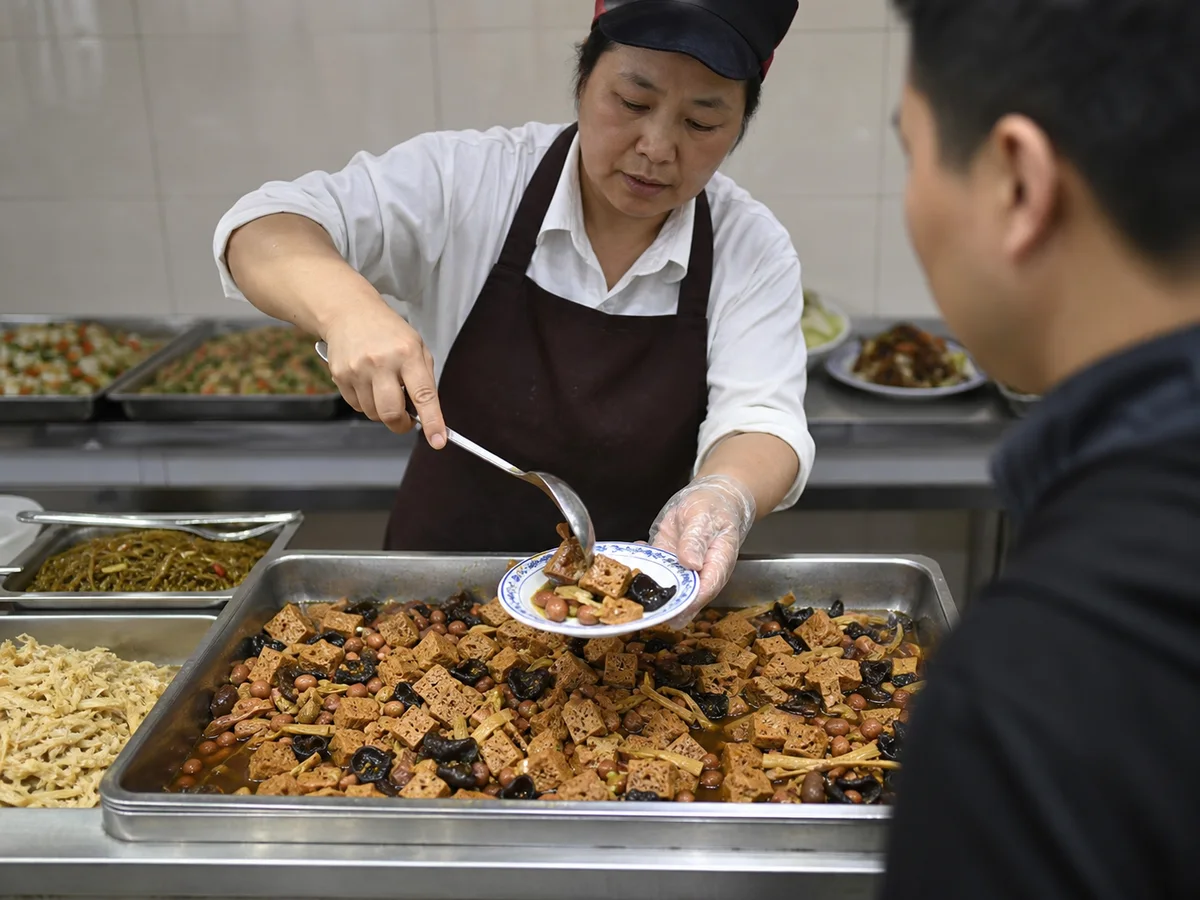
On a menu, look for kaofu, sixi kaofu, or "four-happiness wheat gluten." At a cold-dish counter, point to the tray with porous brown cubes and ask whether it includes peanuts if anyone at the table has an allergy. A small plate is usually enough for two to four people because it is intended as an opener rather than a main course.
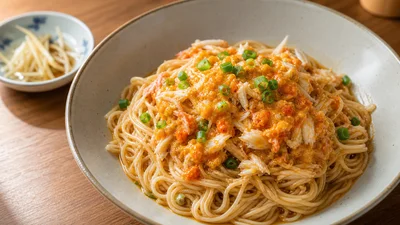
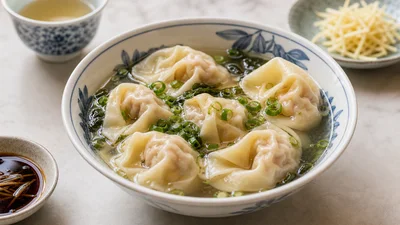
Pair it with something warm and less sweet. A bowl of Shanghai wontons gives a light broth contrast, while scallion oil noodles keep the meal simple and aromatic. If the table wants a richer centerpiece, Shanghai braised pork belly adds weight, but order fresh greens so the repeated sweet-savory notes do not dominate.
Is Shanghai Kaofu Vegetarian?
The defining ingredients are plant-based: wheat gluten, mushrooms, wood ear, daylily buds, peanuts, soy sauce, and sugar. That makes kaofu a common choice for diners avoiding meat. Strict vegetarians should still ask the restaurant, because kitchen practices and braising liquids can vary, and a menu label alone does not confirm how a particular batch was prepared.
Common Ordering Mistakes
- Assuming kaofu is tofu and expecting a smooth soybean texture.
- Ordering too much before the hot dishes arrive; it is meant to open the meal.
- Rejecting the dish because it is cool, even though that serving style is intentional.
- Calling every brown cube "mock meat" and missing the mushroom, daylily, wood-ear, and peanut balance.
- Assuming every version is allergy-safe or strictly vegetarian without asking the kitchen.
Comments (0)