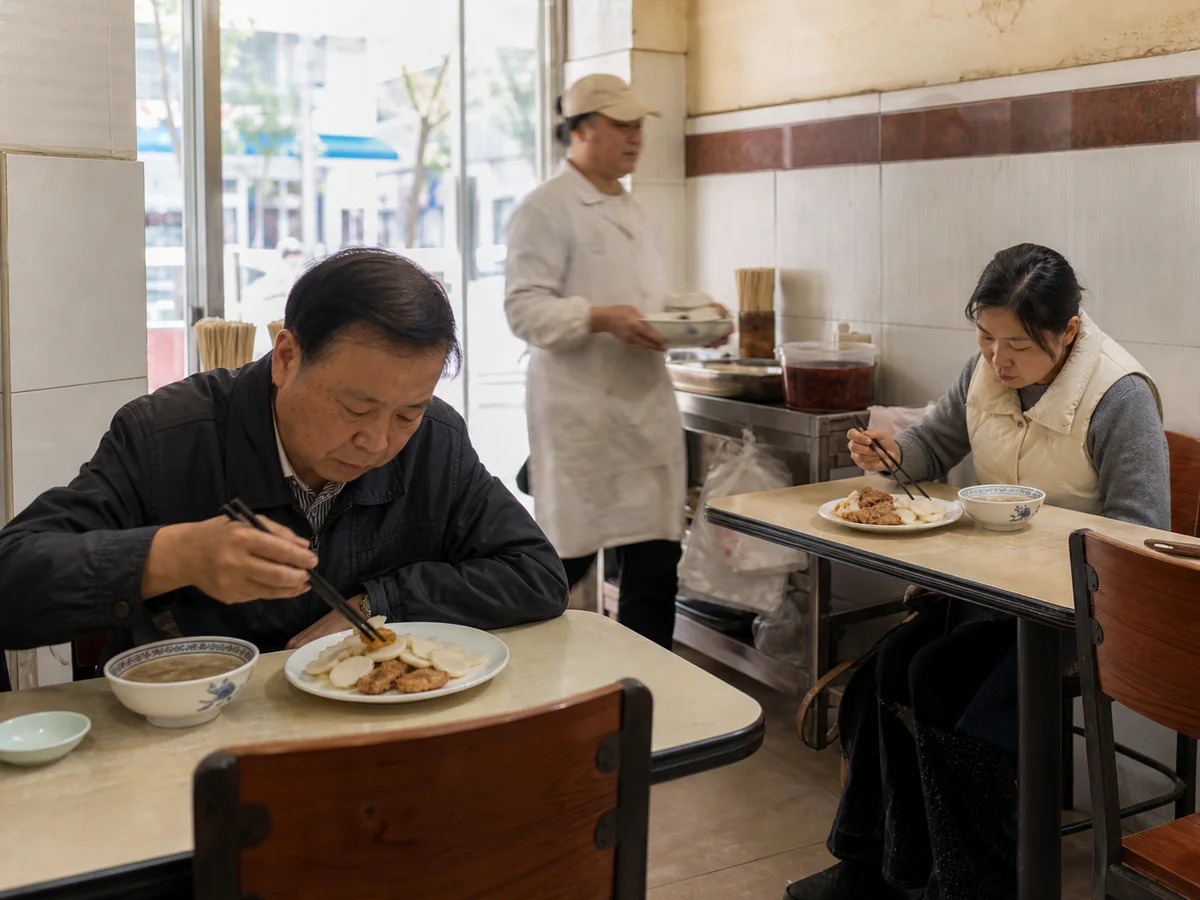
Paigu niangao is one of the Shanghai dishes that makes a full meal from contrast. A thin fried pork chop brings a browned edge and savory bite; oval nian gao slices bring a soft, chewy center; a dark sweet-savory sauce ties the plate together. It is commonly found in snack-shop settings, where the food is meant to arrive hot and be eaten without much ceremony.
This guide builds on the basic rice cake guide and the broader rice cake versions guide. Here the focus is the pork chop plate itself: what it is, what the rice cakes should feel like, and how to keep a rich order from becoming too heavy.
What Paigu Niangao Actually Is
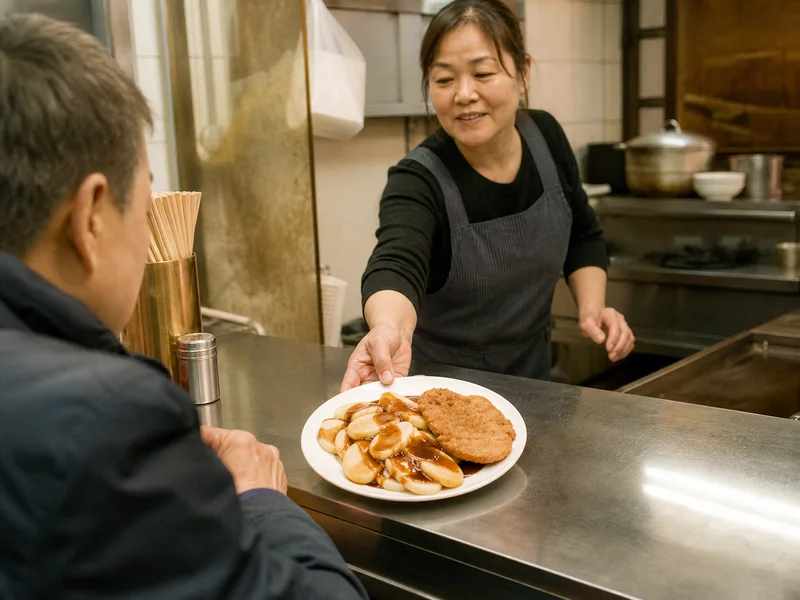
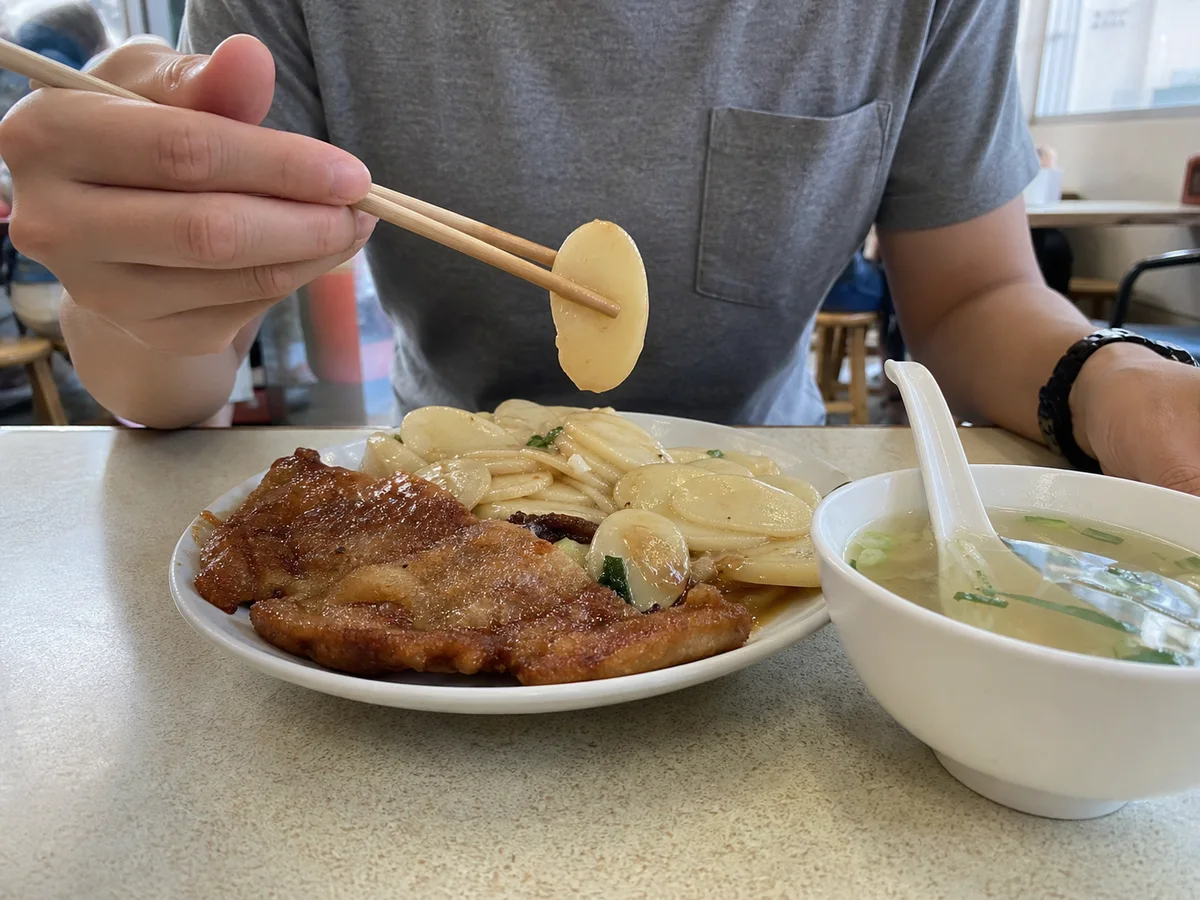
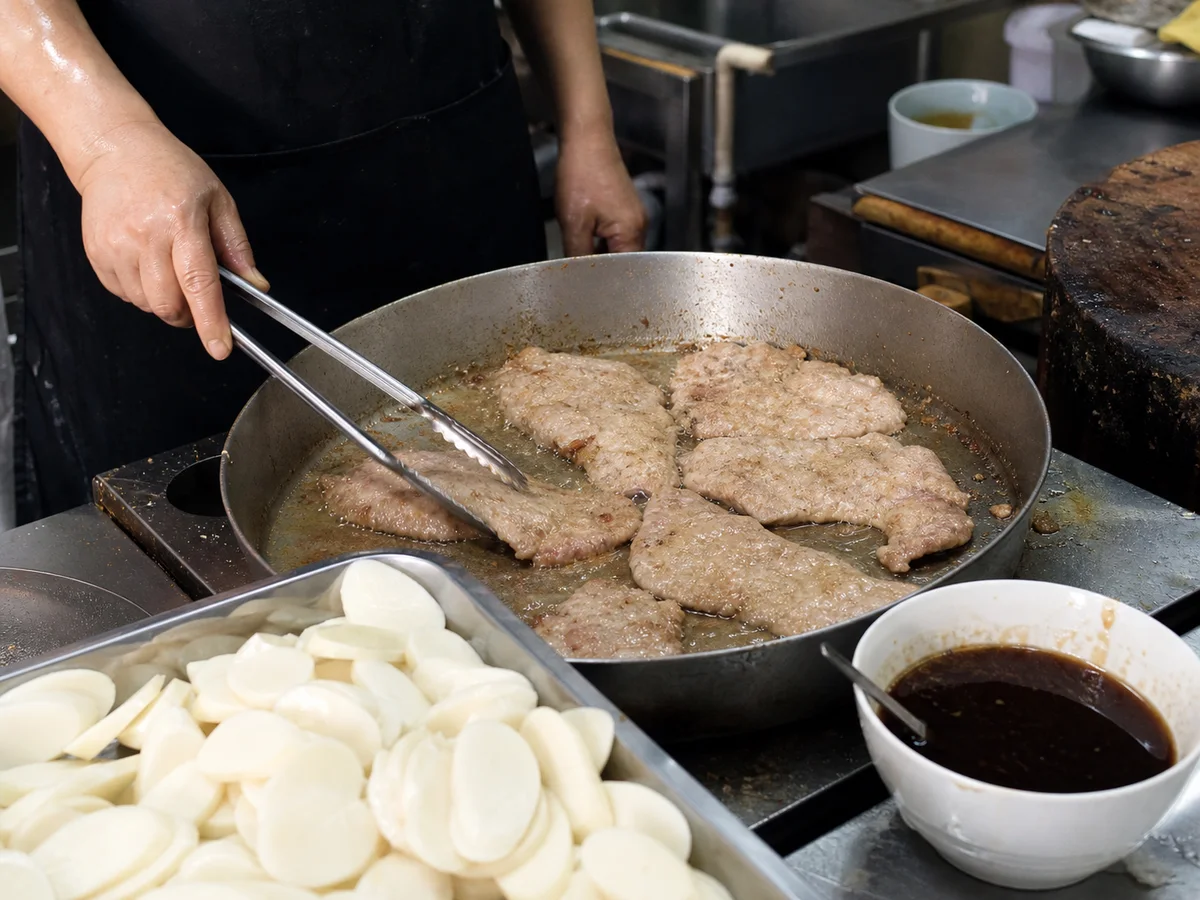
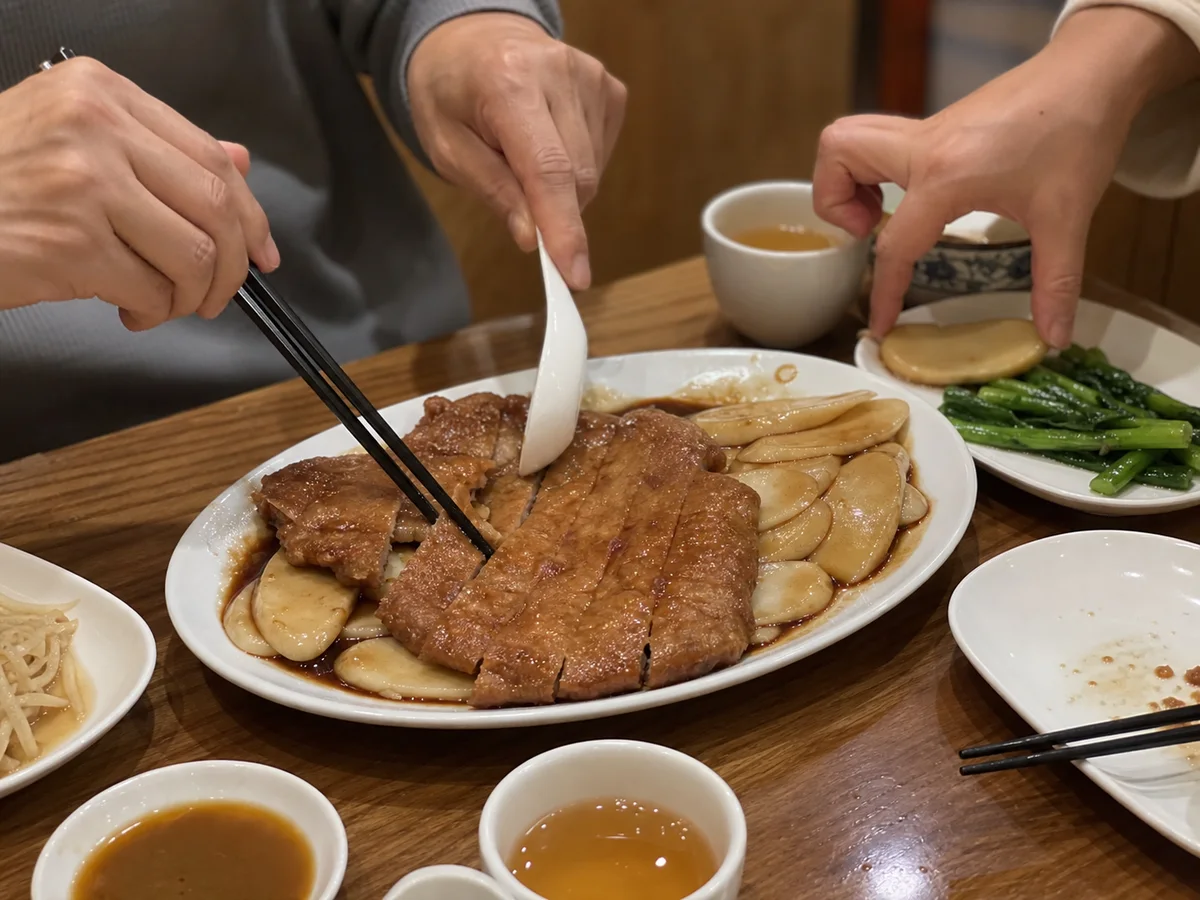
Paigu niangao joins a fried pork chop with Shanghai-style oval rice cake slices. The pork is usually thin and browned rather than a thick Western-style cutlet, while the rice cakes are mild and soft enough to absorb some sauce. The plate can look simple, but the contrast between pork, rice cake, and sauce is the point.
Do not expect a dry pork chop served with a pile of plain starch. The sauce should reach both elements, but it should not drown the pork or turn all the rice cakes into one sticky mass.
How Pork Chop and Rice Cakes Work Together
The pork chop gives the dish its immediate savory character. The rice cakes slow the plate down: they are softer, chewier, and less assertive, so they carry a little sauce without competing with the meat. Take a bite of pork, then a rice cake slice, rather than treating the rice cakes as an afterthought.
A good plate keeps the two textures distinct. The pork should retain a browned surface, while the nian gao should be heated through, smooth around the edges, and tender without being mushy.
What a Good Plate Looks Like
Look for a thin pork chop with a golden-brown edge and several separate oval rice cake slices. A little glossy sauce is welcome, especially around the rice cakes, but a pool of very dark liquid can make the meal feel overly sweet and heavy.
The rice cakes do not need to be crisp. Their job is a warm, yielding chew. If they are hard in the middle, cold, or fused into a dense block, the timing has not worked in the dish's favor.
Snack-Shop Timing Matters
Paigu niangao is best soon after it reaches the table. The pork keeps more of its browned texture before steam softens the surface, and the rice cakes are most pleasant while warm and separate. This is a dish to eat in or nearby rather than carry across town in a sealed bag.
If the counter is actively frying and plating, waiting for a fresh order is usually worthwhile. The dish is not delicate in the way soup dumplings are, but it still loses contrast when it sits too long.
How Much to Order
For one hungry person, a full plate can be a meal. For two people trying several Shanghai snacks, share it and keep the rest of the order lighter. Pork, rice cake, and sauce together are satisfying enough that another large fried item is usually unnecessary.
A small clear-broth bowl from the Shanghai wontons topic can make the meal feel less dry. Simple greens are another calm partner when the table needs freshness rather than more starch.
Paigu Niangao or Another Rice Cake Dish?
Choose paigu niangao when you want pork and a snack-shop plate with more weight than a plain stir-fry. Choose rice cake soup when you want broth and vegetables, or a stir-fried rice cake dish when you want a more direct soy-and-wok flavor.
For a different crisp breakfast or snack texture, a fresh scallion pancake makes more sense on another stop. Ordering both as full portions at once can hide what makes each one enjoyable.
Common Paigu Niangao Mistakes
- Mistaking the dish for a Western pork cutlet with an unrelated side.
- Leaving it sealed in takeaway packaging until the pork loses its browned surface.
- Judging the rice cakes only by sauce instead of checking whether they are warm and separate.
- Adding several other fried or heavy starch dishes to the same meal.
- Expecting the rice cakes to be spicy or cylindrical like a different style of rice cake.
Comments (0)