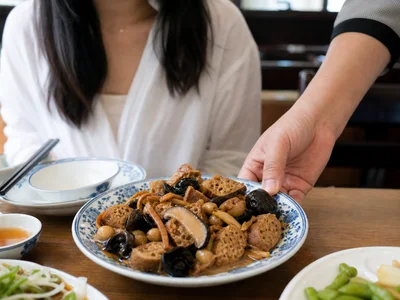
Shanghai Kaofu: Porous Wheat Gluten, Mushrooms, Peanuts, and How to Order It
A practical English guide to Shanghai sixi kaofu, covering its porous wheat-gluten texture, mushroo…
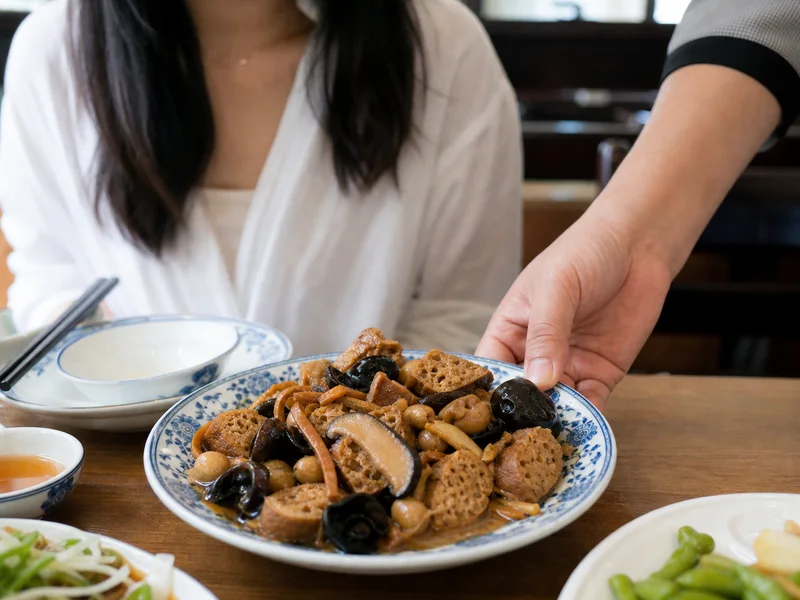
Shanghai sixi kaofu is a cool sweet-savory appetizer of porous braised wheat gluten, mushrooms, wood ear, daylily buds, and peanuts.
Shanghai kaofu is braised wheat gluten with a network of tiny holes that soak up a sweet-savory soy sauce. The best-known version is sixi kaofu, often served cool with shiitake mushrooms, wood ear, dried daylily buds, and peanuts. It is a familiar opening cold dish at Shanghainese restaurants rather than a substitute for tofu or a bowl of mock meat.
This topic explains how to recognize kaofu, why its sponge-like texture is deliberate, and how the supporting ingredients keep the dish from feeling one-dimensional. It also covers the questions that matter when ordering, including sweetness, serving temperature, and whether a restaurant's version is strictly vegetarian.
The wheat gluten should be porous enough to hold sauce but resilient enough to stay in cubes. Shiitake brings a darker aroma, wood ear adds a gentle snap, daylily buds give a fibrous bite, and peanuts provide a firmer finish. Recipes vary, so the name "four happiness" does not guarantee one immutable set of ingredients.
Kaofu normally arrives among the opening cold dishes. Its rounded sweetness makes it a useful contrast to a bowl of Shanghai wontons or a plate of scallion oil noodles. For a broader cold-dish comparison, Shanghai smoked fish is firmer, darker, and built around fish rather than wheat gluten.
Choose a plate where the gluten cubes still show open pores and distinct edges. The sauce should gloss the ingredients without collecting as a heavy pool. A balanced version tastes sweet first, then soy-rich and mushroomy, with enough varied texture that the plate remains interesting after several bites.
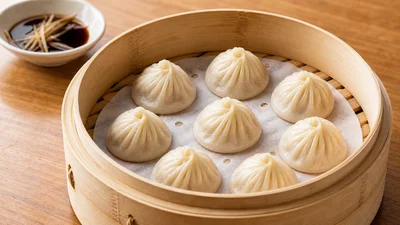
Shanghai xiaolongbao are delicate steamed soup dumplings with thin wrappers, hot broth, pork filling, and a b…
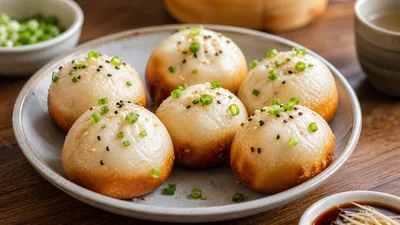
Shanghai shengjian mantou are pan-fried soup buns with soft tops, crisp golden bottoms, sesame, scallions, an…
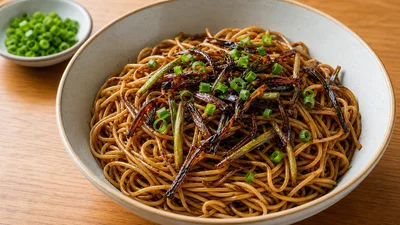
Shanghai scallion oil noodles are thin wheat noodles mixed while hot with fried scallions and soy-based sauce…