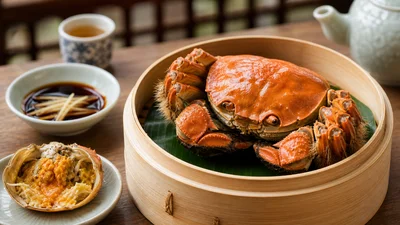
Shanghai rice cakes are often described through stir-fried nian gao, pork chop plates, or crab roe versions. A soup bowl is a quieter option: soft slices simmered in a light broth with greens, mushrooms, bamboo shoots, or a little pork. It is still recognizably nian gao, but the experience is warmer, softer, and less sauce-driven.
This guide builds on the basic rice cake guide and the texture and ordering guide. The focus here is how to read a soup rice cake bowl, choose it when a stir-fry feels too heavy, and eat it while the slices are at their most tender.
What Makes a Soup Rice Cake Bowl Different
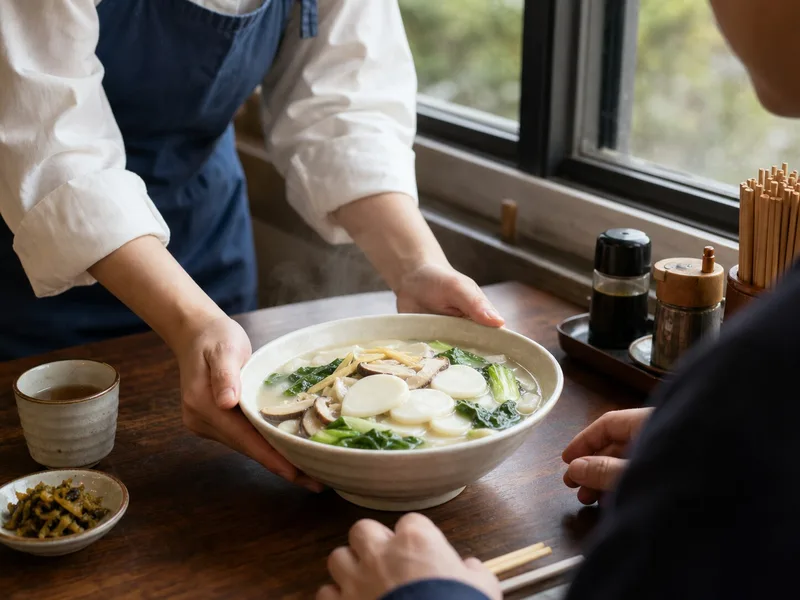
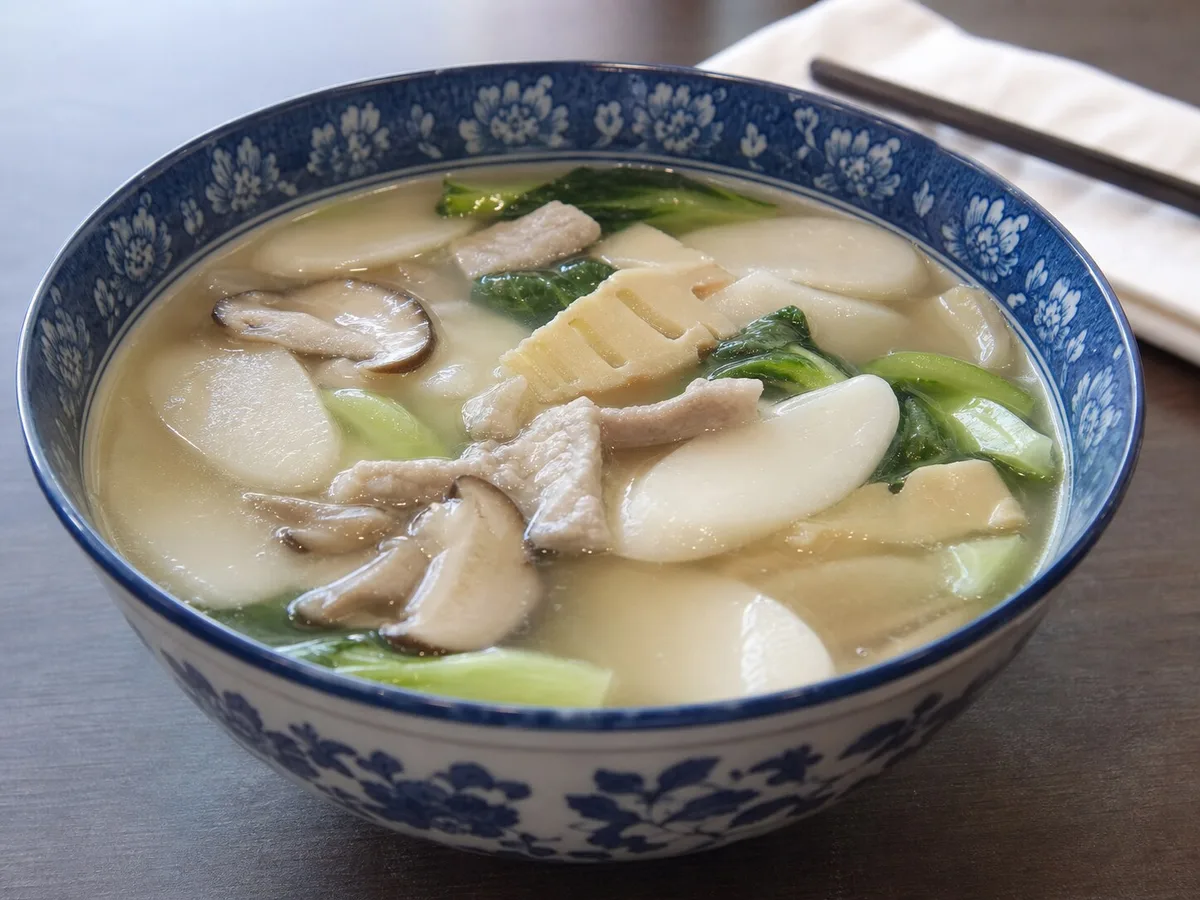
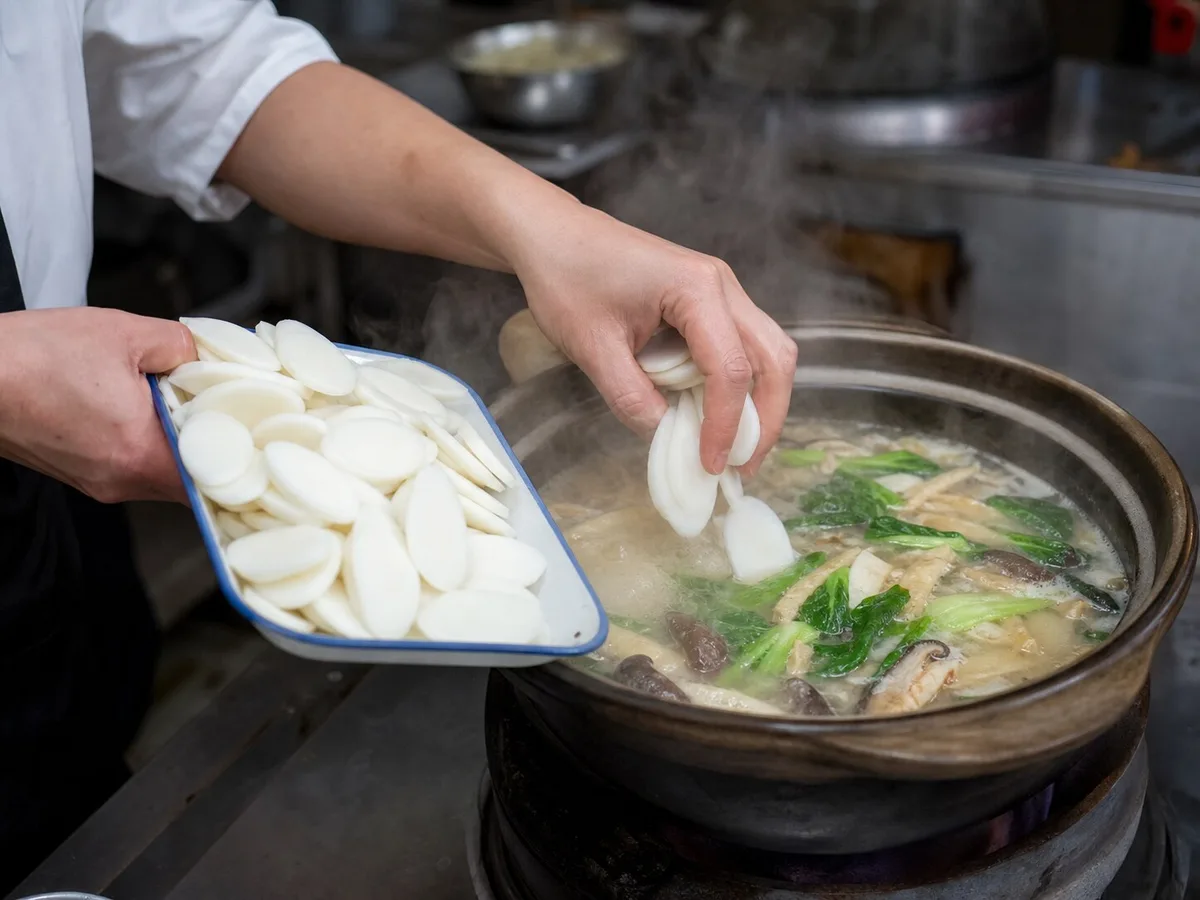
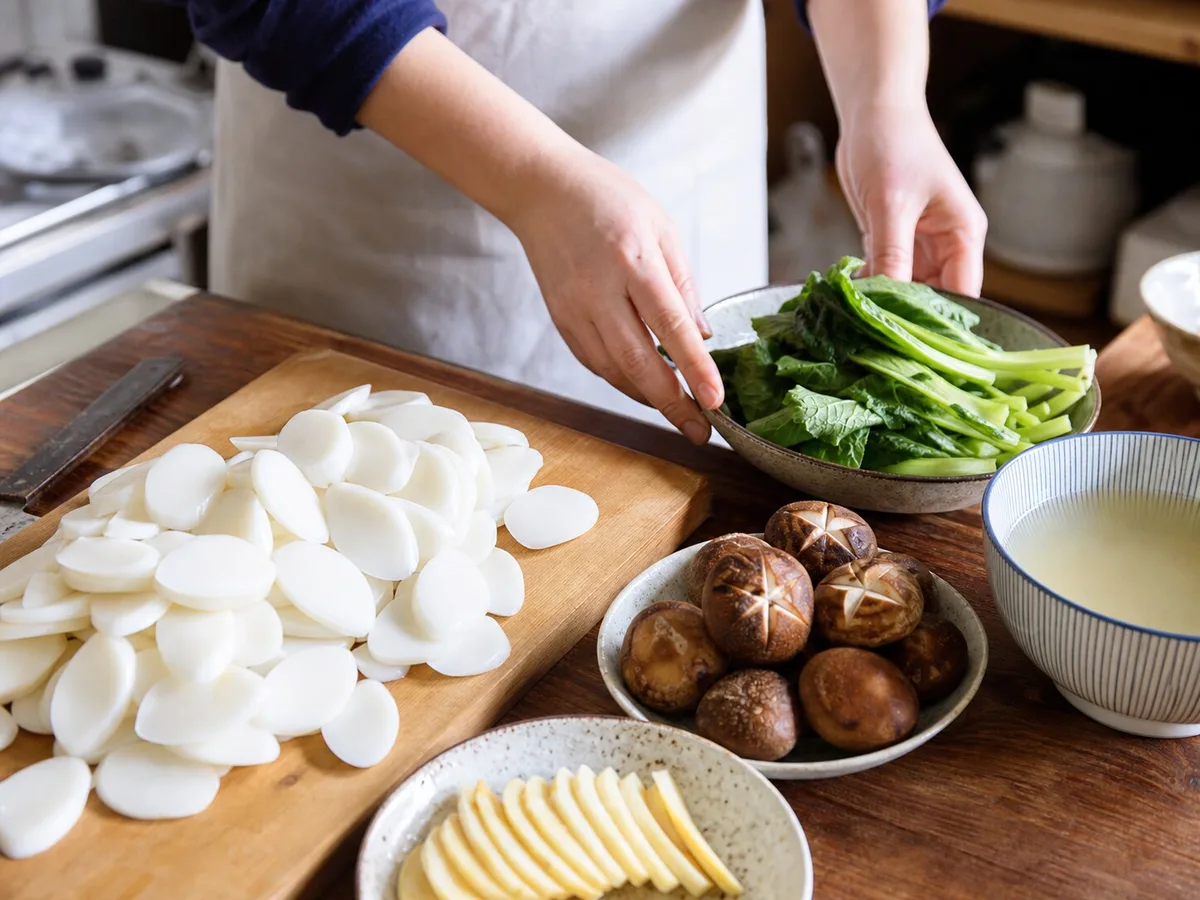
In a soup bowl, the nian gao slices are not meant to be crisp or heavily browned. They soften in the broth and take on the flavor of greens, mushrooms, stock, and any small pieces of pork or other additions. The best slices remain distinct and silky rather than breaking down into paste.
The broth should support the rice cakes, not hide them. A clear or lightly cloudy bowl with visible vegetables gives you a better sense of the dish than a thick, dark sauce. If you are used to stir-fried rice cakes, expect less chew and more gentle warmth.
When to Choose a Lighter Bowl
Rice cake soup makes sense when you want one warm dish without the weight of a pork chop plate or a rich crab preparation. It is useful at lunch, on a cool or rainy day, or when the table already has a strong cold appetizer and needs something mild beside it.
It is also a sensible choice for visitors who want to understand nian gao texture before trying heavier versions. The bowl lets the rice cakes, broth, and greens remain separate enough to taste clearly.
What to Look for in the Bowl
Look for oval slices that are soft all the way through but still have smooth edges. They should not be hard in the center, nor should they be fused together in one dense cluster. Greens and mushrooms should look freshly cooked rather than tired or overboiled.
A few pork strips, bamboo shoots, or mushrooms add depth, but none should dominate the bowl. If every spoonful is only rice cake, ask for a small vegetable side or choose a soup with more ingredients so the meal stays balanced.
How to Eat It Before the Texture Changes
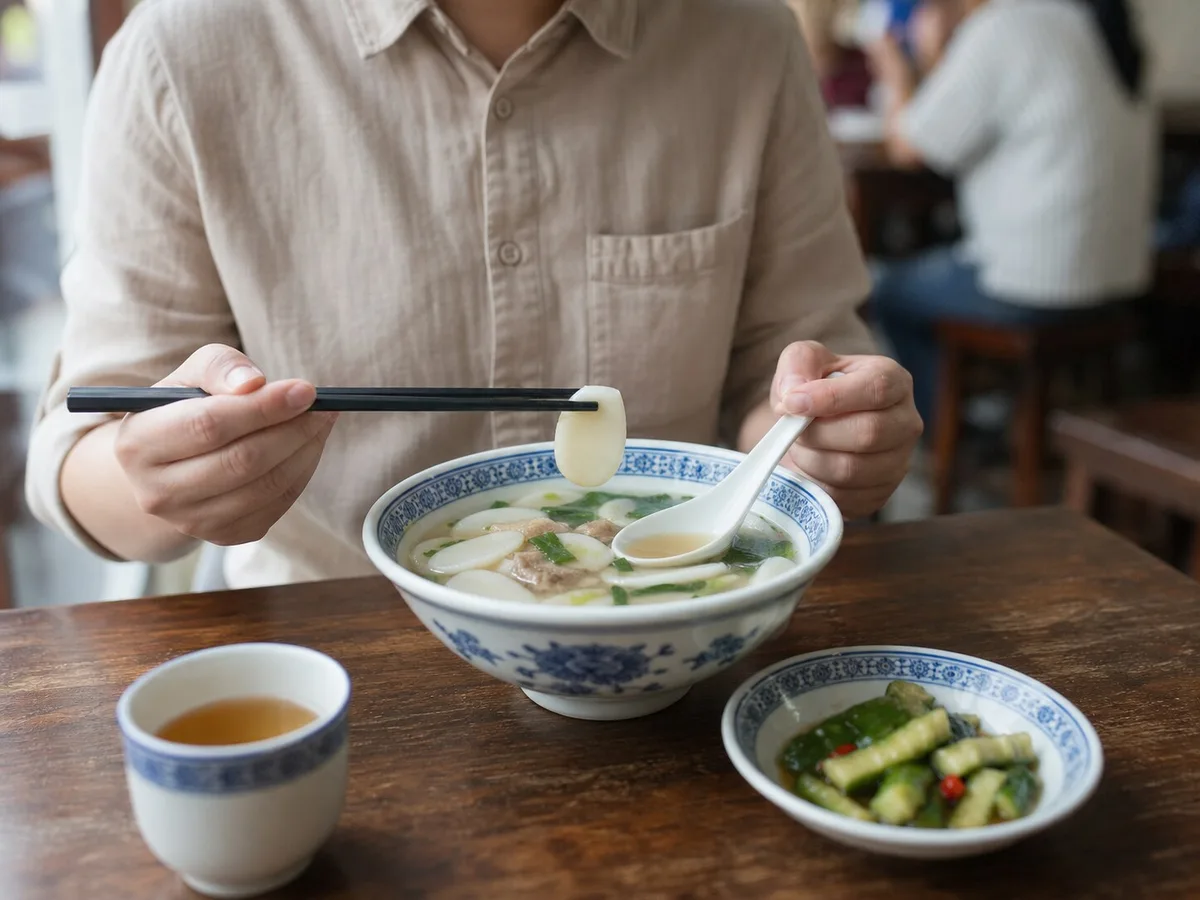
Rice cakes firm up as they cool, even in broth. Start with a few slices while the bowl is hot, then alternate with soup and greens. Chopsticks work well for the rice cakes; a porcelain spoon helps with broth and softer vegetables.
Do not rush through the bowl, but do not leave all the rice cakes for the end either. The pleasant middle point is when the slices are warm, tender, and still separate from one another.
Pairings That Keep the Meal Light
Rice cake soup pairs naturally with a small cold dish or simple greens. A few pieces from the Shanghai smoked fish topic provide a cool sweet-savory contrast, while plain vegetables keep the bowl from feeling like too much starch.
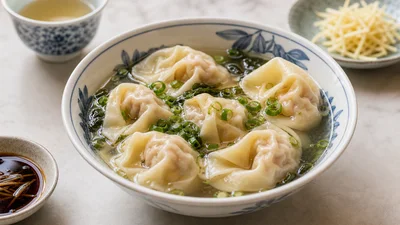
If you want another soft soup option, compare it with Shanghai wontons. Wontons give you wrapper and filling; rice cake soup is more about the chewy-soft slices and broth. Choose one as the main bowl, then let the other wait for another meal.
Soup Bowl or Stir-Fried Plate?
Choose soup rice cakes when you want warmth, broth, and vegetables. Choose stir-fried rice cakes when you want a firmer chew and a more direct soy-based flavor. The versions guide helps with the richer alternatives, especially pork chop and crab dishes.
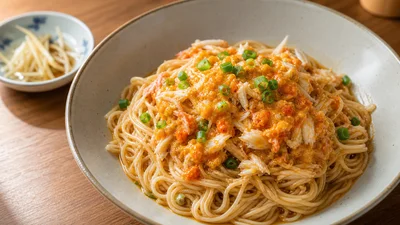
For a dry noodle comparison, scallion oil noodles are more aromatic and fast to eat, while soup rice cakes are slower and gentler. They are both satisfying, but they suit different appetites.
Common Soup Rice Cake Mistakes
- Expecting the slices to have the same firm bite as a hot stir-fry.
- Letting the bowl cool until the rice cakes tighten and clump.
- Adding too many heavy side dishes to an already filling bowl.
- Choosing a dark, thick sauce dish when you were looking for a light broth meal.
- Ignoring greens and soup, then judging the bowl only by the rice cakes.
Comments (0)