Shanghai Xiekehuang: Choosing a Sweet or Savory Crab Shell Pastry
The crab-shell name is only the beginning. Meet Shanghai's flaky sesame pastry, compare black sesame and radish fillings, and put together a simple breakfast order.
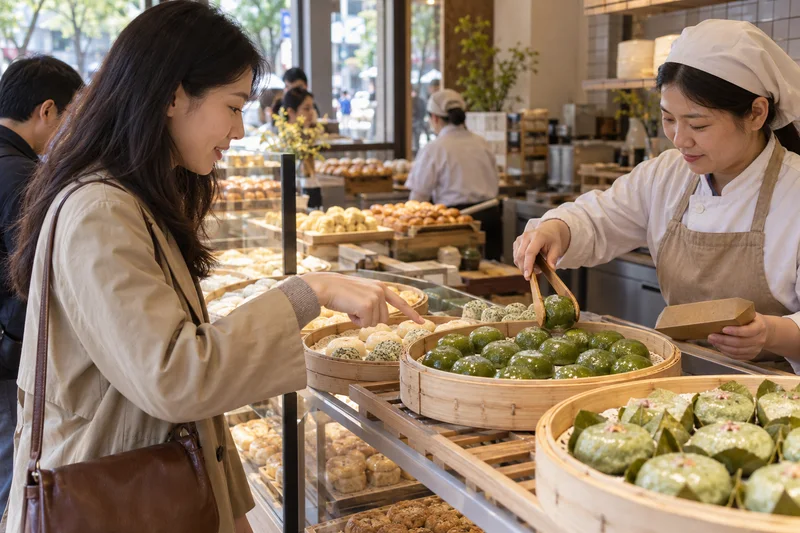
A practical guide to Shanghai qingtuan: when the green rice cakes appear, how red bean and savory fillings differ, what to ask at the counter, and how to eat or reheat them safely.
Spring changes the pastry counter in Shanghai. Among the beige breads, golden cakes, and sesame pastries, small jade-green domes begin to appear. These are qingtuan (青团): soft, chewy rice cakes closely associated with Qingming Festival and the Jiangnan tradition of eating green seasonal foods.
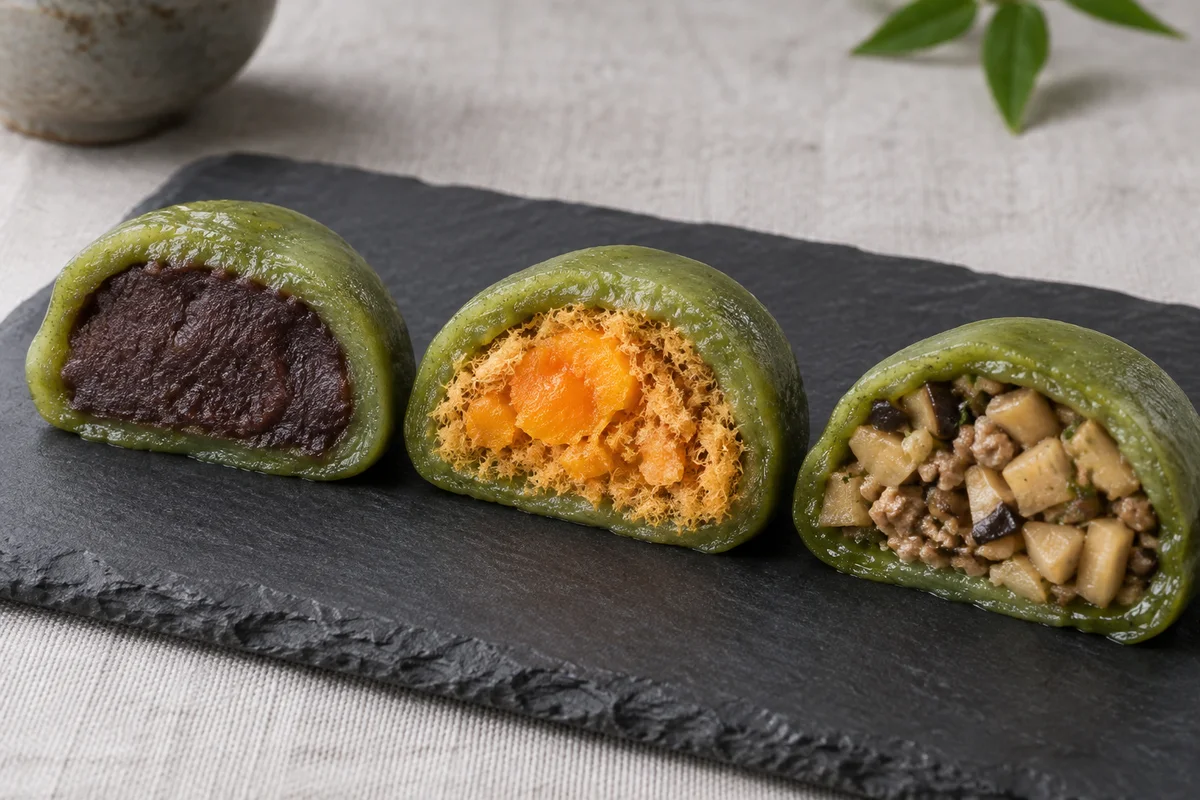
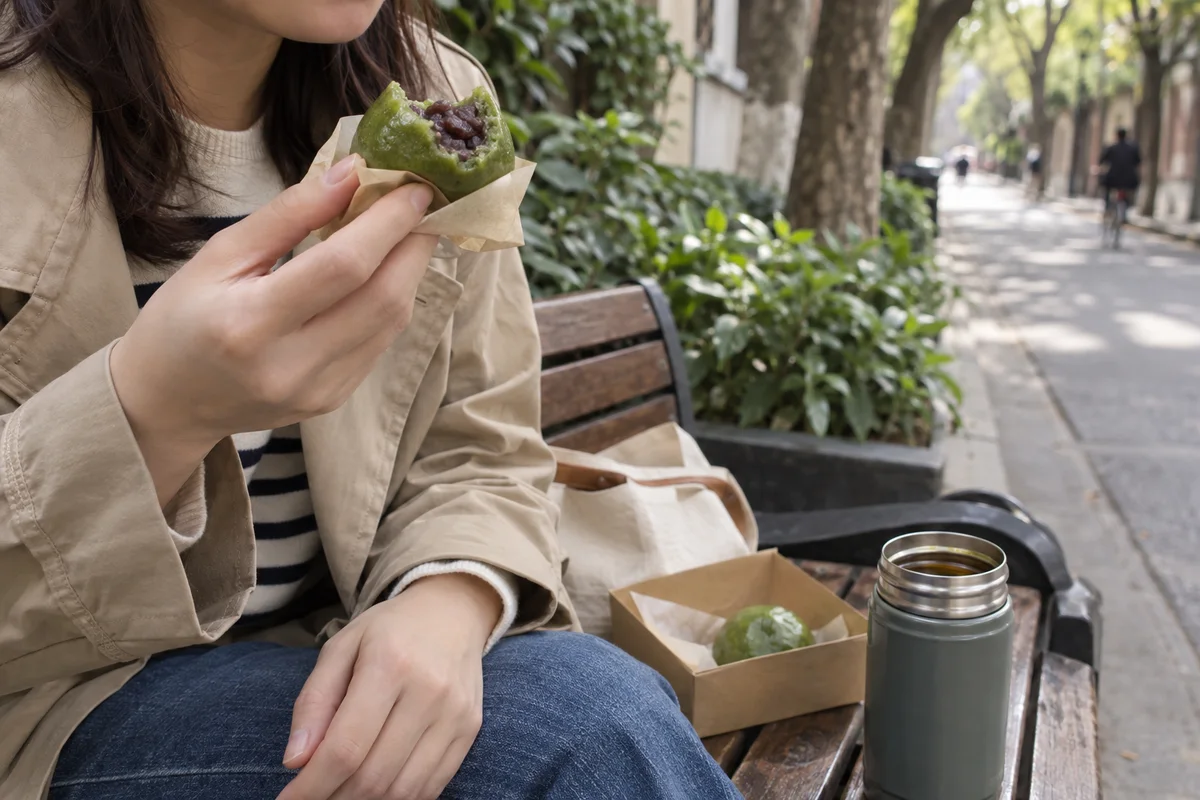
The color tells you what family of snack you are looking at, but not what is inside. One qingtuan may hold smooth red bean paste; another may combine salted egg yolk with pork floss; a savory version can contain bamboo shoots, mushrooms, greens, or meat. The best first question is therefore not “Is this sweet?” but “What filling is this one?”
Qingtuan is most visible in the period leading up to Qingming Festival, which falls in early April. Shanghai's official food guide describes it as a spring ritual that usually appears for only a few weeks. The tradition belongs to the wider Jiangnan region rather than Shanghai alone, but the city's pastry shops and restaurants have developed a particularly broad range of fillings.
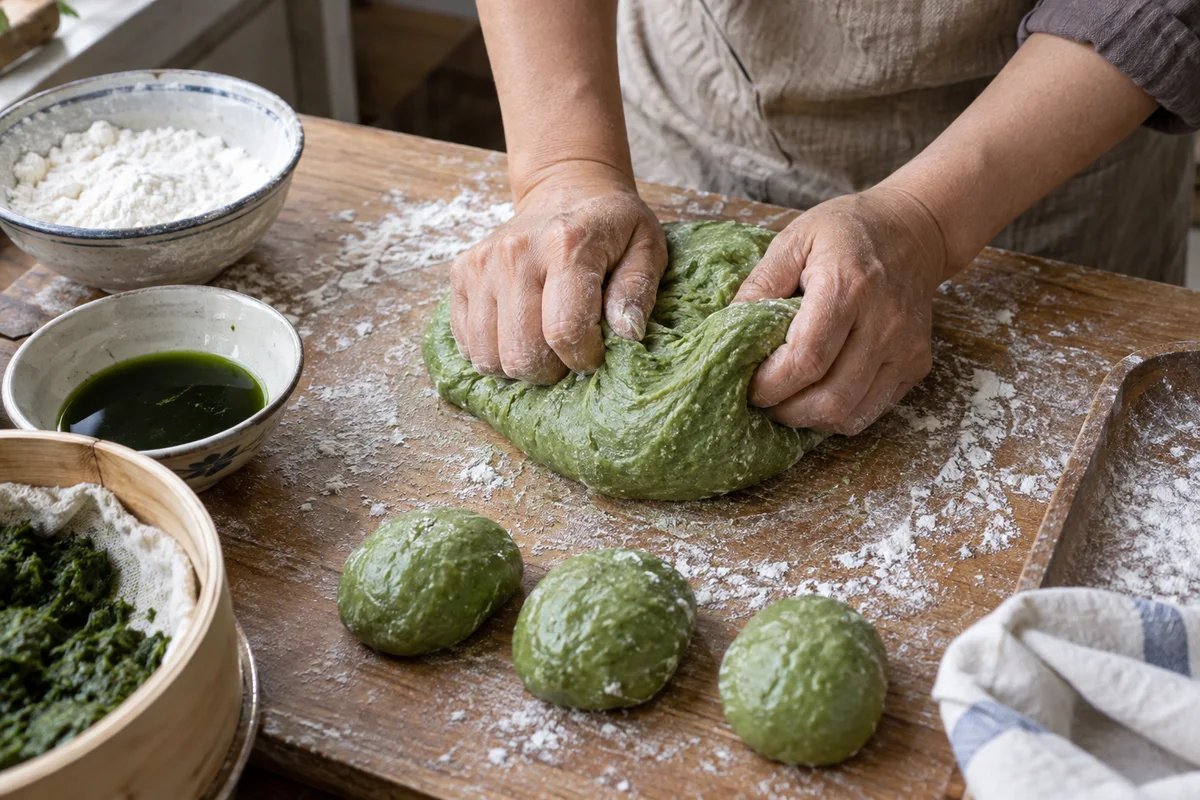
The green skin is made from glutinous rice flour colored and flavored with plant juice, often described in English as mugwort, barley grass, wheatgrass, or other local greens depending on the recipe. Do not use one translation as a universal ingredient list. If the specific plant matters for an allergy or dietary reason, ask the shop about that batch.
Seasonality also means availability moves. A shop address, flavor list, or selling date from a previous year is useful background, not a promise for your visit. If you are traveling outside the spring period, check current stock before crossing the city for one counter.
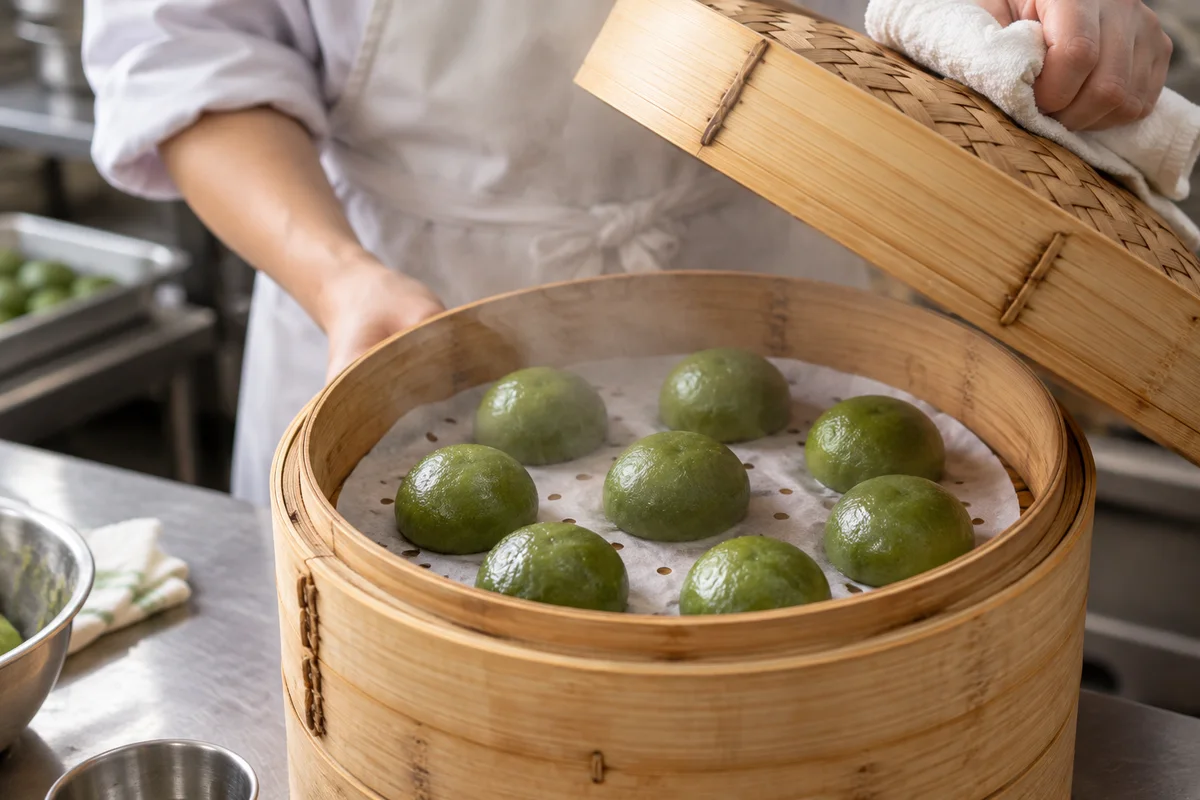
A qingtuan should look like a smooth, low green dome. It is not a steamed wheat bun, and it should not have the pleats of a dumpling. The rice-flour skin is soft, dense, and slightly elastic. A fresh piece yields when pressed gently, but it is not supposed to feel airy like bread.
The closest comparison on this site is structural rather than identical. Osmanthus sticky rice lotus root also uses glutinous rice in a Jiangnan sweet, but the rice fills the channels of a cooked vegetable. Qingtuan turns rice flour into the outer skin around a center. One is sliced and syrupy; the other is handheld and sealed.
Color varies with ingredients and processing. A muted olive-green piece is not automatically stale, just as an intensely bright one is not proof of freshness. Look instead at whether the surface is drying or cracking, whether the shop can explain the filling, and how the product has been stored.
Red bean paste is the classic sweet starting point. It gives a dark, smooth center with a sweetness that contrasts gently with the green rice skin. Ask for 豆沙青团, dousha qingtuan. Some pastes are very fine; others retain a little bean texture, so two shops can produce noticeably different bites under the same name.
Salted egg yolk and pork floss moves the snack into a richer sweet-savory direction. Look for 咸蛋黄肉松. The yolk supplies salinity and a sandy richness, while fine pork floss makes the center lighter and fibrous. It is not vegetarian, and the sweetness of the surrounding skin or paste can vary.
Vegetable, bamboo shoot, mushroom, or meat fillings are a reminder that qingtuan is a format rather than one recipe. Shanghai's official 2026 guide notes fillings inspired by local dishes, including yanduxian. If that name appears, remember that yanduxian traditionally involves fresh and cured pork with bamboo shoots; the green exterior does not make the qingtuan plant-based.
If you buy several flavors, ask the worker to separate or mark them. Once the pieces are in one box, subtle shape differences are unreliable. Cutting every one open defeats the convenience of taking them away and exposes the sticky skin to drying.
Pointing is perfectly workable, but a few short phrases help when several nearly identical green cakes share a tray:
Buy one or two before committing to a gift box. Glutinous rice is filling, and modern varieties can be rich. A mixed box makes sense when you are sharing and already understand the storage instructions; it is less useful when you only want a small snack during a food walk.
A freshly made qingtuan sold for immediate eating can usually be enjoyed as it is. Once chilled, the rice skin often firms. Shanghai's official guide advises reheating refrigerated qingtuan and avoiding excessive heat, which can make the skin collapse or split. The exact method still depends on the packaging and filling.
Read the label or ask the counter before heating. Remove plastic or any wrapping that is not microwave-safe. If steaming, keep condensation from soaking the surface. If microwaving is permitted, use the shop's instructions rather than guessing a long high-power time. After heating, pause before biting: dense bean paste or salted egg filling can be hotter than the outside suggests.
Do not leave a perishable savory filling in a warm bag for a long sightseeing day. Ask how quickly it should be eaten and whether it needs refrigeration. These practical questions matter more than trying to preserve a perfectly soft texture until the next morning.
Qingtuan is compact but sticky. Take small bites and chew fully rather than treating it like a light sponge cake. Children, older adults, and anyone who has difficulty swallowing need particular care with glutinous rice foods. A cup of tea can refresh the palate, but drinking does not replace slow chewing.
Red bean qingtuan works well with unsweetened tea because the drink does not add another layer of sugar. A savory version can be its own small breakfast or afternoon snack. There is no need to pair it with several other dense starches at once.
If you want a crisp counterpoint, try a separate bakery stop for xiekehuang. Its flaky sesame crust is almost the opposite of qingtuan's soft, elastic skin. Keep the tastings separate enough to notice that contrast instead of compressing both into one hurried box.
“Green rice ball” is a useful translation, but qingtuan is not the same as Japanese mochi, a green steamed bun, or a soup dumpling tinted with vegetable juice. The Qingming association, smooth glutinous skin, and filled low-dome form belong together. A dusting of loose starch is also less typical than the smooth, sometimes lightly oiled surface found at Shanghai counters.
The comparison with Shanghai fresh meat mooncakes helps at a mixed pastry shop. Both can hide savory pork, yet the mooncake has a dry, flaky baked shell and is best known for a hot juicy center. Qingtuan is steamed, soft, and chewy. The correct choice depends on texture as much as filling.
Glutinous rice does not contain gluten despite its English name, but that fact alone does not establish that a finished qingtuan is suitable for someone with celiac disease or an allergy. Fillings, flavorings, shared equipment, and packaged ingredients all need separate confirmation. Likewise, a vegetable filling does not guarantee vegetarian preparation.
Ask specifically about egg yolk, pork floss, meat, nuts, sesame, dairy, and the plant juice if any is a concern. For a gift box, keep the ingredient label with the cakes so the recipient can make the same checks. A photograph of a green exterior cannot answer any of these questions.
Qingtuan is rewarding because a familiar rice ingredient behaves in an unexpectedly delicate way: herbal green skin, a sticky chew, and a center that can range from quiet red bean to deeply savory local flavors. Shanghai's official qingtuan overview explains the spring tradition and recent filling ideas, but flavor ranges and shop details change from season to season.
Plan lightly. Look during the weeks around Qingming, ask what filling is actually available, buy a small comparison, and follow the storage advice you receive. That approach leaves room for the thing that makes qingtuan interesting in Shanghai: every spring, the same green shape can hold a different idea.
Shanghai hairy crab is a seasonal crab specialty served with ginger vinegar and small tools, with autumn matu…
Shanghai crab roe noodles are rich seasonal noodles topped with crab roe and crab meat, best mixed carefully…
Shanghai wontons are soft folded dumplings served in clear broth, from tiny breakfast wontons to larger pork…
Comments (0)