Shanghai Qingtuan: Green Rice Ball Fillings and Qingming Season Guide
A practical guide to Shanghai qingtuan: when the green rice cakes appear, how red bean and savory f…
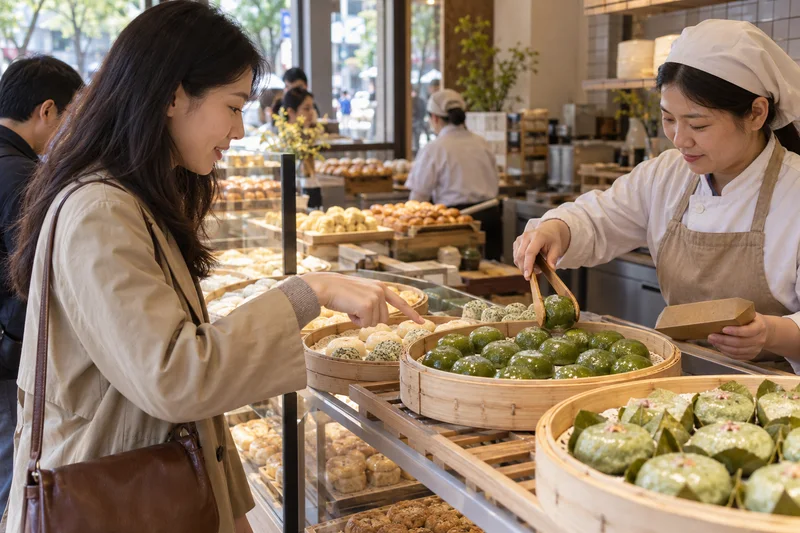
Soft, jade-green glutinous rice cakes with sweet or savory centers. Qingtuan is a seasonal Jiangnan snack closely associated with Qingming and spring in Shanghai.
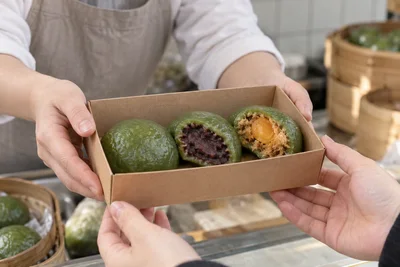
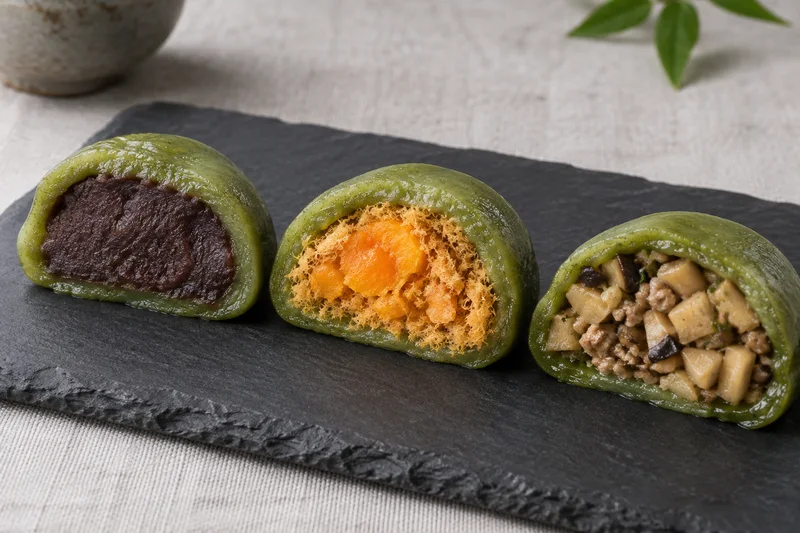
Qingtuan is one of the clearest signs of spring at a Shanghai pastry counter. The small green rice cakes have a soft, sticky skin made with glutinous rice flour and green plant juice. Traditional red bean paste remains an easy starting point, while modern counters may offer salted egg yolk and pork floss, spring bamboo shoots, mushrooms, meat, or other seasonal fillings.
Look for 青团, qingtuan, or “green rice ball.” Its smooth low dome has no pleated top and no bread-like crumb. The outer layer is chewy and gently herbal rather than fluffy. Qingtuan is particularly associated with the weeks around Qingming Festival in early April, although actual selling dates and available flavors depend on the shop and year.
The color can range from muted olive to jade depending on the plant juice and preparation. A brighter green is not automatically more traditional. More useful checks are a supple skin, a filling that suits your taste, and clear storage instructions.
Red bean paste gives a smooth, mildly sweet center and is the most straightforward introduction. Salted egg yolk with pork floss is richer and savory-sweet. Fillings based on spring bamboo shoots, mushrooms, pork, shepherd's purse, or local dishes can be distinctly savory. Ask what is inside every variety rather than assuming green skin means vegetarian or sweet.
One or two pieces are enough for a first comparison because glutinous rice is dense and sticky. If several flavors look identical, ask for separate compartments or have the staff identify them before leaving the counter.
For two people, one classic sweet qingtuan and one clearly savory version make a useful comparison without turning the stop into a heavy meal. Taste the red bean piece first if the savory filling is strongly salted. Plain tea gives you a pause between them, while another sweet drink can hide the mild plant aroma in the skin.
Qingtuan also belongs to a different moment from baked Shanghai pastries. A fresh meat mooncake is crisp, flaky, and best known for its hot pork center; qingtuan is steamed, soft, and sticky. Ordering one of each only makes sense when you have time to notice the contrast and a plan for anything you do not finish.
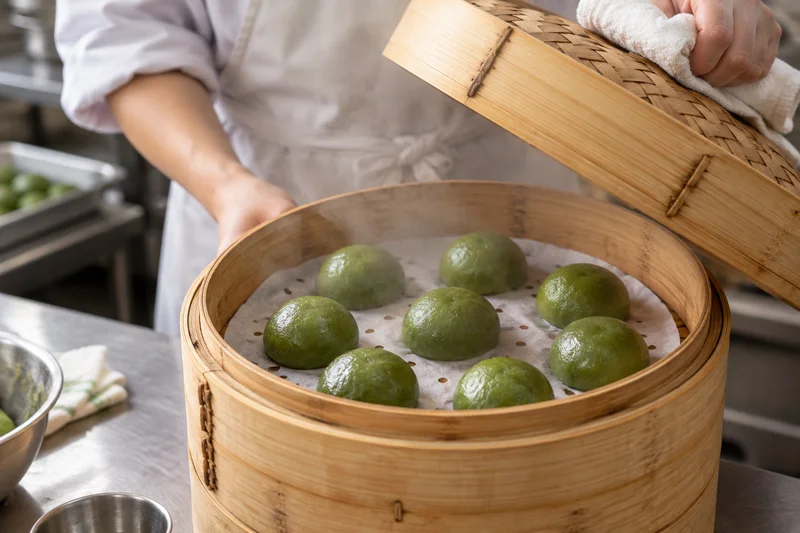
A freshly made, ready-to-eat qingtuan can be enjoyed as sold. A refrigerated or packaged one may need reheating, but follow the shop's label rather than applying one universal time. Remove any unsuitable wrapping first, avoid overheating, and let the center cool before taking a large bite. The skin is sticky, so small bites and slow chewing make sense.
For the seasonal background, filling vocabulary, ordering phrases and practical storage questions, continue with our complete Shanghai qingtuan guide. If qingtuan is unavailable outside spring, the osmanthus sticky rice lotus root topic explores a different Jiangnan sweet built around rice and a vegetable.
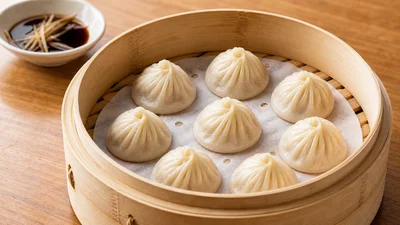
Shanghai xiaolongbao are delicate steamed soup dumplings with thin wrappers, hot broth, pork filling, and a b…
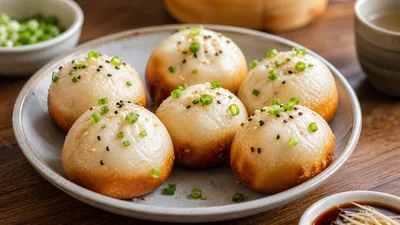
Shanghai shengjian mantou are pan-fried soup buns with soft tops, crisp golden bottoms, sesame, scallions, an…
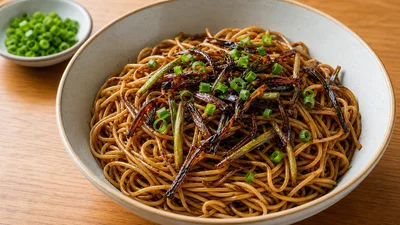
Shanghai scallion oil noodles are thin wheat noodles mixed while hot with fried scallions and soy-based sauce…