Shanghai Eel Noodles: Shredded Eel, Garlic, Pepper, and How to Order
A practical English guide to Shanghai eel noodles, covering shredded eel, dry and soup styles, noodle texture, garlic, pepper, ordering, and natural meal pairings.
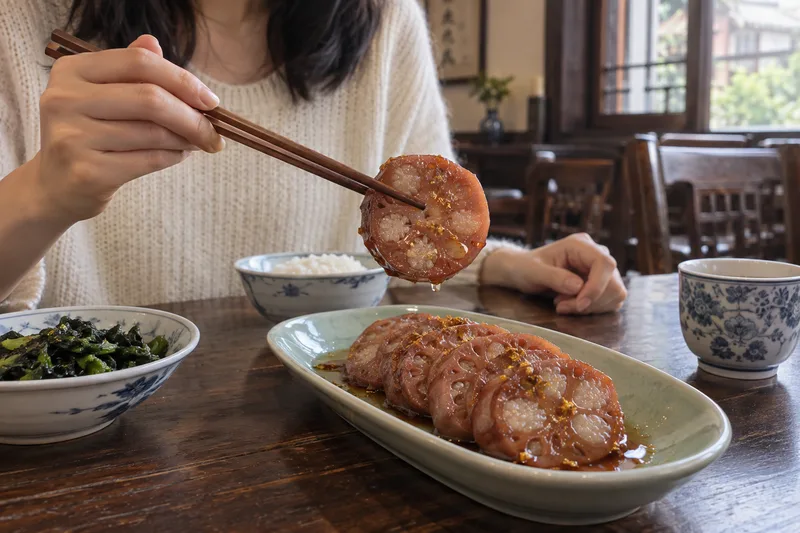
Why a sweet lotus-root dish appears among cold starters, what the rice-filled slices taste like, and how to order guihua nuomi ou without mistaking it for crunchy lotus salad.
A plate of sweet lotus root can make a Shanghai menu momentarily confusing. It looks like a vegetable side, tastes like something from a dessert menu, and may arrive before the hot dishes. Look closely at a slice: the small pale centers are sticky rice packed inside the root, not nuts, seeds or holes left empty. A glossy osmanthus syrup ties everything together.
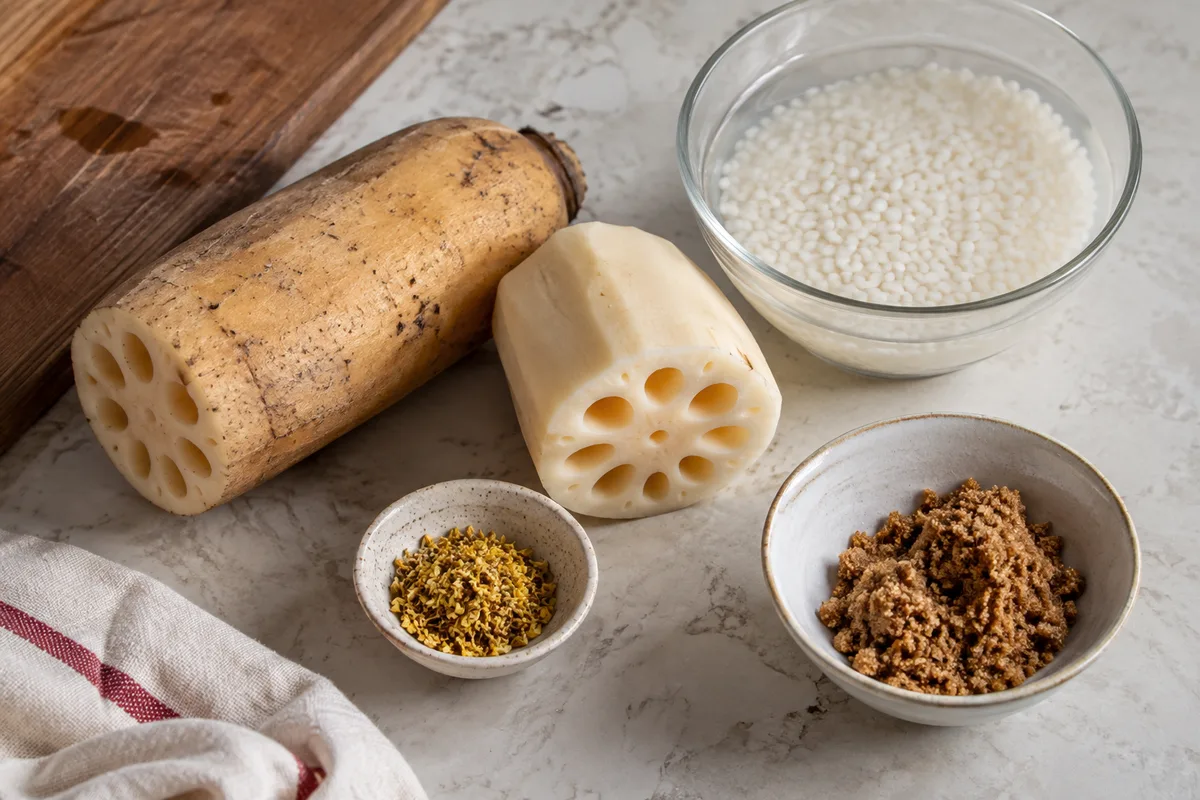
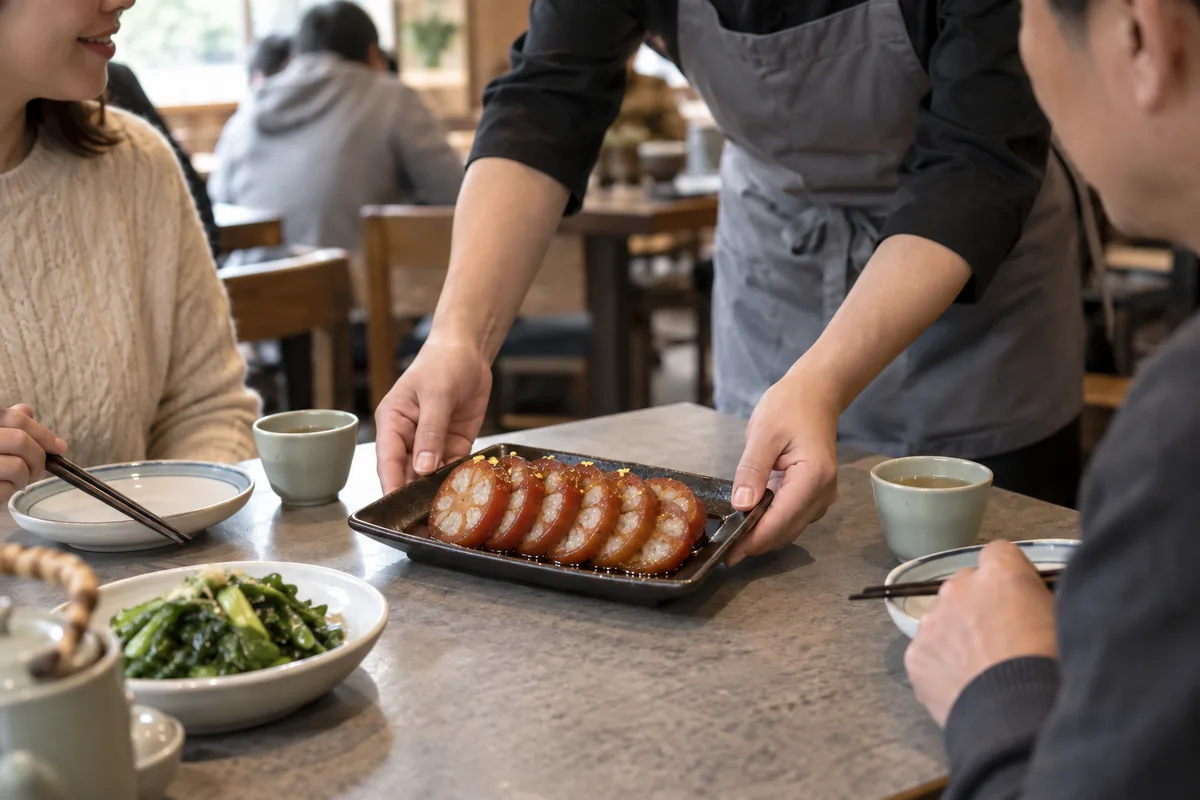
The name to remember is guihua nuomi ou (桂花糯米藕). It is a Jiangnan dish, not an invention exclusive to Shanghai. For a visitor who has already tried soup dumplings and noodles, it opens up a quite different part of the table: floral, sweet and meant to be eaten a few slices at a time.
English translations are inconsistent, so the filling is the useful clue. “Lotus root with glutinous rice,” “sweet stuffed lotus root” and “osmanthus sticky rice lotus root” all point toward the dish. A short entry such as “honey lotus root” needs a follow-up question, because it does not tell you whether rice is inside or what sweetener the kitchen uses.
If you can only find 藕片, meaning lotus-root slices, do not assume that is the same dish. Ask to see a photograph or point to the full Chinese name above. Savory lotus-root dishes may be crunchy, spicy or vinegary, none of which describes the sweet stuffed plate you are looking for.
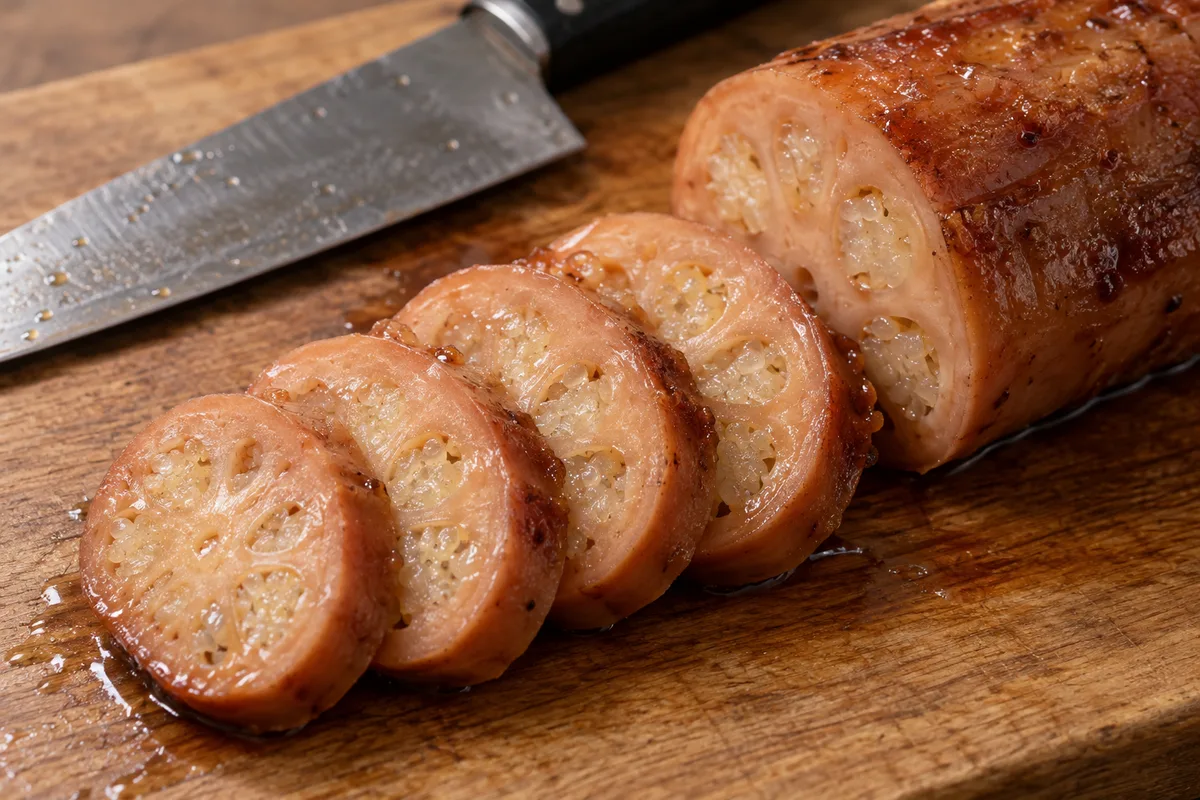
Someone familiar with crisp lotus root in a stir-fry may expect a snap. This preparation moves in the opposite direction. The root is cooked until tender while the rice inside becomes sticky and soft. Each slice holds its shape, but the bite is more yielding than a raw-looking lotus salad. The filling gives small pockets of chew rather than a single dense block.
That makes it worth comparing with a Shanghai breakfast rice roll only in a very specific way: both introduce sticky rice, but their structure and place in a meal are different. Cifan tuan wraps rice around a substantial filling and can be breakfast on its own. In sweet lotus root, the rice sits inside the vegetable and the portion is a few slices, not a handheld bundle.
Take a first bite with some root and some rice together. Then notice the syrup. It should be a floral sweet finish, not a reason to expect the plate to taste like ordinary plain rice. Unsweetened tea is a useful companion if you prefer a break between sweet bites; there is no need to order an additional sugary drink.
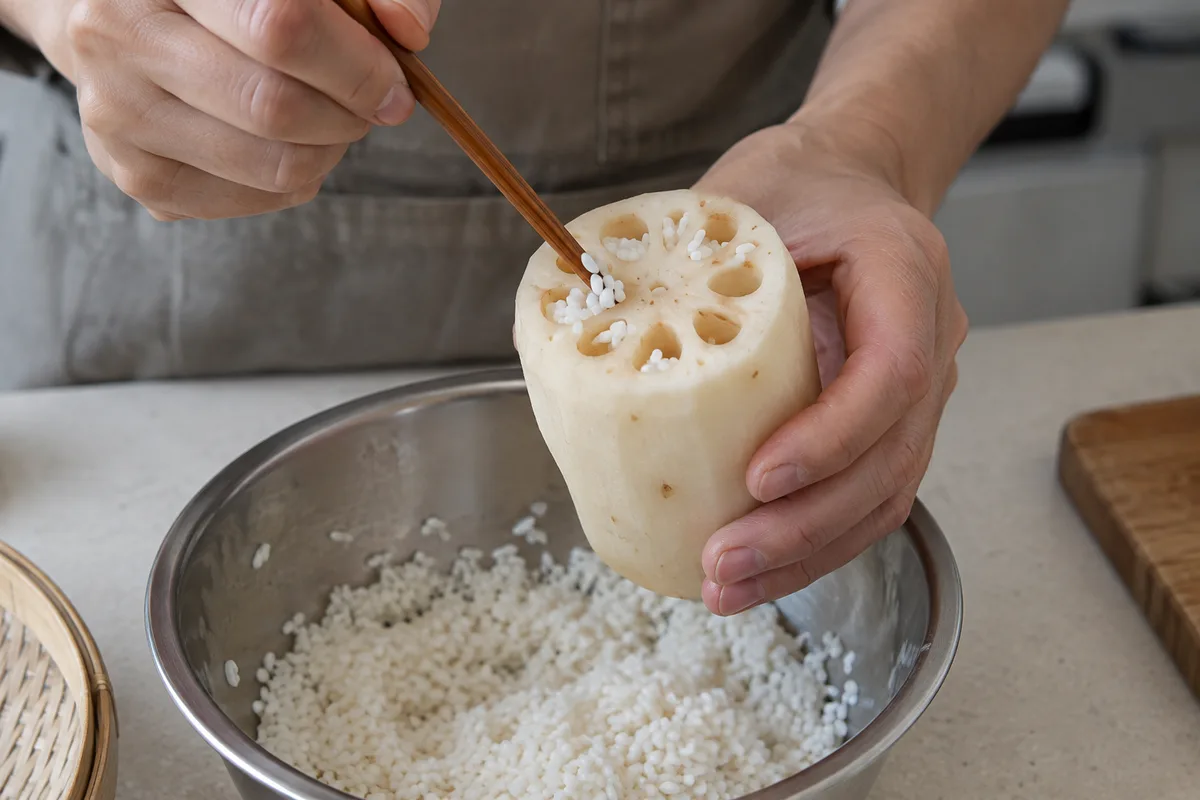
The distinctive pattern comes from the root itself. Its channels run lengthwise, so filling a whole segment and later cutting across it reveals rice in each slice. The broad preparation sequence is stuffing, cooking, slicing and dressing, not shaping rice into decorative dots on an already sliced vegetable.
Shanghai's official seasonal food guide describes the stuffed root cooking slowly with sweeteners and osmanthus until tender. Individual recipes differ in when they add the flower syrup and which sugars they use. Those differences help explain why one plate is pale amber and another is deeper pink-brown. Judge the dish by the tender root and cooked filling, not by whether it matches one photograph's exact color.
This is an ordering guide rather than a quick recipe: a restaurant version cannot be reproduced just by spooning syrup over crunchy lotus slices. The time spent softening the stuffed root is essential to the eating experience.
Sweetness does not always determine serving order on a Chinese restaurant menu. This dish can appear among cold appetizers, even though it feels dessert-like to many overseas diners. If it arrives early, nothing has gone wrong with your order. You can taste it alongside the first plates and leave the remaining slices to share.
For a meal where you want a clear savory beginning, ask for the lotus root later. “Could this come at the end?” is more helpful than insisting that it must be a dessert. Likewise, ask about temperature rather than assuming it will be hot: recipes and restaurants may serve the dish warm or cold.
Opening instead with sliced cold chicken gives the table a gentle savory start. Bring the lotus root in as a separate sweet note, not as a sauce or accompaniment to put on the chicken. Each dish is easier to appreciate when it keeps its own place.
For two people trying the dish for the first time, one small shared plate is a sensible starting point. Actual portion sizes vary, so ask how many slices the order contains rather than assuming a standard weight. It is easy to underestimate how filling rice inside a vegetable can be when the plate looks modest.
If the meal already includes rich Shanghai braised pork belly, let vegetables or a clear soup provide contrast and keep the lotus root portion small. Both dishes can bring sweetness, and adding several more sweet sauces would make the order feel repetitive. This is a practical way to balance your table, not a rule about which traditional dishes are allowed together.
For an afternoon food walk, it also helps to separate sit-down food from takeaway snacks. A plate of syrupy slices needs utensils and a little time. If the next stop is a bakery for butterfly crackers, sharing rather than finishing a whole lotus-root plate alone leaves room for the contrasting flaky pastry.
First check the filling, then the sweetness and temperature. You can ask for less finishing syrup, but that will not remove sugar already used during cooking. Similarly, asking for it warm does not guarantee the restaurant can change its prepared serving style. A quick question before ordering is more useful than trying to alter the dish after it arrives.
The basic idea centers on lotus root, rice, sugar and osmanthus, but the name alone is not a dietary guarantee. Ask what is in the syrup and whether there are added garnishes. If avoiding honey is important, say so explicitly. For any allergy or strict dietary requirement, have the kitchen confirm ingredients and preparation; a menu translation cannot establish that for you.
Osmanthus is strongly associated with autumn in Jiangnan, and Shanghai's seasonal guide includes this dish in its collection of flower-scented foods. Preserved syrup also lets kitchens use the flavor beyond the flowering season. That does not mean every restaurant serves stuffed lotus root year-round, or that fresh blossoms are being used on the day you visit.
There is no need to chase a particular address to understand the dish. When it appears on a menu, verify the rice filling, decide when you would like it served, and share a small plate. The memorable part is the contrast inside each slice: a tender vegetable around sticky rice, with a floral sweetness quite unlike the city's better-known savory snacks.
Shanghai hairy crab is a seasonal crab specialty served with ginger vinegar and small tools, with autumn matu…
Shanghai crab roe noodles are rich seasonal noodles topped with crab roe and crab meat, best mixed carefully…
Shanghai wontons are soft folded dumplings served in clear broth, from tiny breakfast wontons to larger pork…
Comments (0)