Shengjianbao in Shanghai: Crispy Pan-Fried Soup Buns Guide
A detailed guide to Shanghai shengjian mantou, the pan-fried buns with crisp bottoms, sesame, scallions, juicy filling, and hot soup inside.
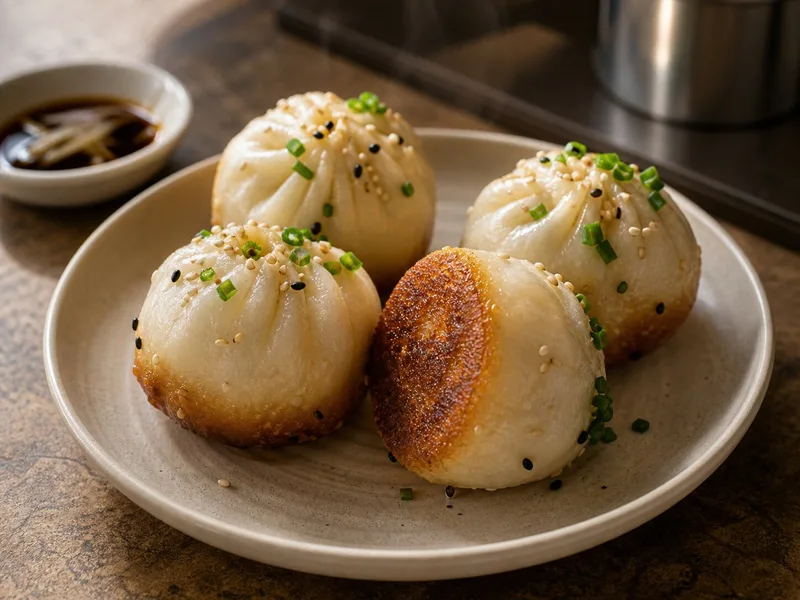
A focused English guide to Shanghai shengjianbao, covering crisp bottoms, hot soup, hunshui and qingshui styles, one-liang four-piece orders, vinegar, and safe eating tips.
Shanghai shengjianbao are easy to recognize from across a breakfast counter: round buns in a hot pan, sesame and scallions on top, and a browned base that should crack slightly when you bite. What makes them worth learning is not only the look. A good shengjianbao has contrast: crisp bottom, soft dough, hot filling, and juice that must be handled carefully.
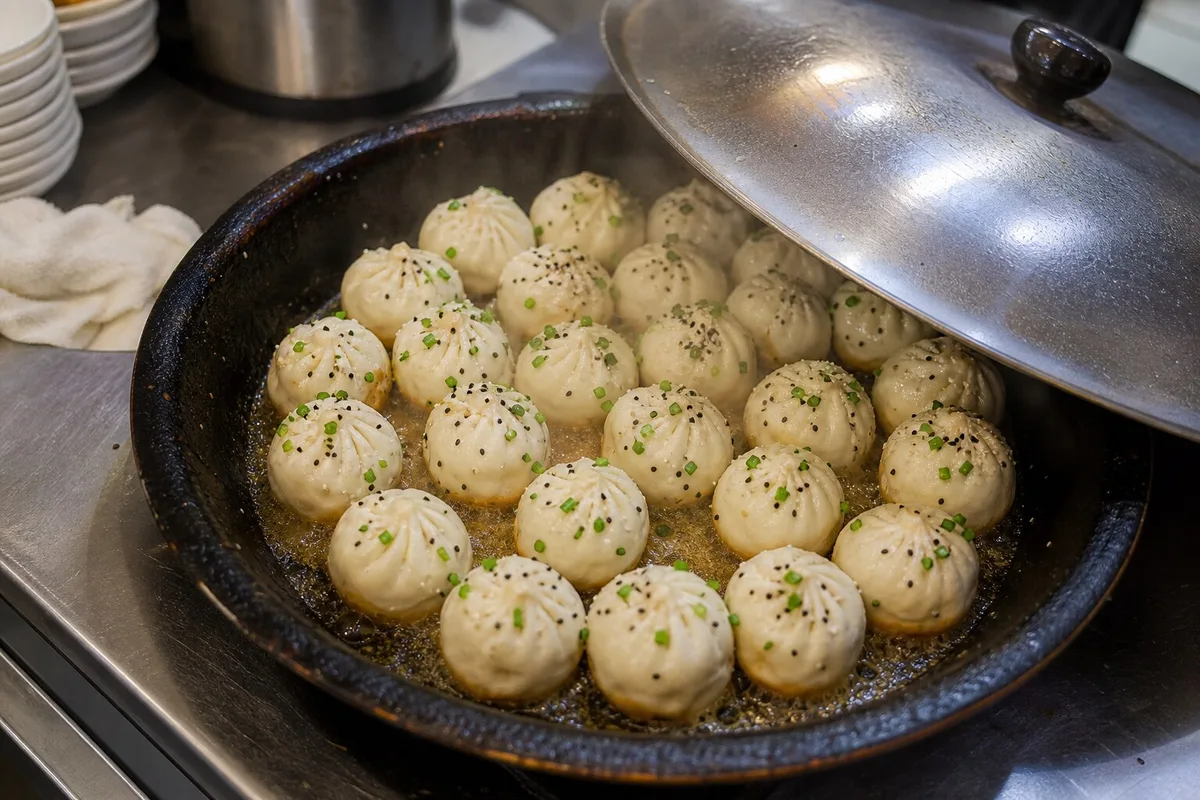
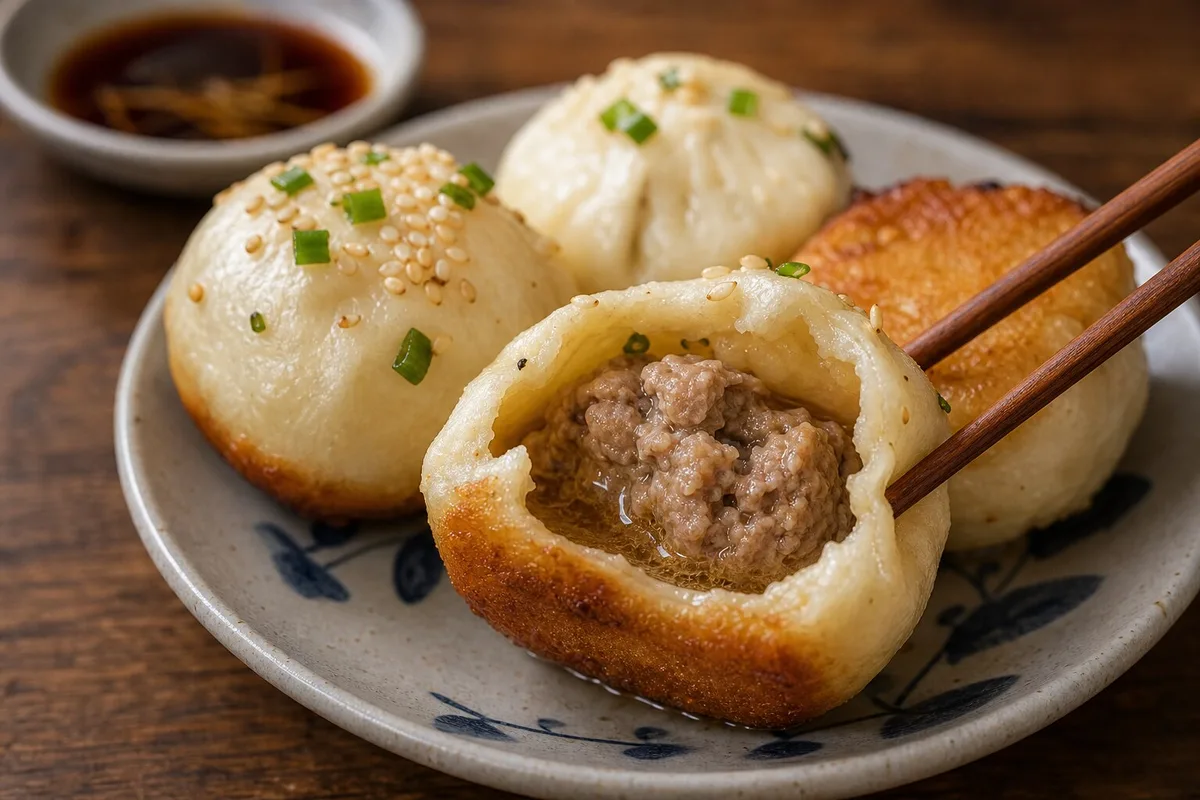
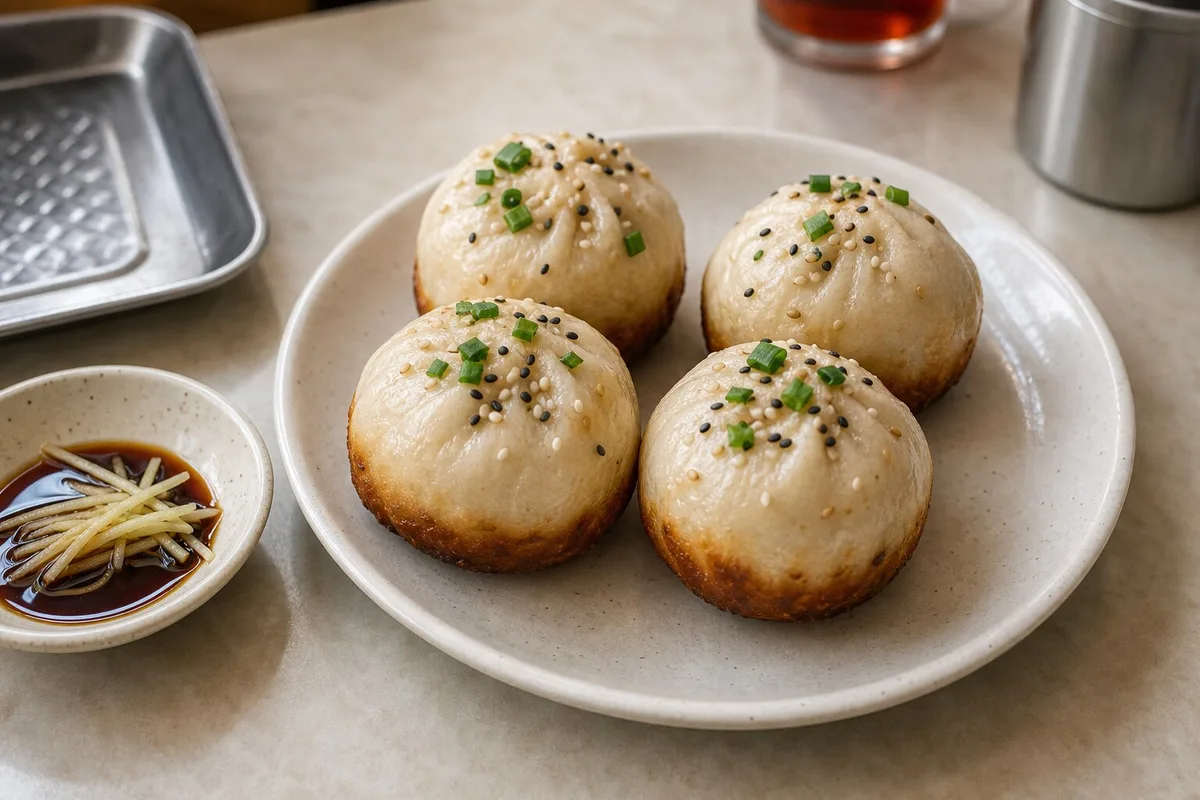
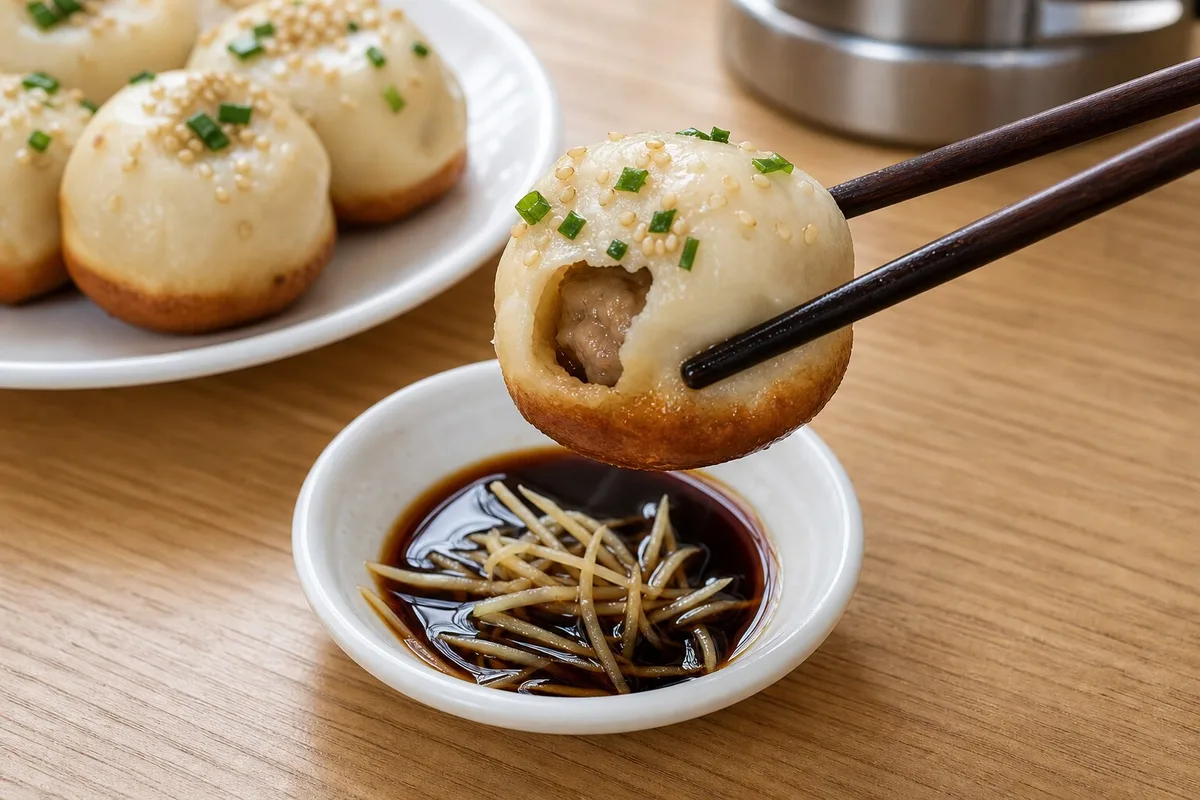
This guide goes deeper than the basic Shengjian Mantou introduction. It focuses on ordering, style differences, and the eating method that helps you enjoy the broth without burning your mouth or losing the best texture.
In many Shanghai shops, shengjianbao are ordered by the liang. Outside this food context, liang is a weight measure, but for shengjian it commonly means four buns. That four-piece order is practical: enough to taste the pan, the dough, and the filling without turning breakfast into a heavy meal.
If you are trying several foods in one morning, one liang is usually the right starting point. It leaves room for soy milk, wontons, or another breakfast item without forcing too many fried foods into the same stop.
Shengjianbao are often discussed through two broad styles. Hunshui versions are soupier, usually relying on aspic that melts into hot broth inside the bun. They are dramatic and juicy, but they require a careful first bite.
Qingshui versions are usually cleaner and more bread-like, with less added aspic and a stronger focus on fermented dough and a cracker-like fried base. Neither style is automatically better. Hunshui is about juice; qingshui is about dough, aroma, and crispness.
The bottom should be deeply browned but not burnt. It should feel crisp enough to create contrast, while the upper dough stays soft. If the whole bun feels hard, the pan work has gone too far. If the bottom is pale, the bun loses the reason it is pan-fried.
This is the easiest way to separate shengjianbao from xiaolongbao. Xiaolongbao are steamed and delicate. Shengjianbao are sturdier, louder, and built around the meeting point between frying and steaming.
Do not bite straight into the center of a hot bun. Lift one bun carefully, make a small opening, and let the steam escape before drinking or tasting the broth. Once the filling cools slightly, enlarge the opening and eat the pork and dough together.
Vinegar works best near the end, especially on the crisp bottom. If you dip too early, the first taste can hide the meat aroma and soften the base too quickly. A small dish of vinegar and ginger is useful, but it should support the bun rather than drown it.
The classic companion is a light soup, especially when the buns are rich. For a breakfast route, shengjianbao also work beside soy milk and youtiao, but keep the order modest so the meal does not become too oily.
If you want a broader morning plan, spread dishes across several days: shengjianbao one morning, cifan tuan when you need something portable, and Shanghai wontons when you want a softer bowl.
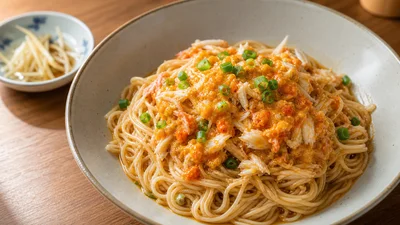
Shanghai crab roe noodles are rich seasonal noodles topped with crab roe and crab meat, usually ordered for c…
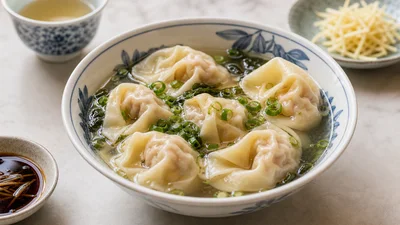
Shanghai wonton soup with soft wrappers, pork and vegetable filling, clear broth, egg strips, seaweed, scalli…
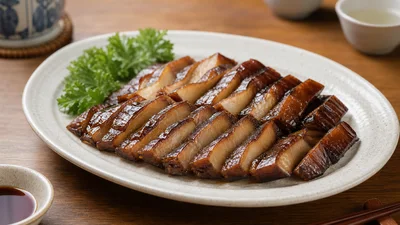
Shanghai smoked fish, or xun yu, is usually fried fish slices soaked in a dark sweet-savory sauce and served…
Comments (0)