Shanghai Cold Noodles: Summer Liang Mian and When to Order It
A practical English overview of Shanghai cold noodles, covering what liang mian is, why it works in summer, when to order it, and how it fits beside other local noodles.
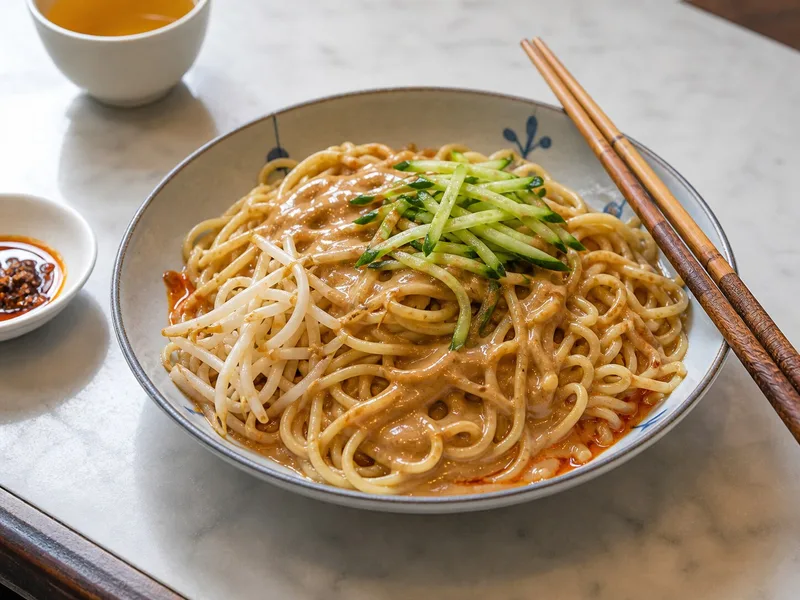
A focused English guide to Shanghai cold noodles sauce and toppings, covering sesame-peanut balance, vinegar, cucumber, bean sprouts, chili oil, and mixing texture.
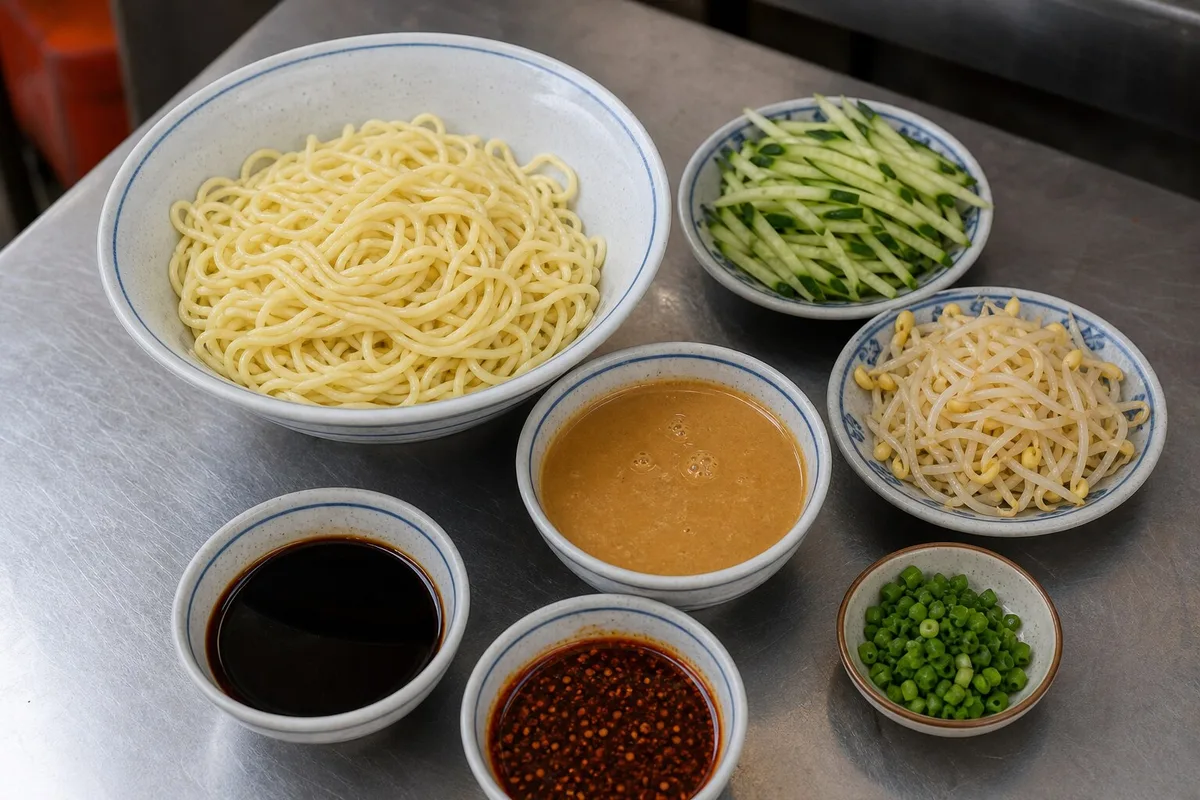
Shanghai cold noodles look simple, but the flavor is built in layers. Sesame-peanut sauce gives body, vinegar keeps the bowl awake, cucumber and bean sprouts add crunch, and careful mixing keeps the noodles glossy instead of sticky.
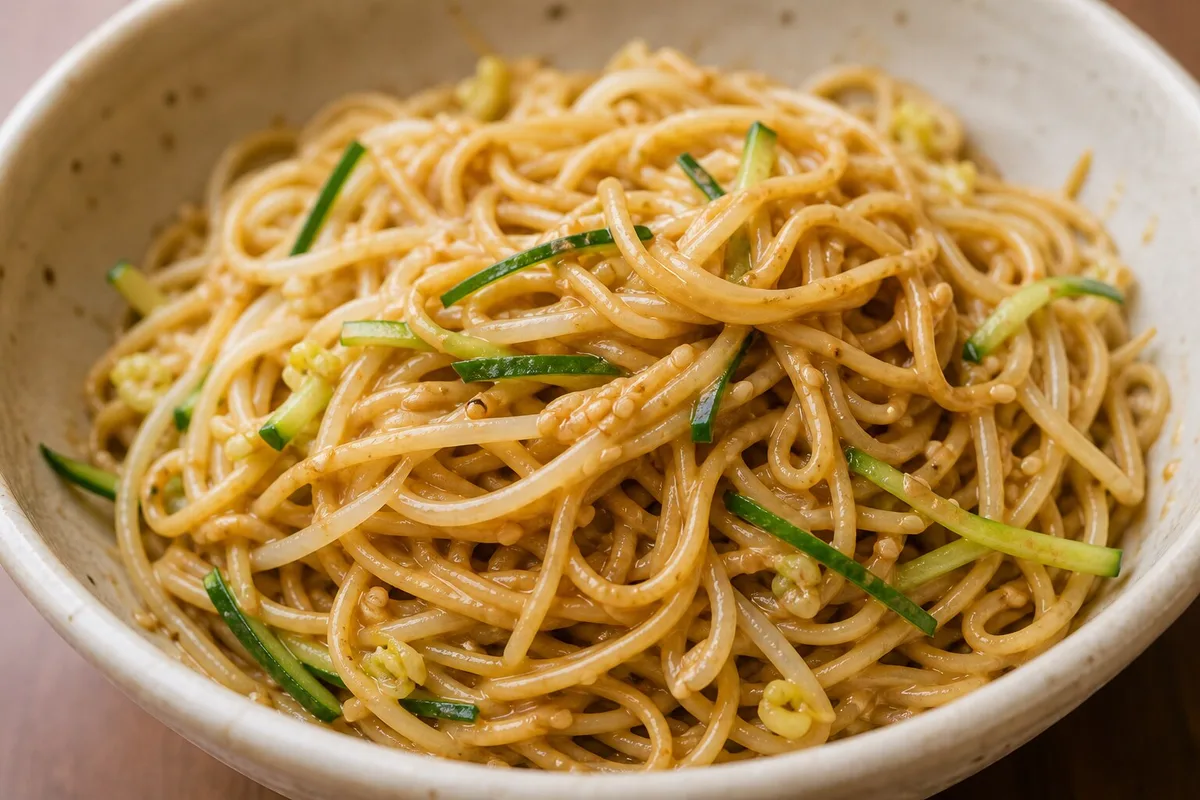
This guide is the detail page for readers who already know what liang mian is. For the broader summer overview, start with the main Shanghai cold noodles guide. Here, the focus stays on sauce, toppings, texture, and how a bowl gets its flavor.
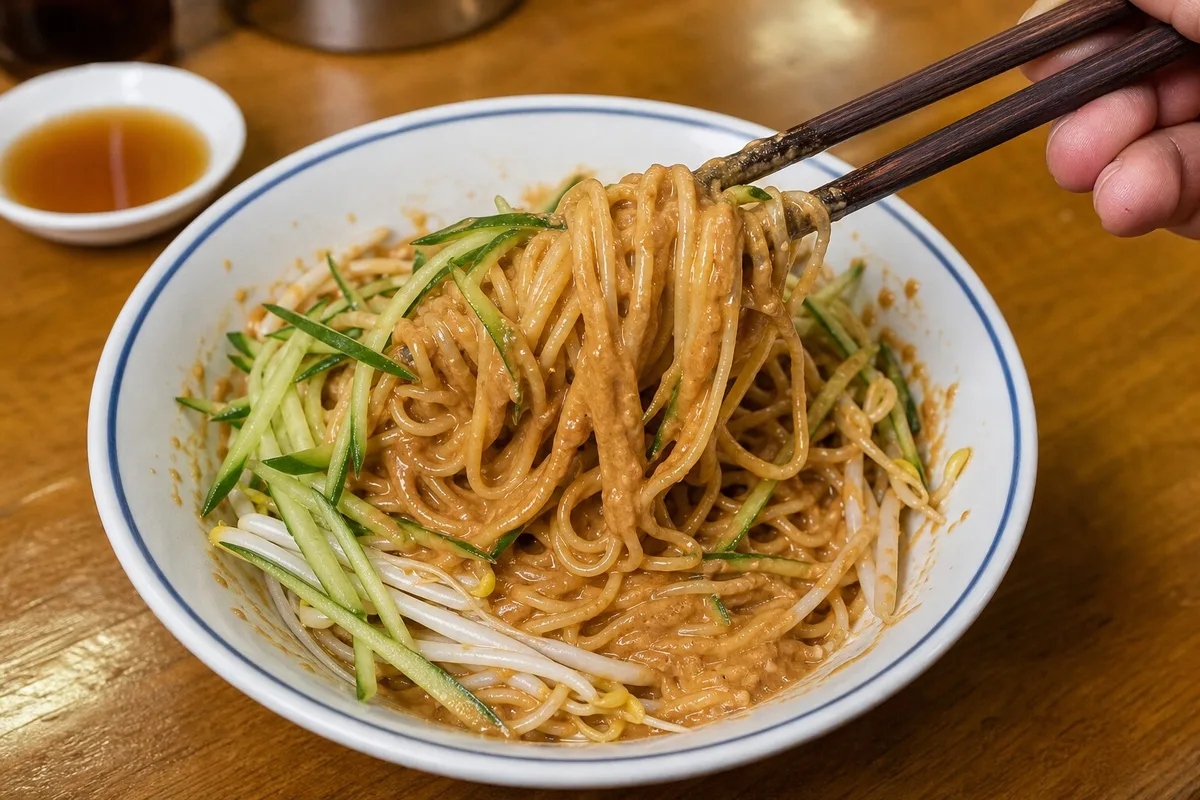
The core sauce usually leans on sesame paste, peanut flavor, soy seasoning, and a little sweetness or salt depending on the shop. It should be rich enough to cling to the noodles but not so thick that every bite feels dry. A good bowl can be mixed evenly with chopsticks, leaving the noodles glossy rather than sticky.
Vinegar is the important counterweight. Without it, the sauce can feel flat and heavy. With too much of it, the nutty flavor disappears. The best version sits in the middle: nutty first, lightly tangy second, and still clean enough for a hot day.
Cucumber strips are not decoration. They bring moisture, crunch, and a cool contrast to the sauce. Bean sprouts add a different kind of snap and help keep the bowl from feeling like a single soft texture. When both are fresh, the noodles feel lighter.
If the vegetables look tired or watery, the bowl may taste dull even if the sauce is good. This is one reason Shanghai cold noodles are better eaten soon after assembly instead of carried around for too long.
Mix the noodles from the bottom up, pulling sauce through the strands instead of pressing everything into a paste. If chili oil is available, add a little first rather than covering the whole bowl. Chili should sharpen the sauce, not hide the sesame-peanut base.
If you are eating with someone who is also trying scallion oil noodles, compare the two directly. Scallion oil noodles are about fragrance and soy warmth; cold noodles are about sauce balance and chilled texture. The comparison helps explain why Shanghai noodles can be simple without being plain.
Cucumber makes the first bite feel cooler. Bean sprouts keep the texture from becoming too soft. Chili oil adds aroma and heat, but it should sharpen the sauce rather than turn the whole bowl into a spicy noodle dish. Vinegar is the reset button when the sesame-peanut base starts to feel heavy.
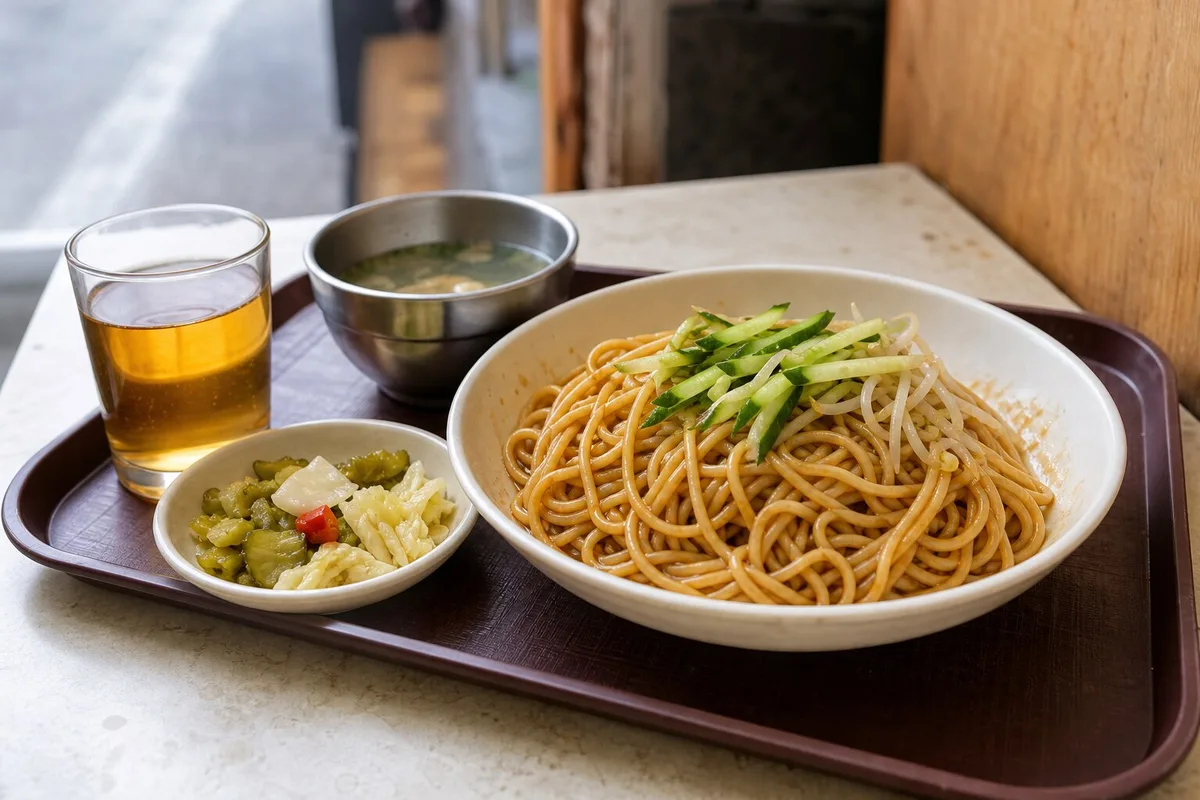
Protein toppings such as shredded chicken can make the bowl more filling, but they are not the point of this page. If you want a full meal, add one supporting dish, not another heavy noodle. A small plate of Shanghai smoked fish or a light bowl of Shanghai wontons creates more contrast.
A good bowl should show separate noodle strands, sauce that can be mixed through the noodles, fresh cucumber or sprouts, and enough acidity to keep the flavor awake. It should taste cool and savory, not cold and flat.
If you are new to the dish, start with the broader Shanghai cold noodles topic, then use this sauce guide when you are comparing shops or deciding whether a bowl is worth ordering again.
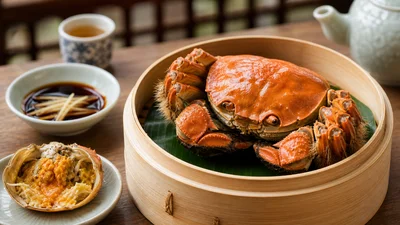
Shanghai hairy crab season includes autumn mature crabs and early-summer Liuyuehuang young crabs with softer…
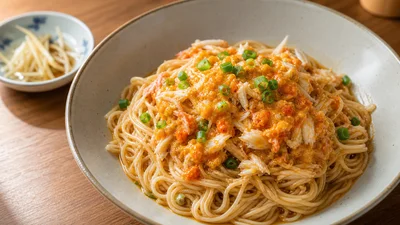
Shanghai crab roe noodles are rich seasonal noodles topped with crab roe and crab meat, usually ordered for c…
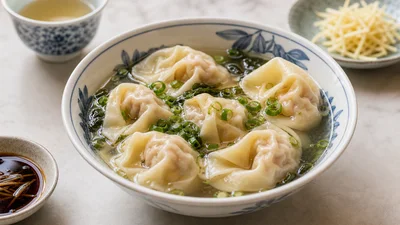
Shanghai wonton soup with soft wrappers, pork and vegetable filling, clear broth, egg strips, seaweed, scalli…
Comments (0)