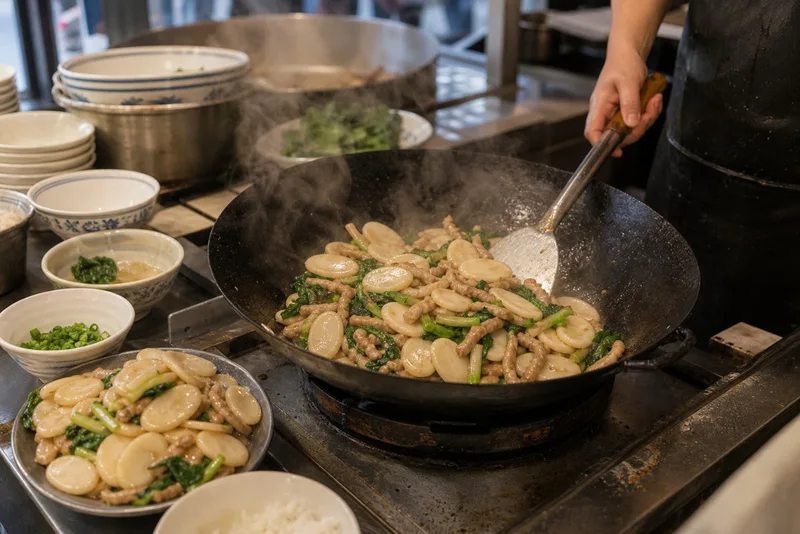
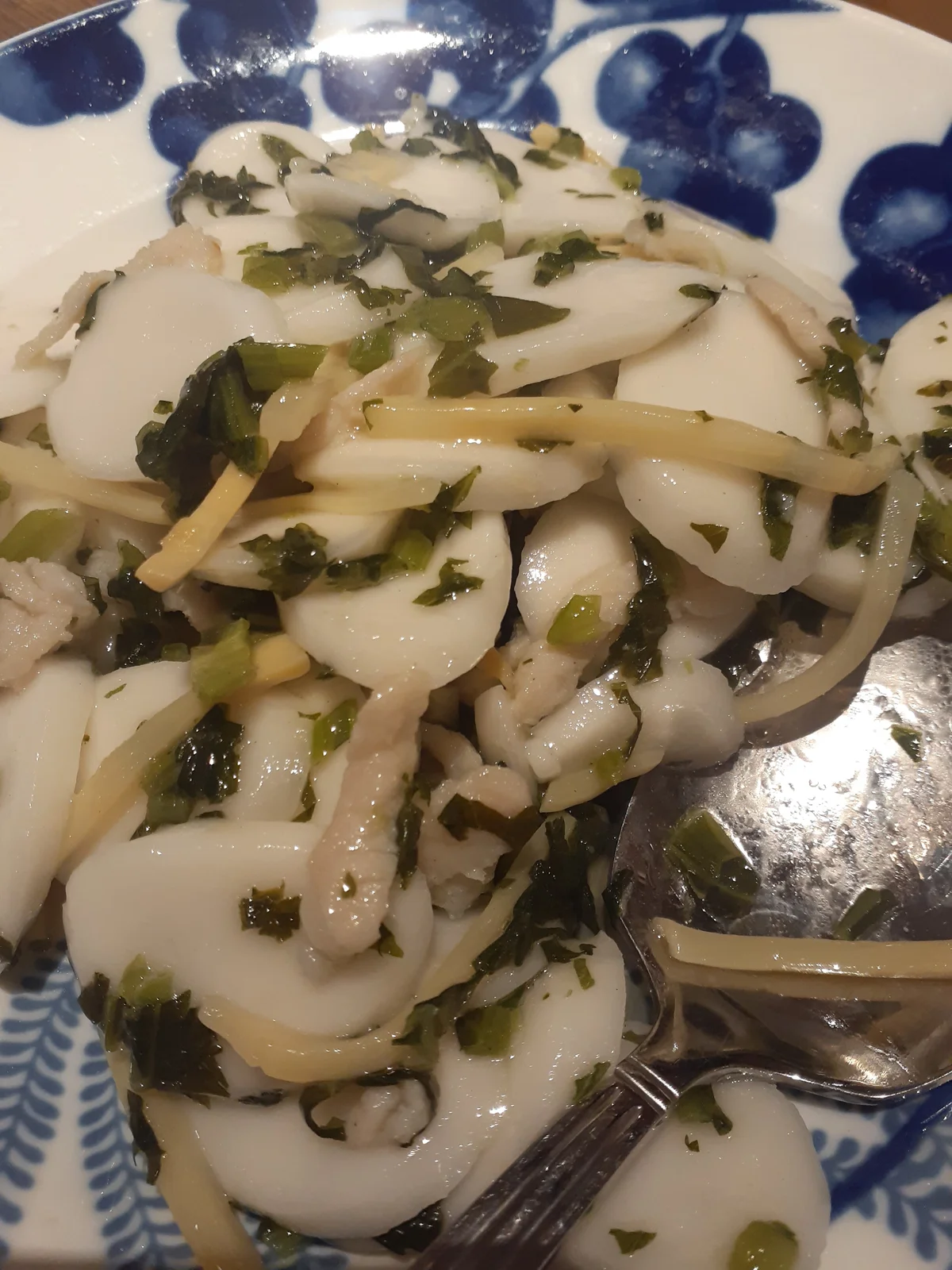
Shanghai rice cakes, or nian gao, are about texture before flavor. The oval slices are mild on their own, which is exactly why they work well with greens, pork, mushrooms, crab, and savory sauces. They carry the dish around them.
For overseas readers, rice cakes also widen the idea of Shanghai staples. They are not noodles and not dumplings, but they can be just as filling and just as central to a shared table.
The Right Kind of Chew
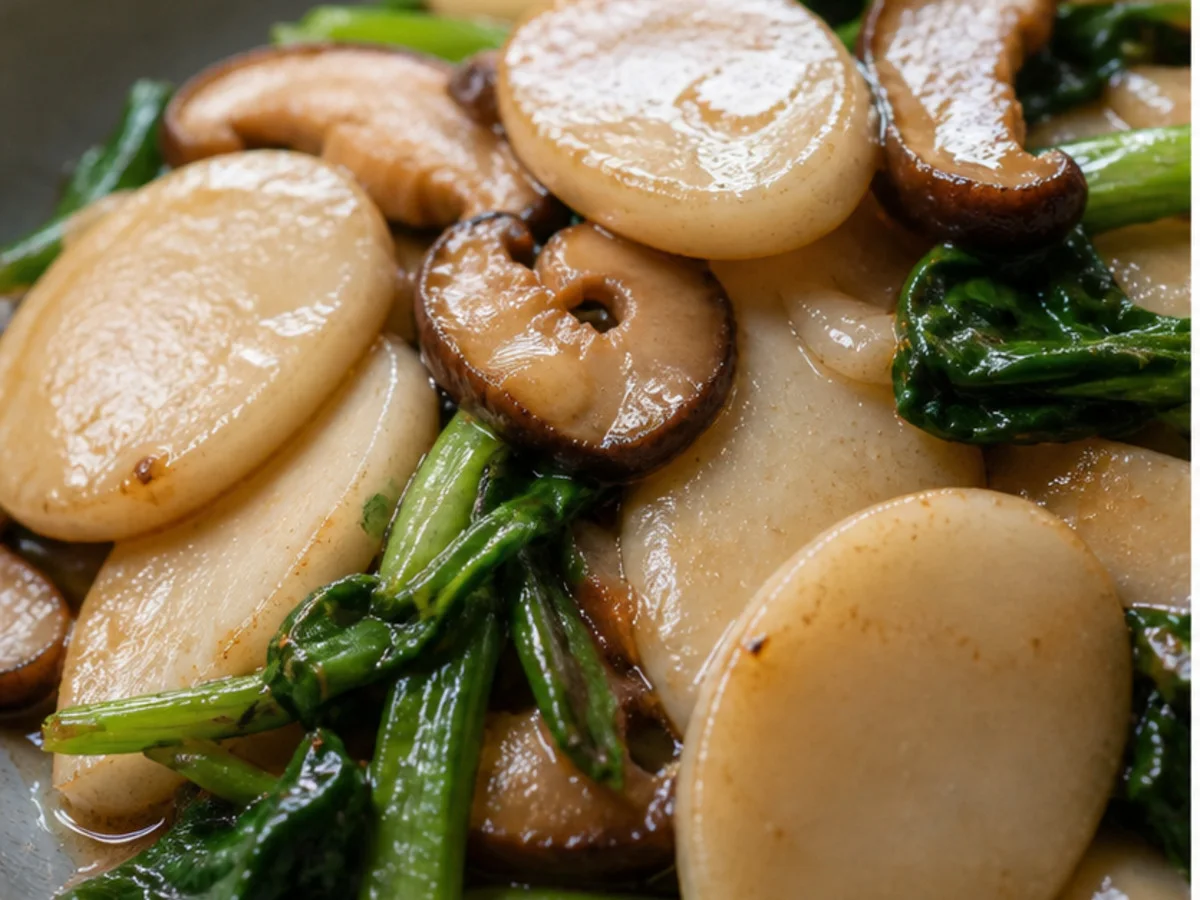
Good nian gao should be soft enough to bite through but still springy. Undercooked slices feel stiff; overcooked slices become sticky and heavy. The best versions hold their shape while absorbing sauce.
Common Shanghai Versions
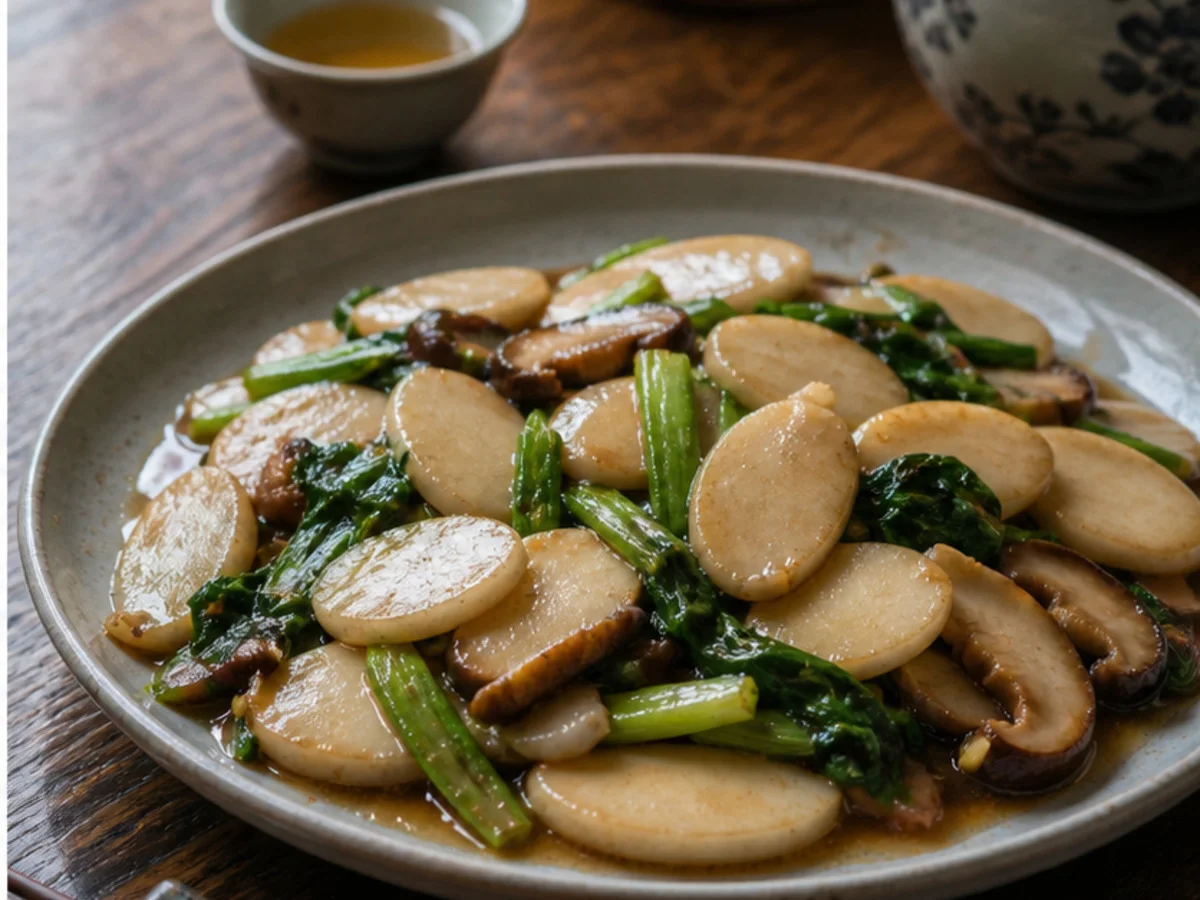
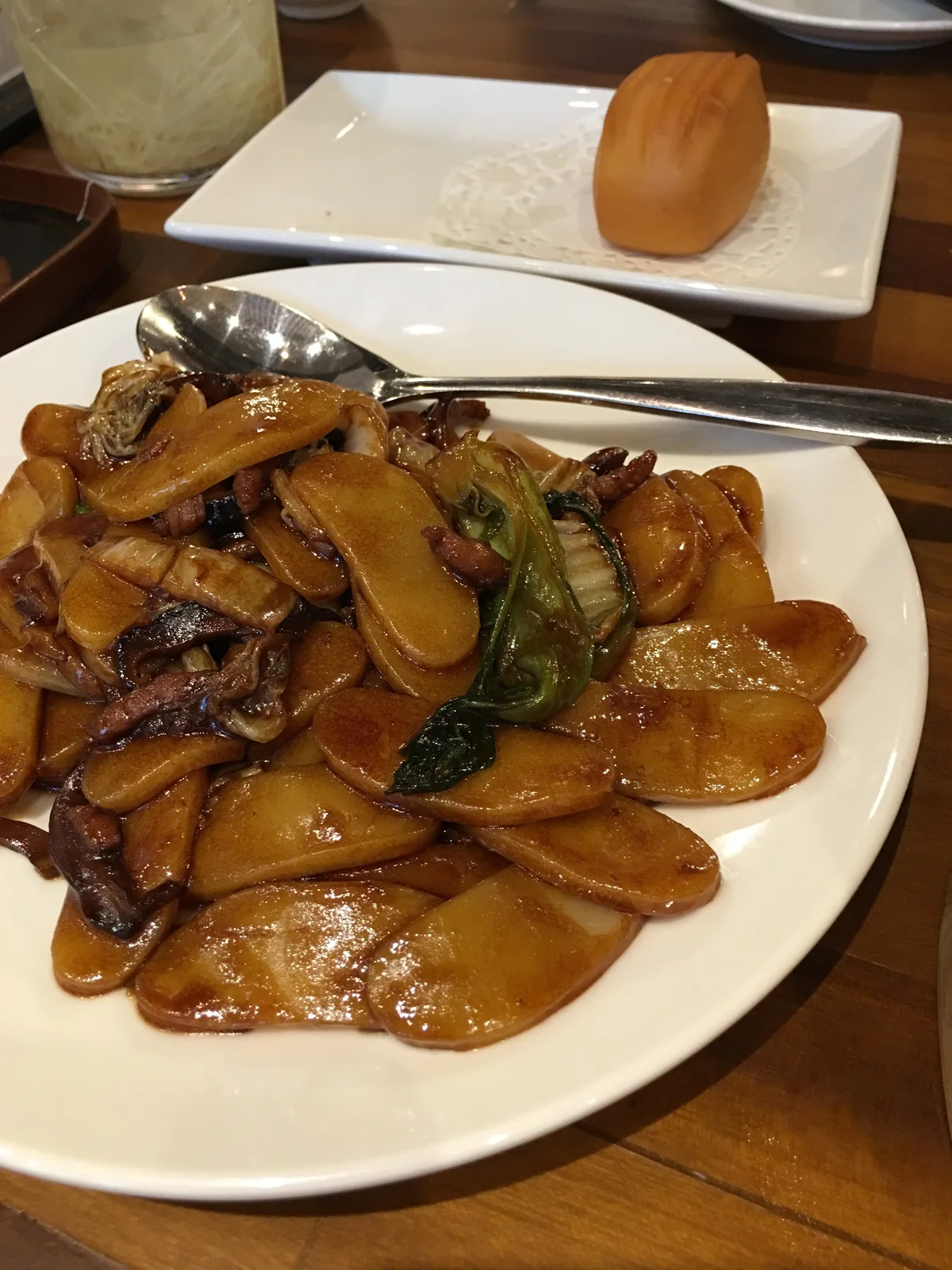
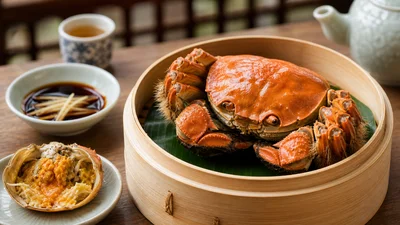
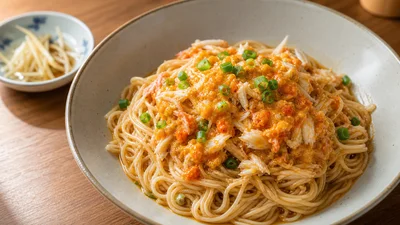
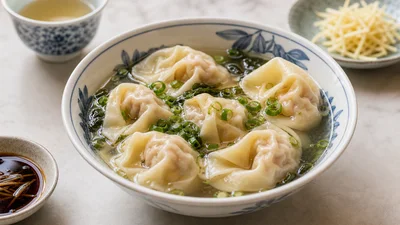
Everyday plates may include greens, mushrooms, or pork. Seasonal restaurant versions may bring in crab, which connects the dish to hairy crab and crab roe noodles. Soup versions exist too, but stir-fried rice cakes are often easier for visitors to recognize.
How to Order Them
Order rice cakes as a shared dish, not a small side you forget about. They are filling. Pair them with one stronger dish, such as smoked fish or hong shao rou, and one lighter vegetable or soup. That balance keeps the chew enjoyable instead of tiring.
Timing Matters
Eat rice cakes while hot. As the plate cools, the slices firm up and the sauce loses its shine. This is one of the dishes where timing noticeably changes the eating experience.
How to Recognize a Good Plate
- Oval rice cake slices should stay distinct.
- The sauce should coat rather than bury them.
- Greens, pork, crab, or mushrooms should explain the version.
- The plate should arrive hot and glossy, not heavy or congealed.
Comments (0)