Scallion oil noodles are often called a simple bowl, but simple does not mean indifferent. Thin noodles cool quickly, fried scallions lose their aroma when they sit in steam, and a sauce that tastes balanced at the counter can become heavy if it is left unmixed at the bottom of the bowl.
This guide builds on the aroma and sauce guide. The focus here is the short window between cooking and eating: how a breakfast shop's rhythm affects the bowl, what to do when it arrives, and how to choose companions without turning a neat noodle breakfast into too much food.
Look for Bowls Made to Order
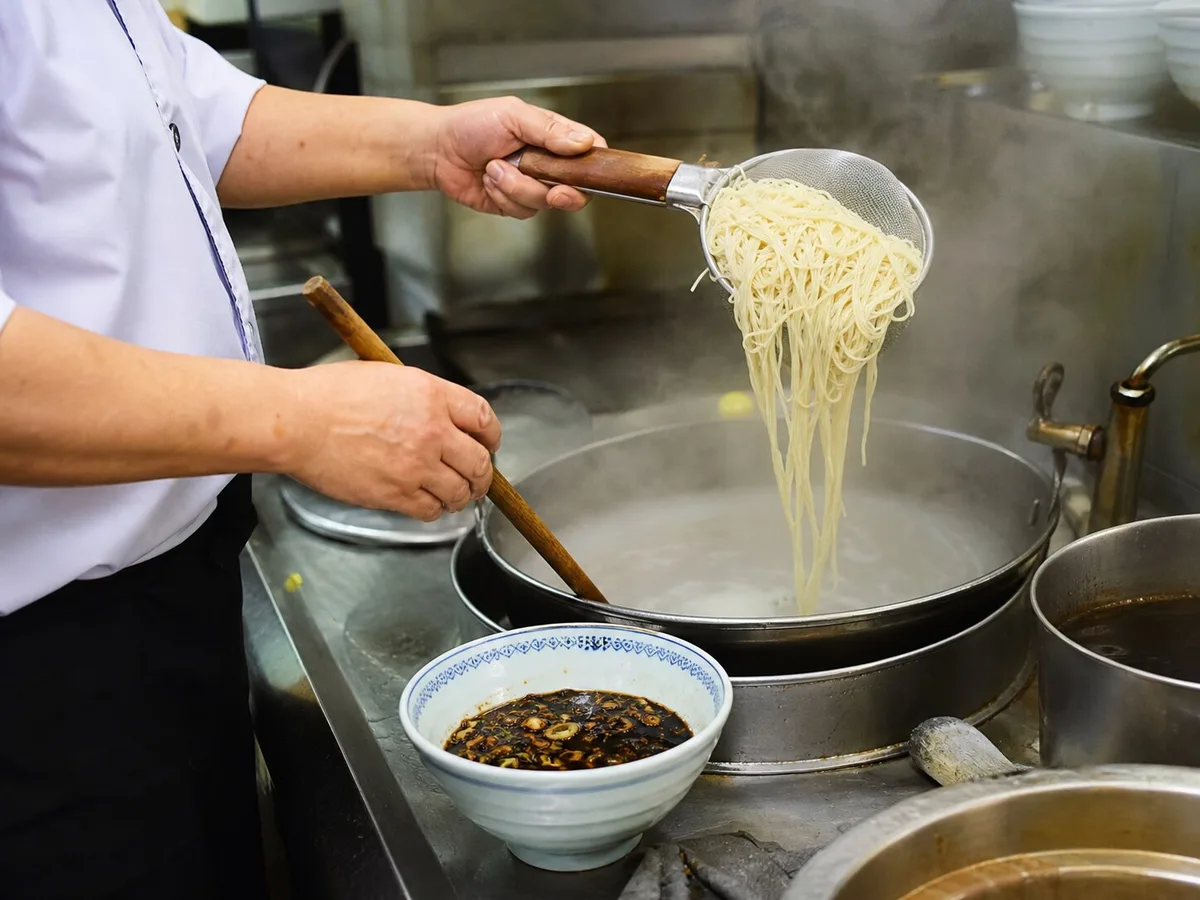
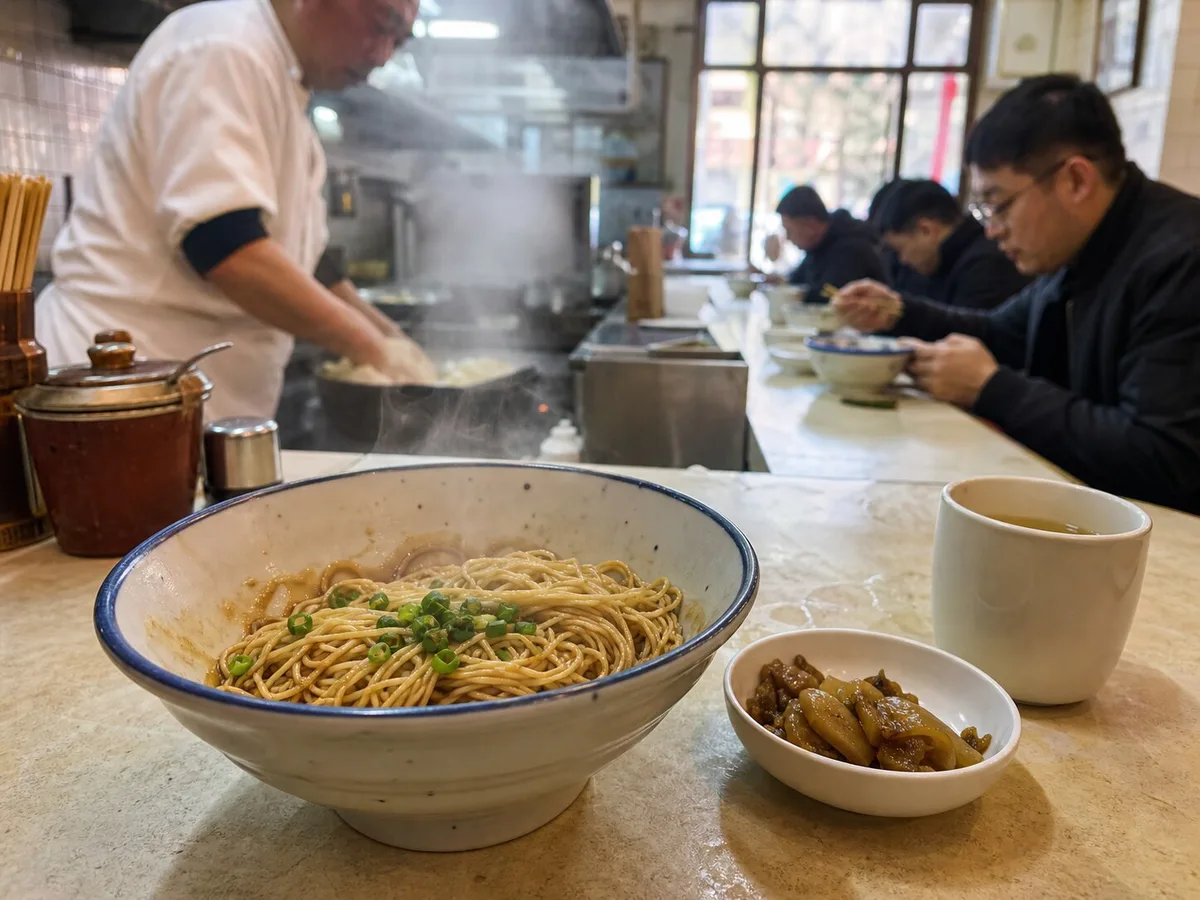
At a busy noodle counter, the useful signal is not simply a long queue. Watch whether the cook is blanching small portions, draining them, adding oil and sauce, and sending each bowl out straight away. That rhythm gives the noodles a chance to stay springy while the fried scallions still smell nutty rather than stale.
A bowl waiting on a counter is not necessarily bad, but it is less forgiving. The sauce sinks, the noodle strands begin to clump, and the heat disappears. If the shop is quiet, it is reasonable to ask for the noodles to be mixed fresh; in a fast-moving morning shop, the natural turnover usually does that work for you.
The First Mix Matters
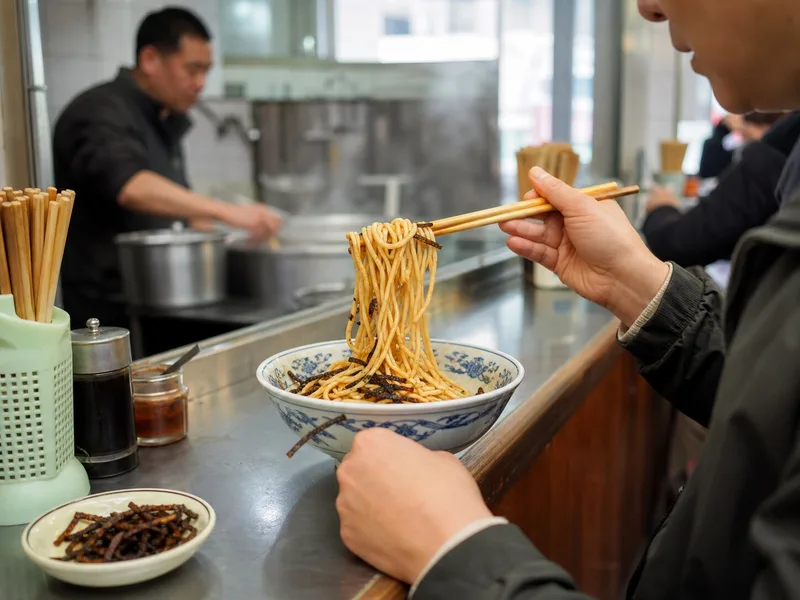
When the bowl arrives, use the chopsticks to lift from the bottom and turn the noodles over several times. The dark soy-based sauce and scallion oil often settle below the first visible layer, so a few gentle lifts are more useful than stirring the surface in circles.
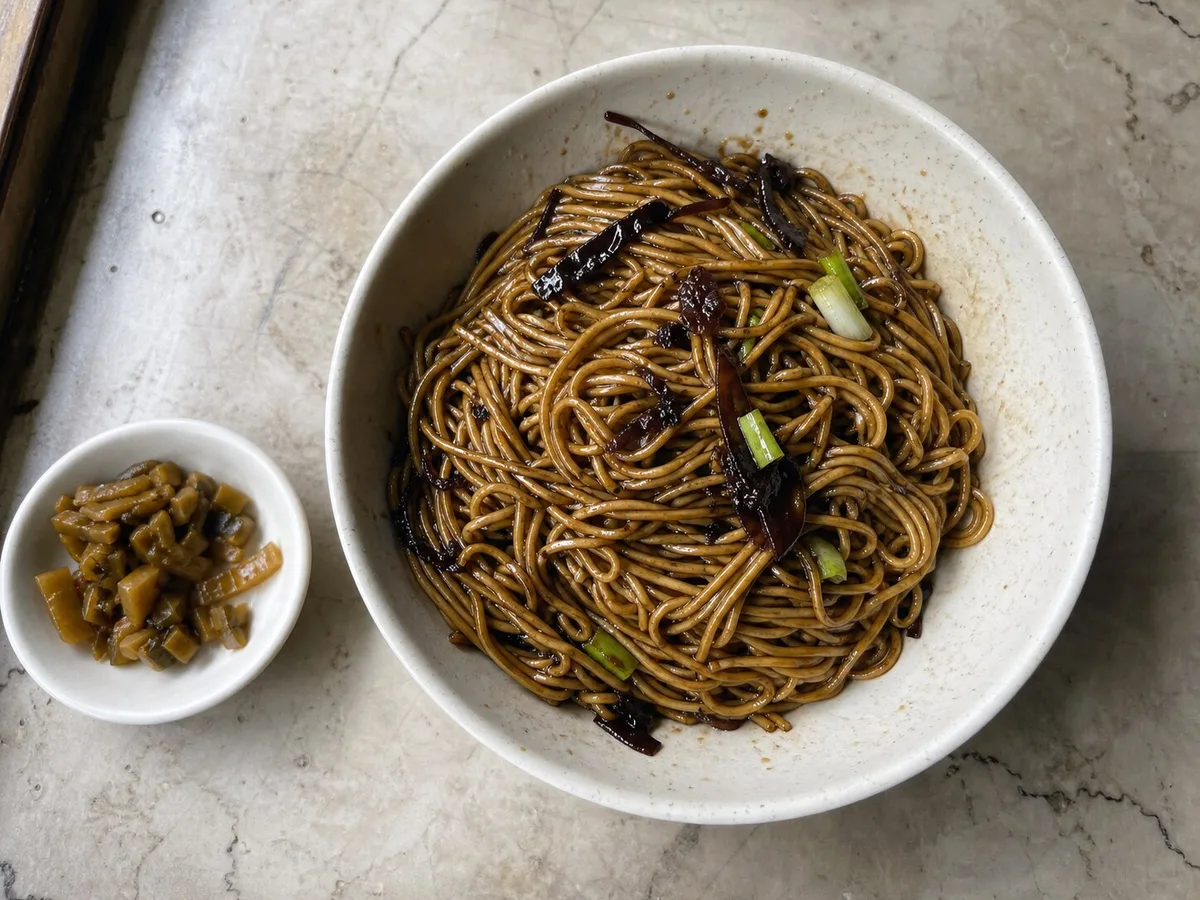
Stop once the color looks even and the noodles have a light gloss. Overworking them can make the strands cool and compact. A good bowl should still feel loose, with browned scallion pieces distributed through the noodles instead of gathered in one oily patch.
What Fresh Noodles Feel Like
Freshly cooked cong you ban mian should be warm enough for the oil to coat the strands, but it does not need to arrive aggressively hot. The texture is smooth and resilient rather than crunchy or soft. If the noodles are dry at the edges, heavily stuck together, or taste mostly of dark sauce, they may have been waiting longer than the bowl can comfortably handle.
The fried scallions should be aromatic and gently crisp, not blackened. Their purpose is to bring sweetness and fragrance to the soy sauce. The earlier toppings guide is useful here: extra pork, egg, or a large side dish can be satisfying, but try the plain bowl first so you can tell whether the noodles and scallion oil are doing their job.
Why Breakfast Counters Suit This Dish
Scallion oil noodles make sense at breakfast because they are quick, warm, and satisfying without being as heavy as a large braised dish. A counter seat also solves the timing problem: you can eat as soon as the bowl is served rather than carrying it through traffic or back to a hotel.
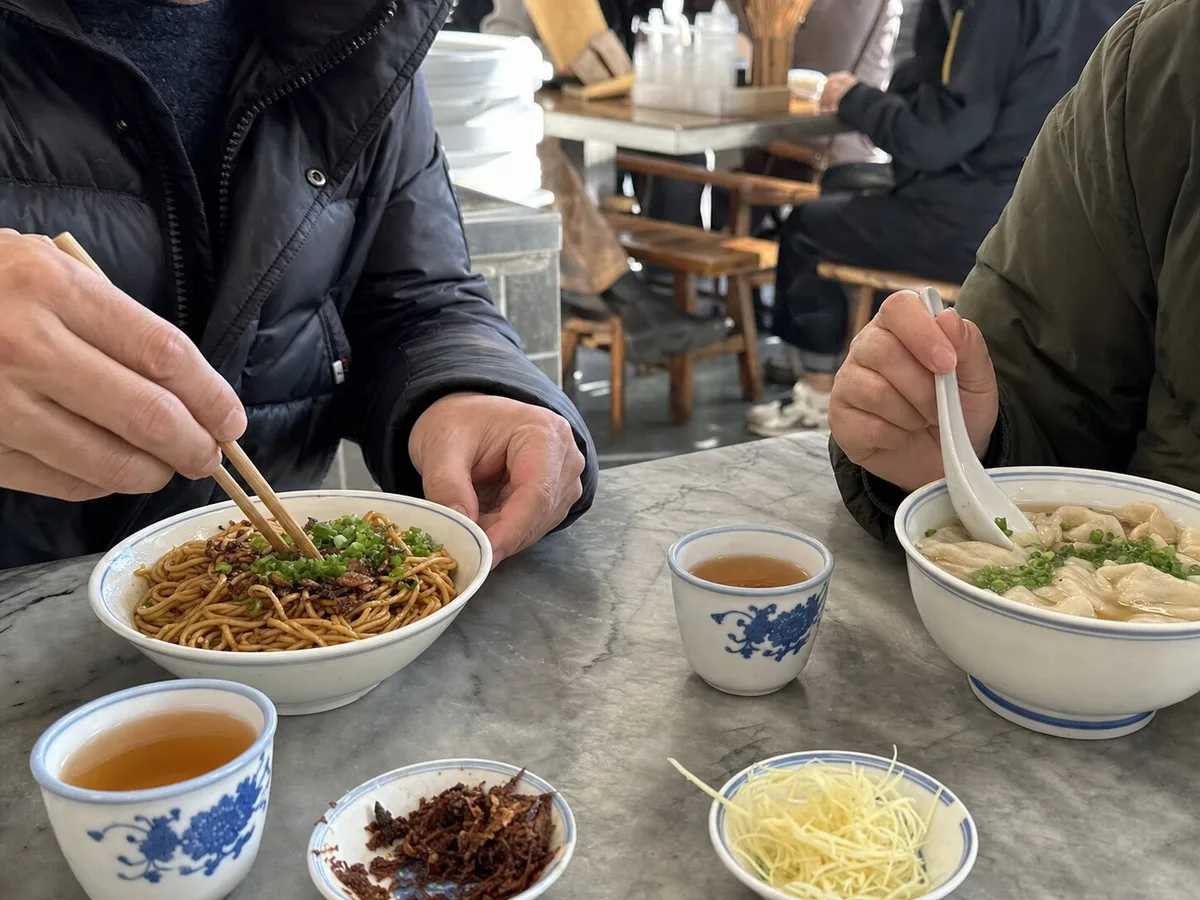
For a fuller breakfast, add something with a different texture instead of another rich noodle dish. A small clear-broth serving from the Shanghai wontons topic brings warmth without competing with the scallion oil. A few pieces of Shanghai smoked fish work well when you want a cold, sweet-savory contrast, especially if you are sharing.
Takeaway Is a Short-Distance Choice
Unlike a crisp pancake or a tightly packed rice roll, scallion oil noodles do not improve in a closed takeaway box. The steam softens the scallions, the sauce pools, and the noodles lose their relaxed texture. A short walk is fine; a long ride is less rewarding.
If you do take them away, mix the noodles while they are still warm and eat them promptly. Do not add a large amount of extra sauce just because the bowl looks pale at first. The oil and sauce are usually sitting underneath, waiting for the first lift of chopsticks.
How to Build a Sensible Shanghai Morning Meal
One bowl of scallion oil noodles can be the center of breakfast, not a side to everything else. If you want another staple, share it. For example, split a small order of shengjianbao with another person, or save a cifan tuan for later when you need something portable.
This approach also makes it easier to explore the wider Shanghai breakfast scene over several mornings. Eat the hot noodle bowl at the counter today, then try soy milk and youtiao, wontons, or pan-fried buns on another day rather than stacking every classic into one meal.
Common Mistakes With Scallion Oil Noodles
- Waiting too long before mixing, then assuming the sauce is missing.
- Ordering too many rich toppings before tasting the plain bowl.
- Leaving a hot bowl sealed in takeaway packaging for a long ride.
- Judging freshness by queue length instead of the cook's bowl-by-bowl rhythm.
- Adding so much vinegar or chili oil that the scallion fragrance disappears.
Comments (0)