Shanghai rice cakes are easy to misunderstand if you judge them only by sauce. The rice cake slices themselves are the point: soft, springy, chewy, and mild enough to carry vegetables, pork, crab, or a sweet-savory glaze without disappearing into the dish.
This guide goes deeper than the basic Shanghai Rice Cakes introduction. It focuses on texture, common versions, and how to order nian gao in a way that feels balanced rather than heavy.
The Texture Test
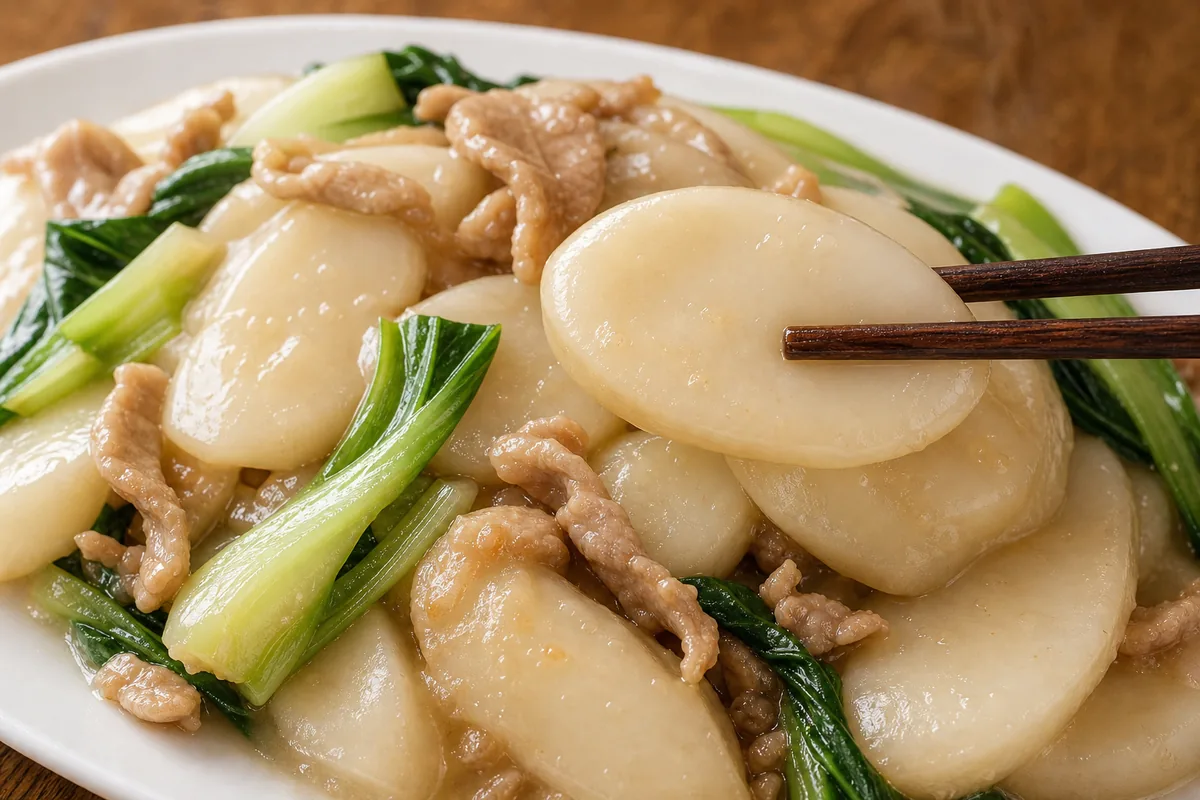
Good nian gao should bend and bite cleanly. It should not feel stiff in the middle, and it should not collapse into glue. A good slice keeps its oval shape after stir-frying but still feels soft enough to chew easily.
This is why timing matters. Rice cakes are best while hot. As the plate cools, the slices tighten and the sauce becomes less lively. If you are sharing several dishes, eat a few rice cake slices early rather than leaving them until the end.
Stir-Fried Rice Cakes With Greens and Pork
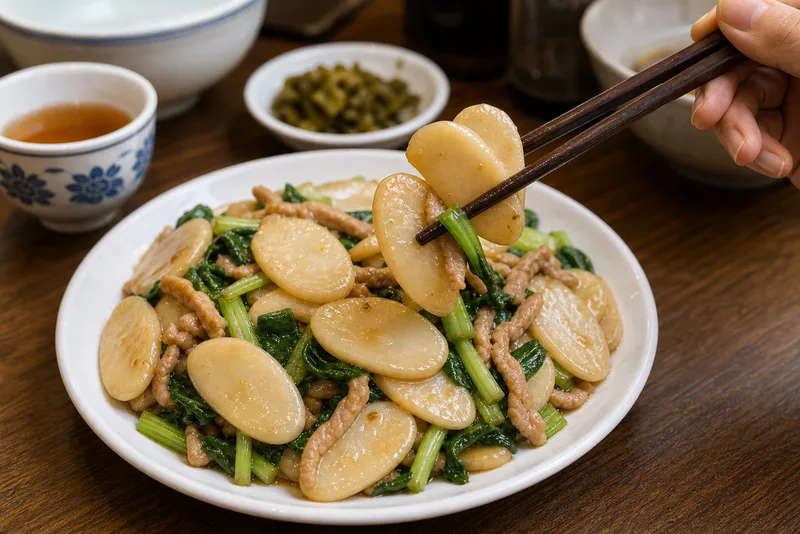
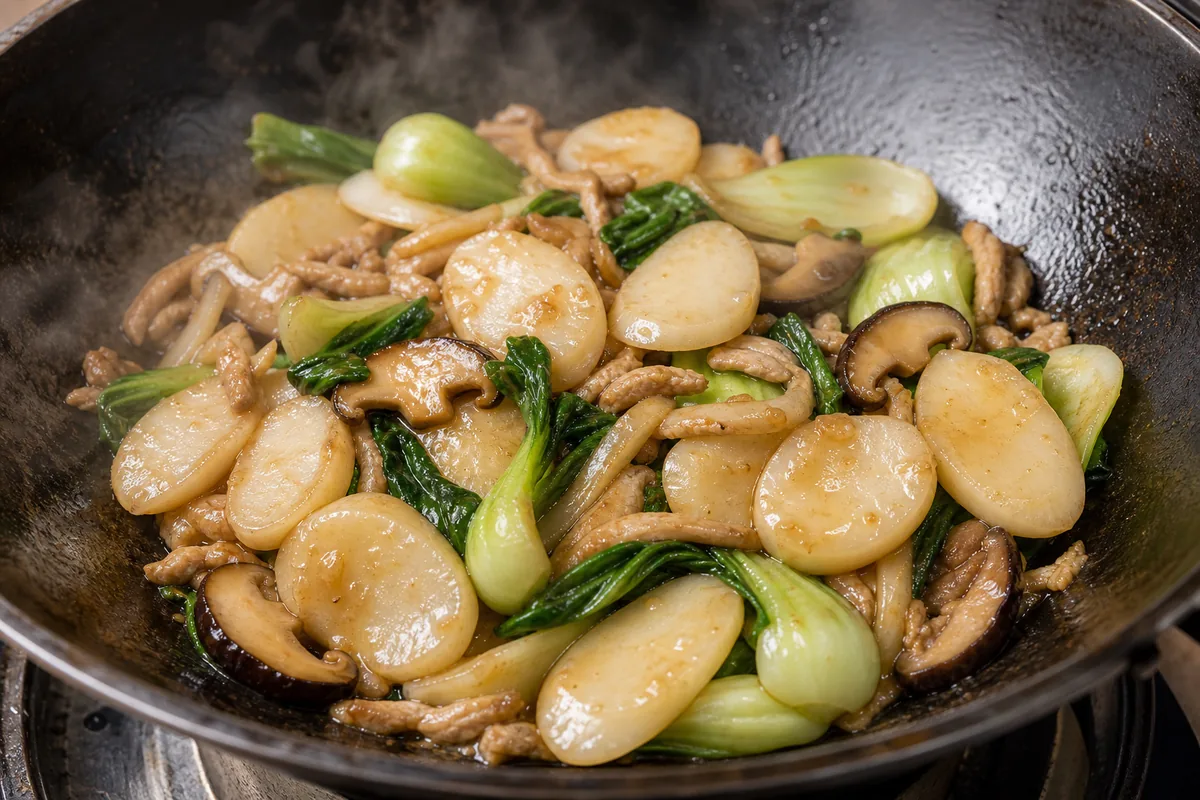
The clearest starting point is stir-fried rice cakes with greens, mushrooms, or shredded pork. The vegetables keep the plate fresh, the pork adds savoriness, and the sauce gives the mild rice cakes something to carry.
A good plate should not look like noodles. The rice cake slices should remain separate and visible. If everything is broken, sticky, or buried under sauce, the kitchen has lost the texture that makes the dish worth ordering.
Paigu Niangao
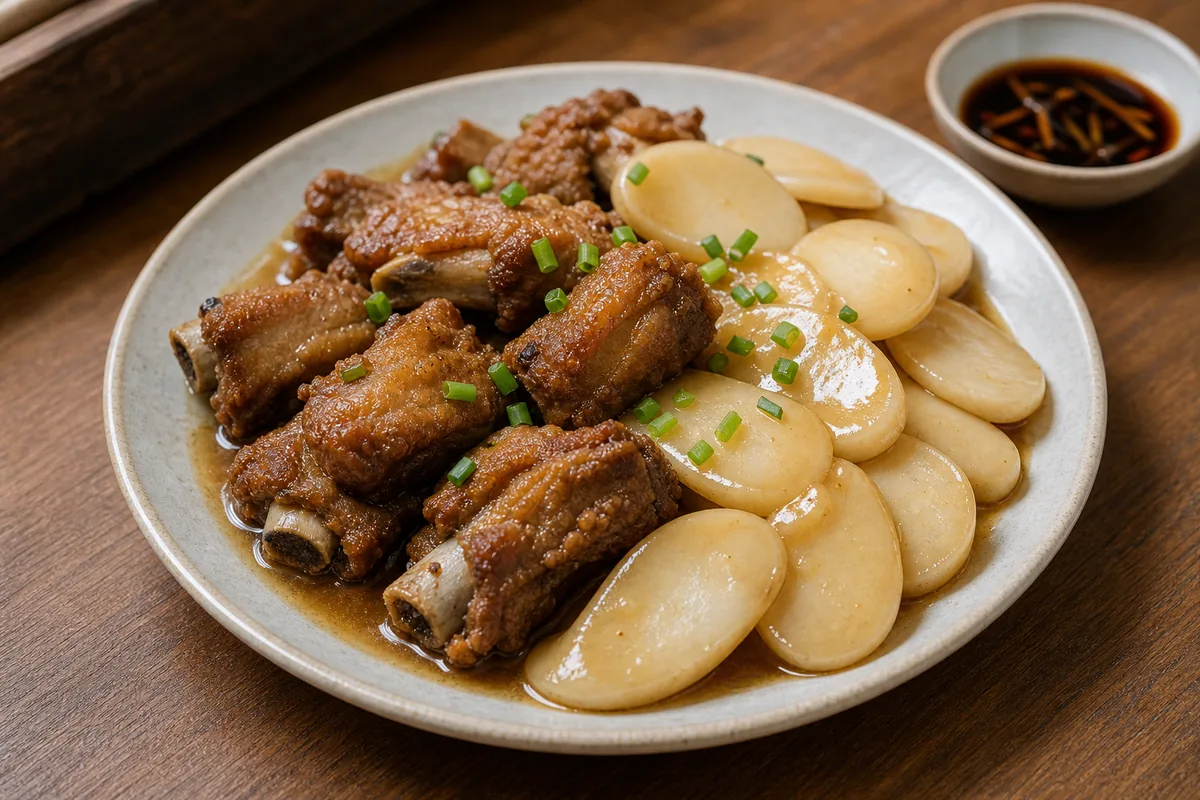
Paigu niangao, pork ribs with rice cakes, is a more snack-shop style version. The pork brings crunch, seasoning, and richness, while the rice cakes give chew and absorb sauce. It is a useful dish if you want something more filling than a vegetable stir-fry but less formal than a full shared restaurant plate.
The risk is imbalance. If the pork dominates, the rice cakes become a side. If the rice cakes are too thick or cold, the pork feels separate from the dish. Look for a plate where the sauce ties the two together without making everything soggy.
Crab Rice Cakes
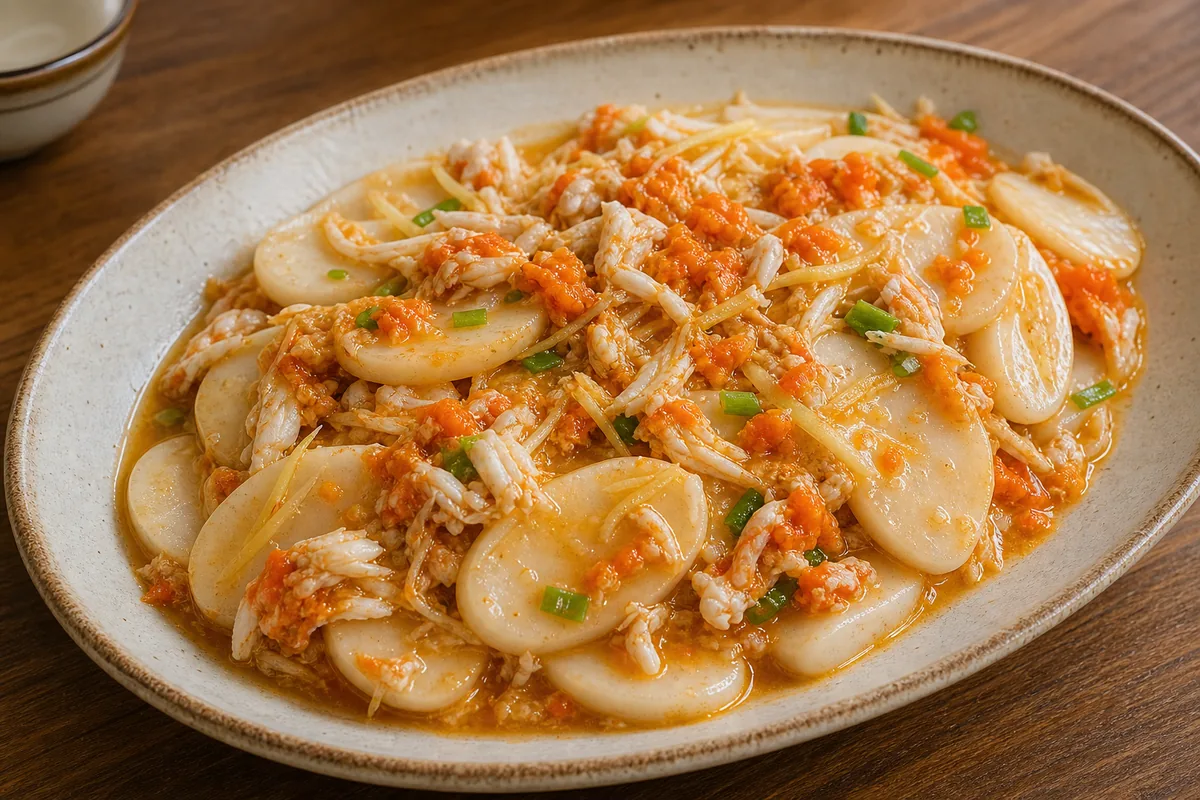
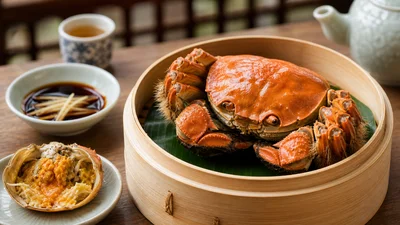
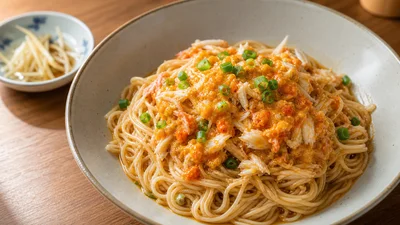
Crab rice cakes appear naturally around Shanghai's crab season and restaurant menus. They connect rice cakes to the richer world of hairy crab and crab roe noodles: the rice cakes absorb crab roe sauce while giving the plate a satisfying chew.
The best crab version still lets the nian gao remain distinct. If the plate is only orange sauce and starch, it can become tiring. If you can taste crab aroma, ginger, scallion, and the springy rice cake slices separately, the balance is much better.
How to Build a Meal Around Rice Cakes
Rice cakes are filling, so treat them as a shared starch dish rather than a small side. If you order them with hong shao rou, add greens or soup so the meal does not become too heavy. If you order them after smoked fish, the chew gives the table a softer follow-up to a firm, sweet-savory starter.
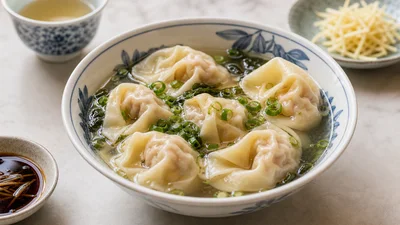
They also work as a bridge dish. Scallion oil noodles are simpler and more aromatic; rice cakes are chewier and more sauced. Wontons are softer and soupy; rice cakes are denser. Knowing those differences helps you avoid ordering several dishes that all feel heavy in the same way.
How to Order
For the first try, order a standard stir-fried nian gao with greens or pork. It gives you the cleanest read on texture. Choose paigu niangao if you want a snack-shop plate with pork ribs. Choose crab rice cakes if you are already exploring seasonal crab dishes.
Ask whether the rice cakes are stir-fried or served in soup. Stir-fried versions are easier for most visitors to judge because the slices stay visible. Soup versions can be comforting, but they depend more on broth and timing.
Common Mistakes
- Expecting rice cakes to taste strong on their own; the appeal is chew plus sauce.
- Waiting too long and letting the slices firm up.
- Ordering rice cakes with too many other heavy starch dishes.
- Choosing crab rice cakes only for the sauce and ignoring whether the nian gao texture is still clear.
- Confusing Shanghai oval rice cake slices with Korean cylindrical rice cakes in spicy sauce.
Comments (0)