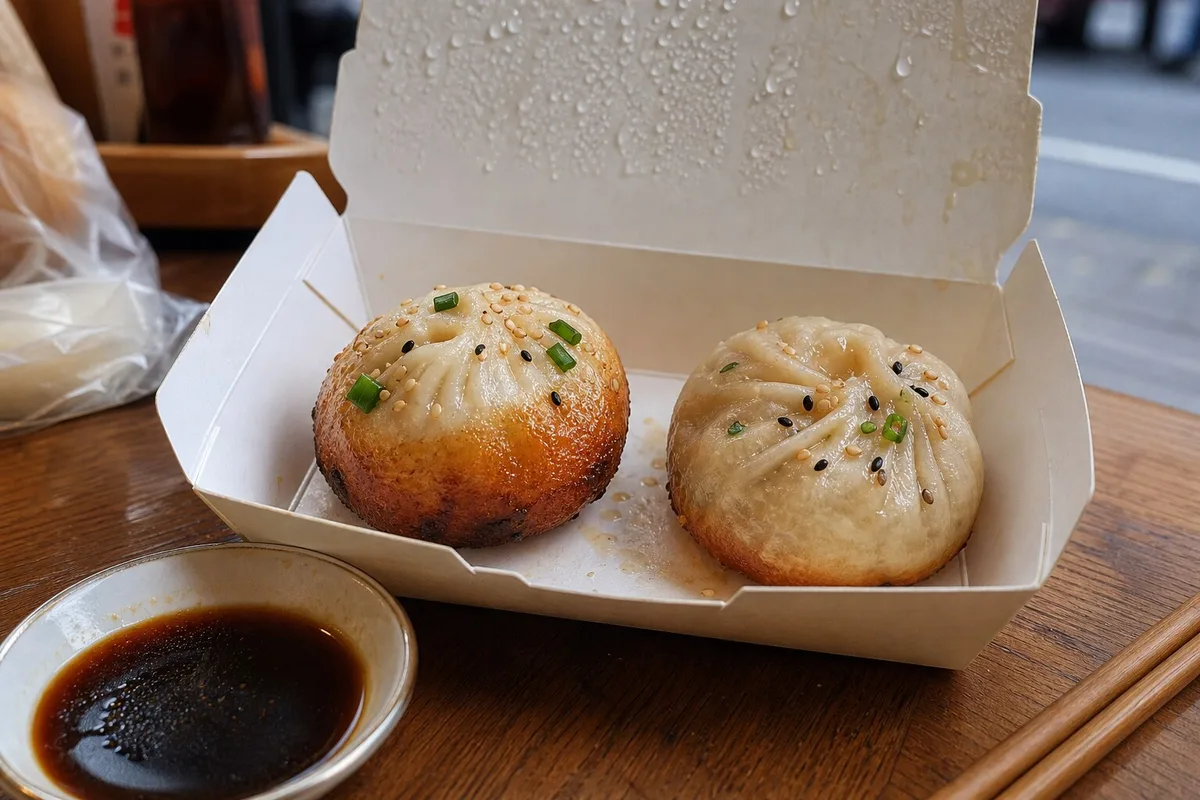
Shengjianbao travel better than xiaolongbao because the dough is sturdier, but they are still not a food that likes waiting. The crisp bottom softens, the hot soup settles into the wrapper, and the steam inside a takeaway box can change the texture in minutes.
This guide builds on the fresh batch breakfast shop guide. Here the focus is the moment after ordering: whether the queue is useful, how to handle the hot filling, when takeaway makes sense, and how to keep the buns close to their best.
What a Useful Queue Tells You
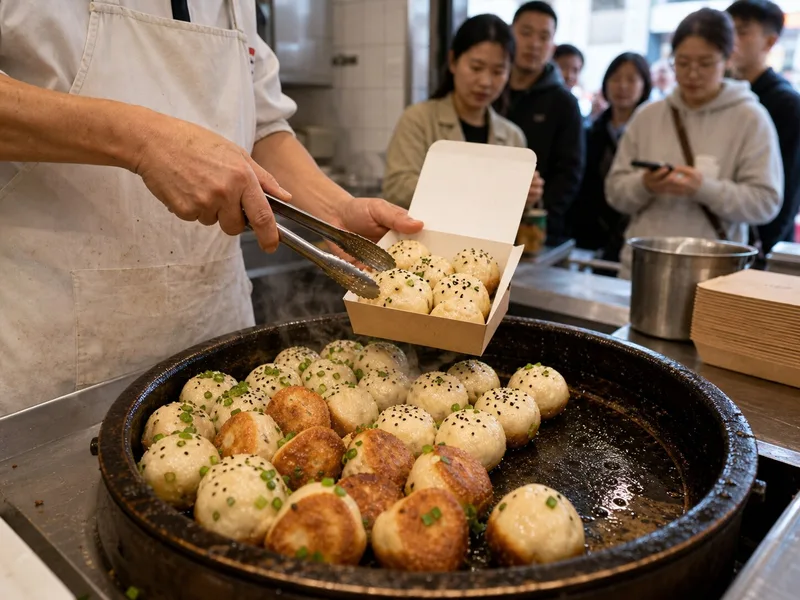
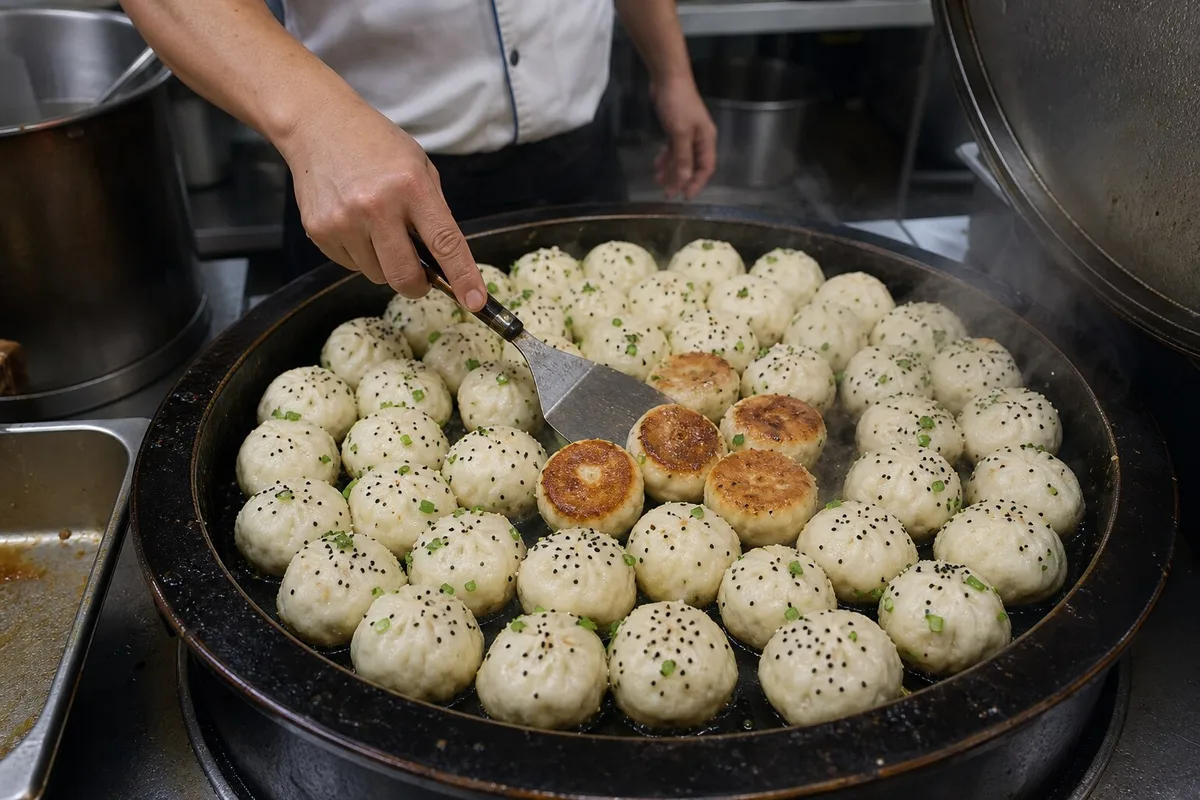
A line outside a shengjian shop is not automatically proof of quality, but it can be useful if the queue moves with the pan. When buns are coming out regularly, turnover keeps the bottoms crisp and the filling hot without leaving trays to sit for too long.
Watch the counter before ordering. A good rhythm looks like pan, lift, pack, serve, and repeat. If the line is long but the buns are already boxed in piles, the queue may be telling you more about reputation than freshness.
Takeaway Changes the Bottom First
The browned base is the first part to suffer in a closed box. Steam collects on the lid, drops back down, and softens the bottom that should crack lightly when bitten. This is why shengjian eaten standing near the shop can taste better than the same order carried across town.
If you need takeaway, open the box slightly once you are away from the counter so steam can escape. Do not seal hot shengjian inside a bag for too long unless you care more about warmth than texture.
Eat Around the Hot Filling
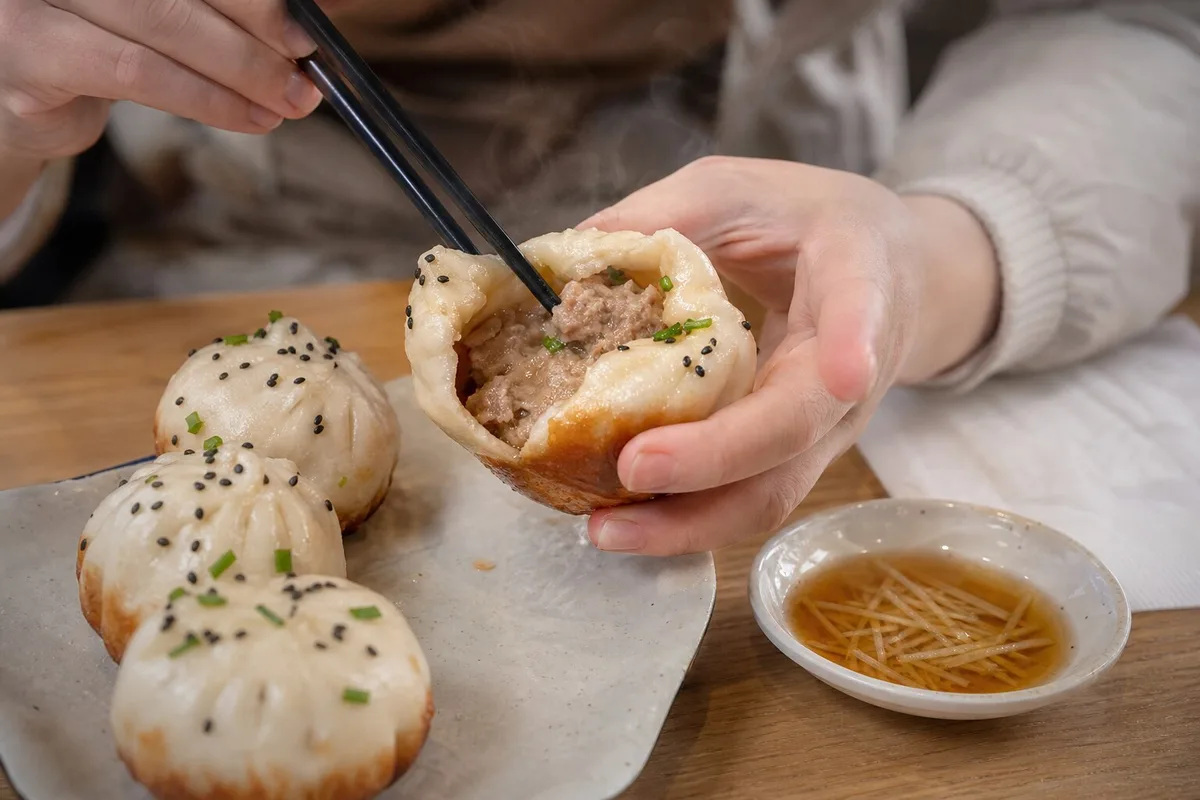
Fresh shengjianbao can be hotter than they look. Bite a small opening near the top or side, pause, and let steam leave before taking a full bite. This keeps the soup from spilling and protects your mouth from the first rush of heat.
The method is different from the more delicate xiaolongbao ritual. Shengjian has a thicker wrapper and a crisp base, so you can handle it more directly, but the filling still deserves patience.
Dine-In or Takeaway?
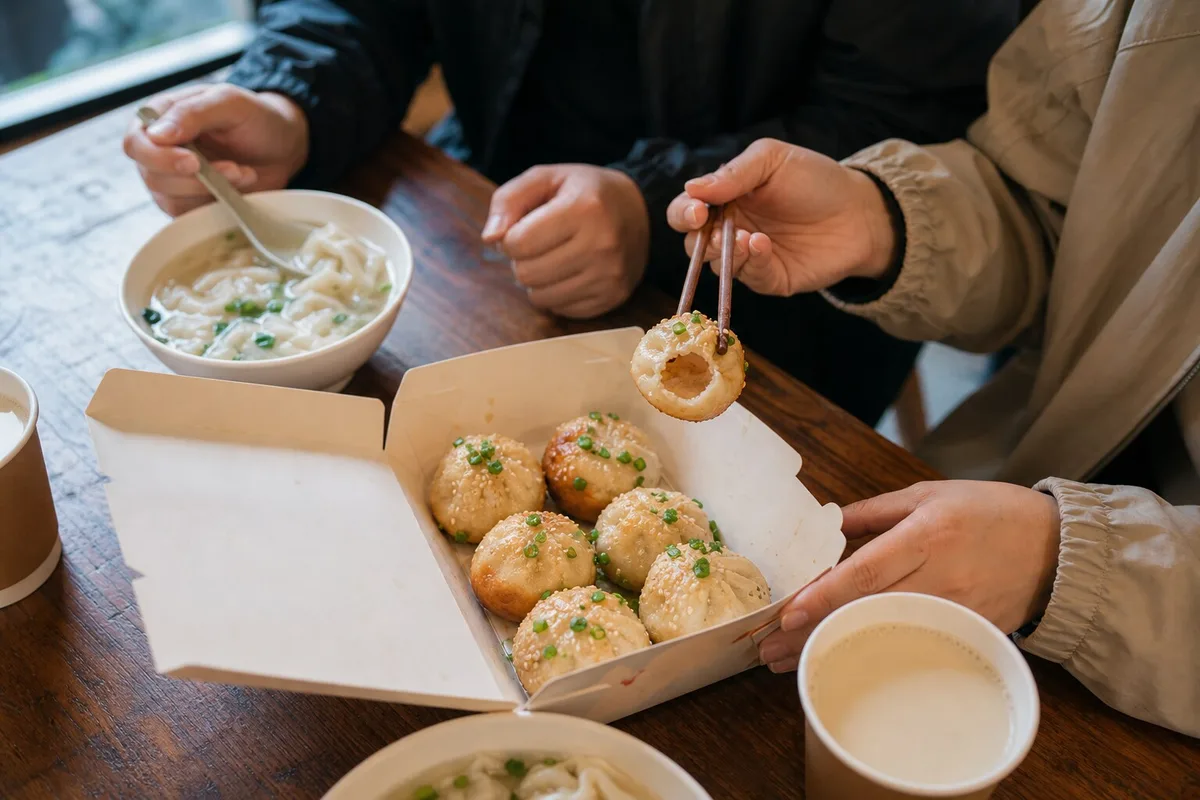
Dine-in is best when the shop has a small counter or shared table and the buns arrive straight from the pan. Takeaway works for a short walk, a hotel room nearby, or a quick snack in a park, but it is less ideal for long transport.
If you are building a morning food route, eat the shengjian first and save sturdier foods for later. Cifan tuan can wait longer, while soy milk and youtiao are better when you want something lighter beside the buns.
Pairings That Do Not Overload the Meal
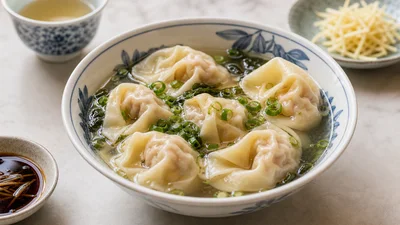
Soy milk is the easiest pairing because it cools the mouth and softens the fried richness. A small bowl from the Shanghai wontons topic can also work if you want broth, but a big noodle bowl may make the meal too heavy.
Use vinegar lightly. It helps cut oil and brighten the filling, but too much vinegar softens the bottom and makes every bun taste the same. Try one bun plain first, then adjust.
Common Takeaway Mistakes
- Keeping the box tightly closed until the crisp bottoms turn soft.
- Ordering too many buns before you know how quickly you can eat them.
- Biting into the filling immediately without letting steam escape.
- Judging only by queue length instead of watching batch turnover.
- Pairing shengjian with too many other heavy breakfast staples at once.
Comments (0)