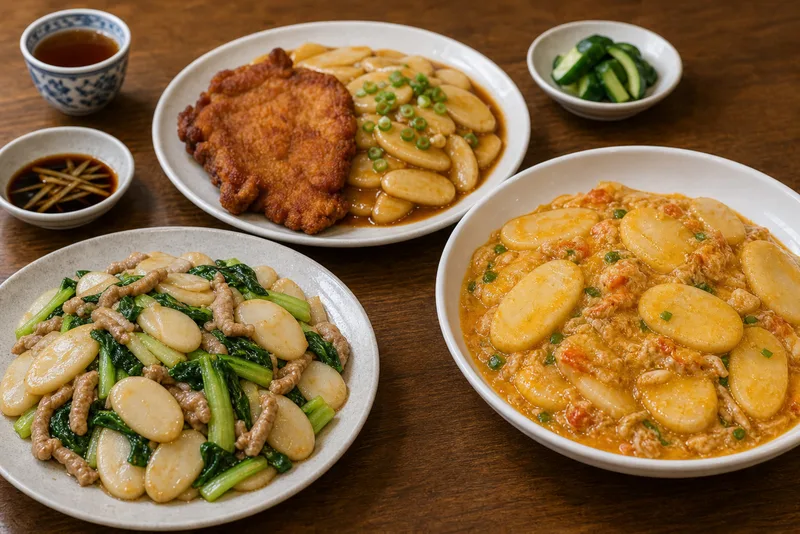
Shanghai rice cakes can be a quick snack, a shared stir-fry, or a seasonal restaurant plate. The key is knowing which version you are ordering. A plate of greens and pork rice cakes does not play the same role as paigu niangao, and crab roe rice cakes are richer than both.
This guide builds on the basic rice cakes guide and the texture and ordering guide. It focuses on choosing between versions, reading the meal context, and avoiding the mistake of treating all nian gao dishes as the same.
Start With Stir-Fried Rice Cakes
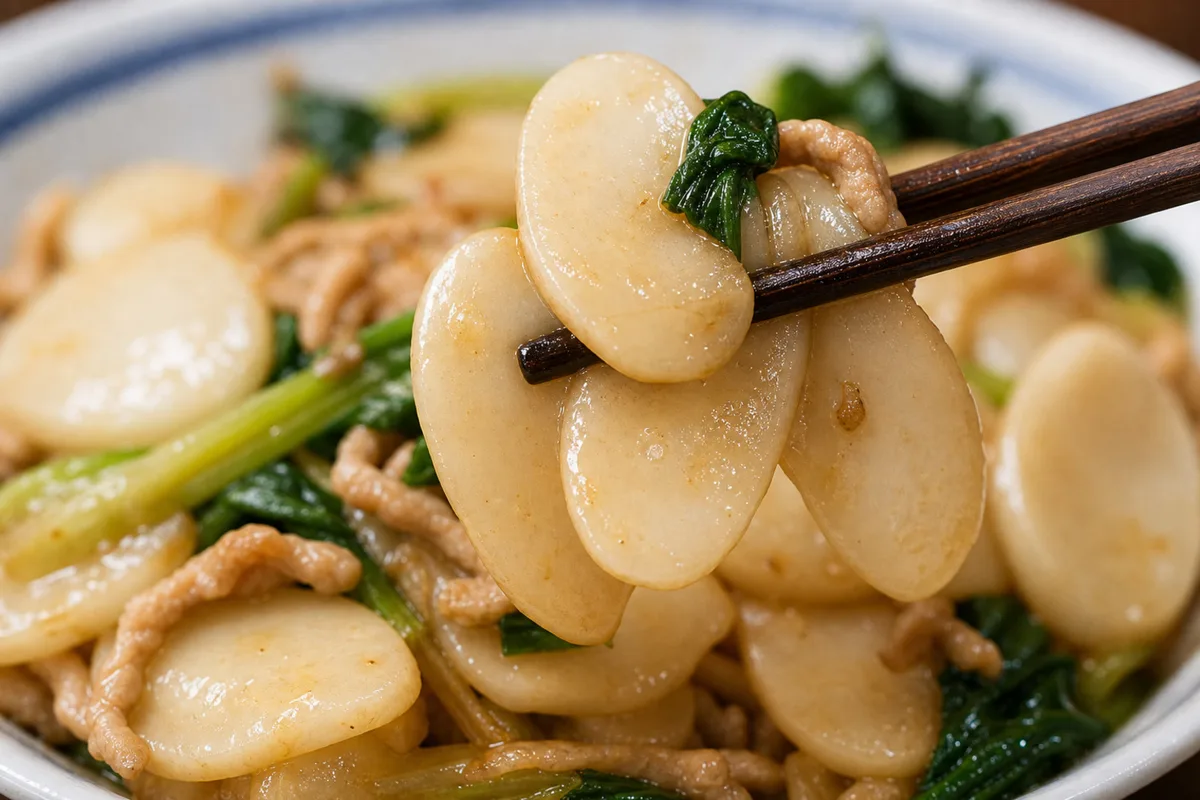
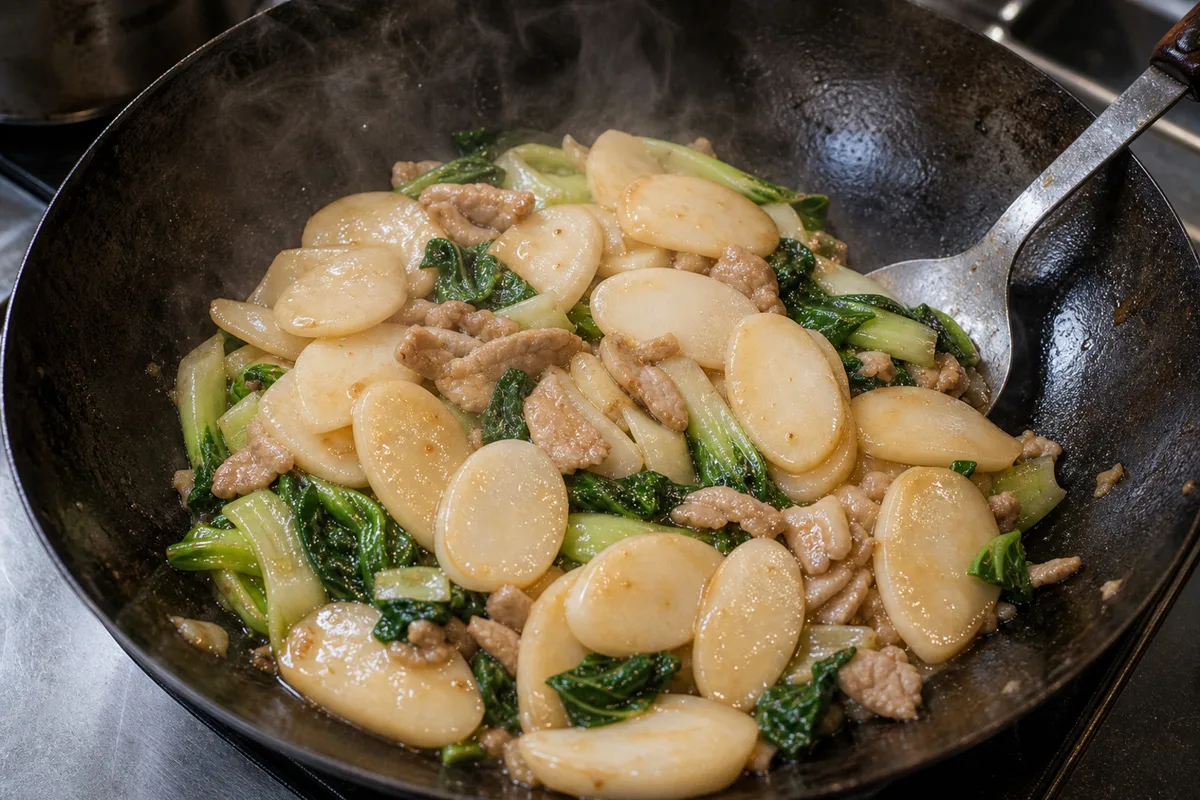
The most everyday version is stir-fried nian gao with greens, pork strips, mushrooms, or a light soy-based sauce. This is the best first order if you want to understand the rice cake texture without too much richness.
The slices should stay oval and distinct. If they collapse into a sticky mass, the plate becomes heavy. If they are stiff in the middle, they needed more cooking time.
When to Choose Paigu Niangao
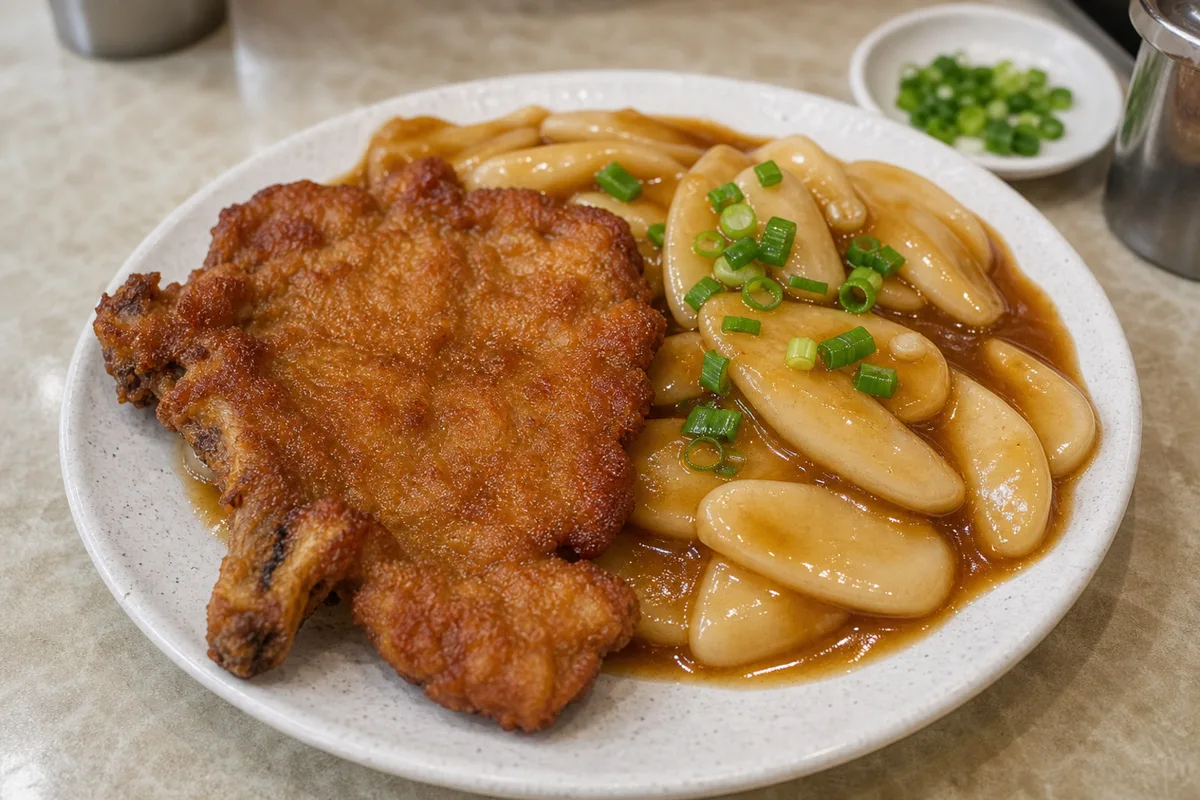
Paigu niangao is a snack-shop style choice: pork chop or pork cutlet with rice cakes and a savory brown sauce. It is more filling and more direct than a vegetable stir-fry, so it works well when you want a quick meal rather than a shared restaurant plate.
The pork chop should not hide the rice cakes. A good plate lets you taste both parts: crisp or sauced pork on one side, chewy rice cakes on the other. If the sauce floods everything, the rice cake texture can disappear.
When Crab Rice Cakes Make Sense
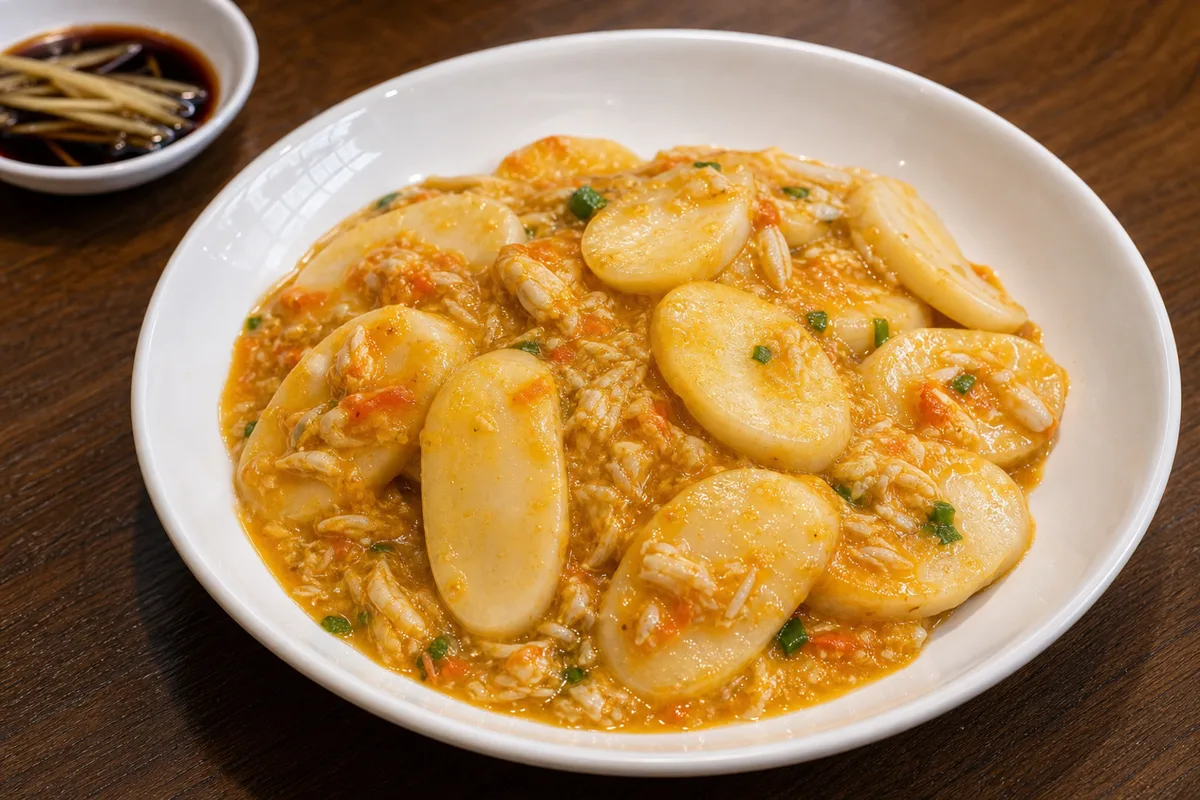
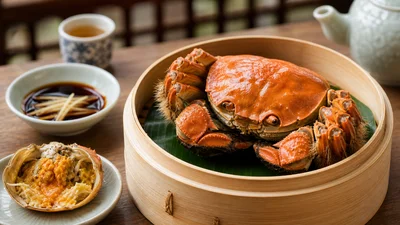
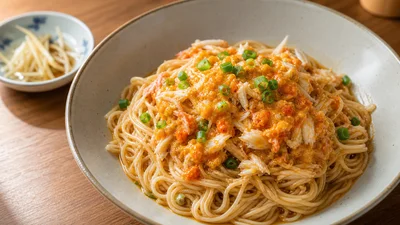
Crab rice cakes are richer and more seasonal. They belong closer to the world of crab roe noodles and hairy crab than to a casual breakfast or snack order.
Order them when you want the rice cakes to carry crab roe, crab meat, and oil. The slices should still be visible under the sauce. If the dish tastes only oily or salty, the crab has lost its purpose.
How to Pair Rice Cakes
Rice cakes are filling, so pair them carefully. A light soup, greens, or a small cold dish works better than another heavy carb. If the rice cakes are already rich with crab or pork chop, keep the rest of the table simple.
For a noodle comparison, scallion oil noodles are more aromatic and dry-tossed, while rice cakes are chewier and more sauce-carrying. Ordering both can work for a group, but it is too much starch for one person.
Texture Changes as the Plate Cools
Rice cakes are best hot. As they cool, the slices tighten and the sauce becomes heavier. This matters more than it does with many noodle dishes because nian gao texture is the center of the plate.
If you are sharing, eat the rice cakes early in the meal. Do not leave them until the end while focusing on other dishes, especially if the sauce is thick or crab-based.
Ordering Clues
Look for clear naming. If the menu says stir-fried rice cakes with greens or pork, expect an everyday plate. If it says paigu niangao, expect pork chop and rice cakes. If it mentions crab roe, expect a richer seasonal price and a more intense sauce.
When in doubt, ask whether the dish is dry-fried, sauced, or crab-based. That tells you more than the English translation alone.
Common Ordering Mistakes
- Ordering crab rice cakes when you wanted a light everyday plate.
- Expecting paigu niangao to taste like a vegetable stir-fry.
- Letting rice cakes cool before eating them.
- Pairing a heavy rice cake dish with too many other starches.
- Judging only the sauce and forgetting that chewy texture is the point.
Comments (0)