Shanghai Cold Noodles Sauce and Toppings: How Liang Mian Gets Its Flavor
A focused English guide to Shanghai cold noodles sauce and toppings, covering sesame-peanut balance, vinegar, cucumber, bean sprouts, chili oil, and mixing texture.
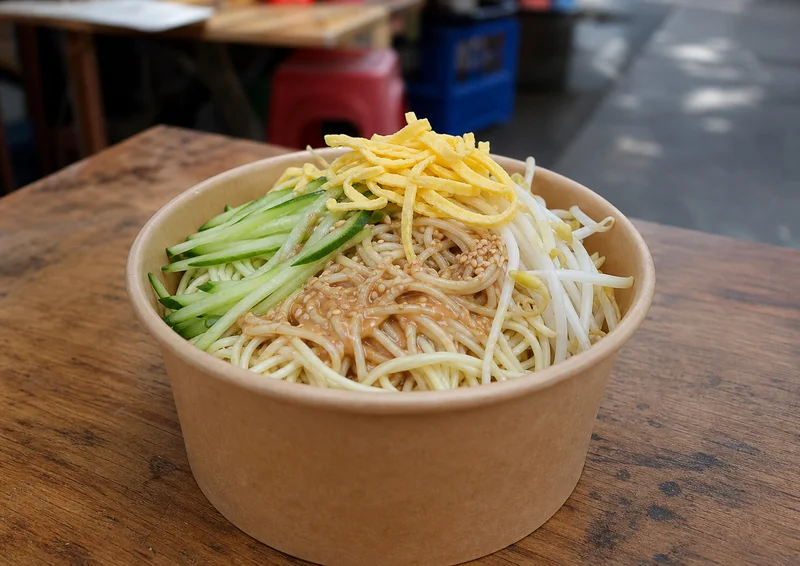
A practical English overview of Shanghai cold noodles, covering what liang mian is, why it works in summer, when to order it, and how it fits beside other local noodles.
Shanghai cold noodles are one of the easiest summer foods to recognize once you know the basic shape of the dish. The bowl is usually dry rather than soupy: cooled wheat noodles, a nutty sauce, crisp vegetables, and seasonings that make the noodles feel cool without tasting plain.
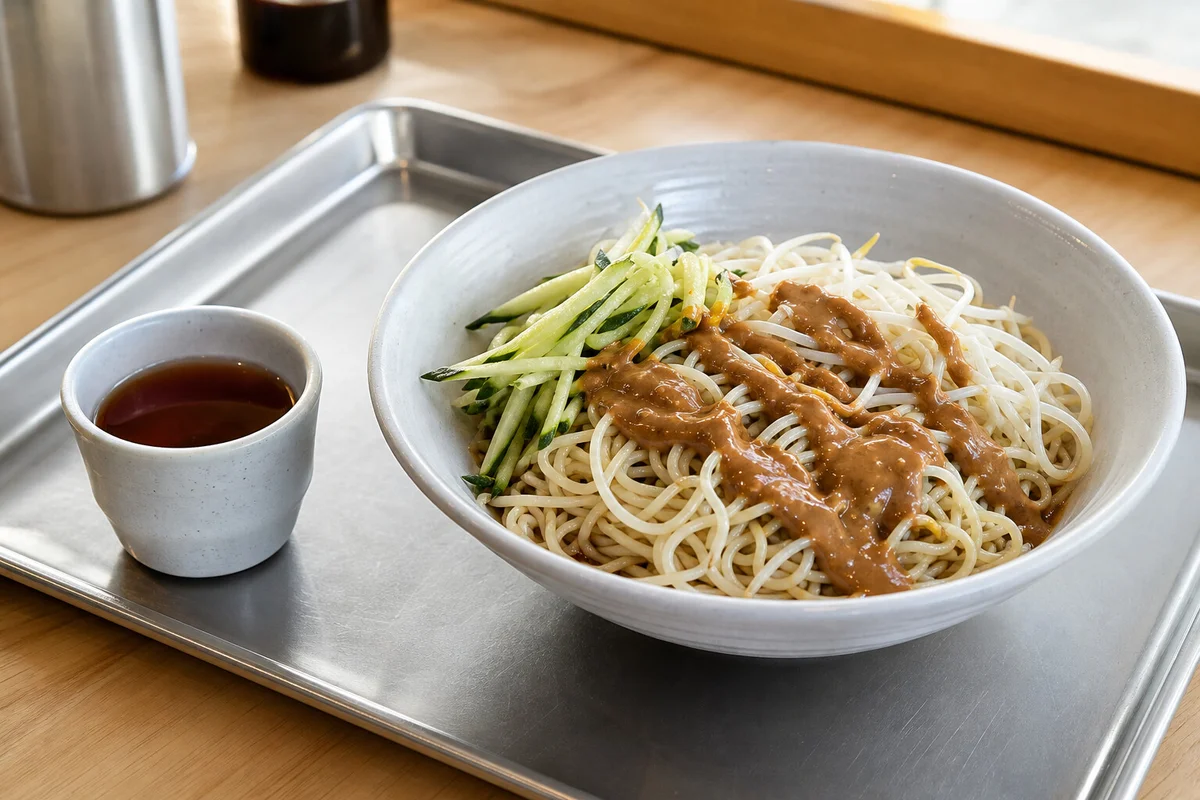
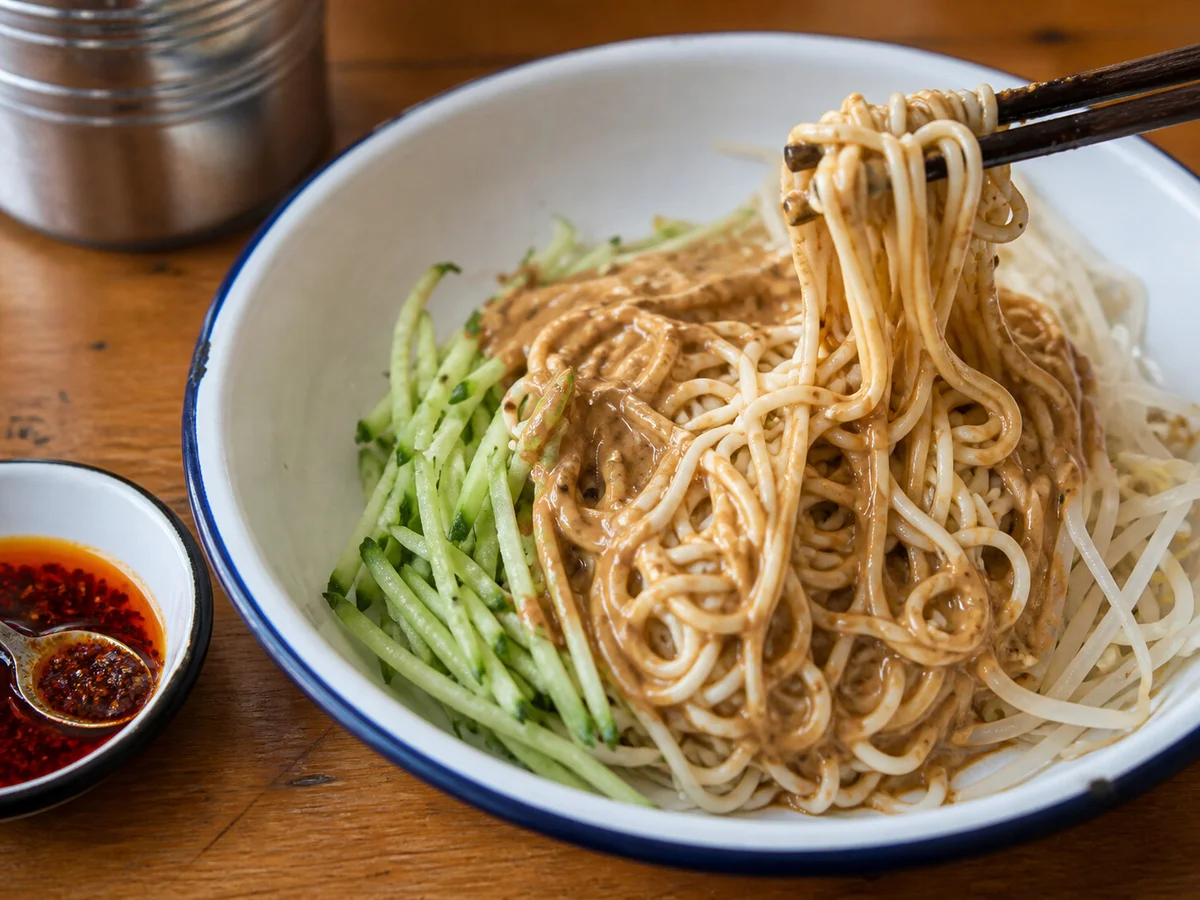
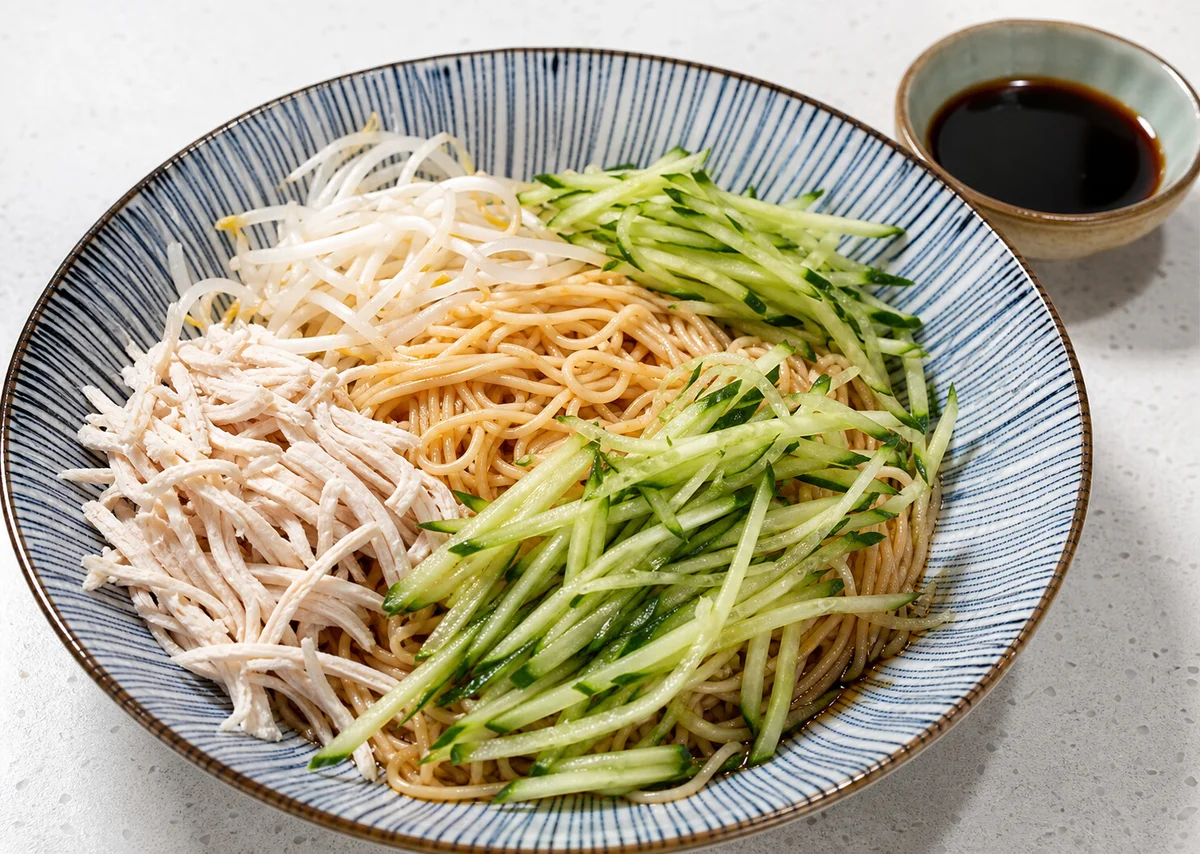
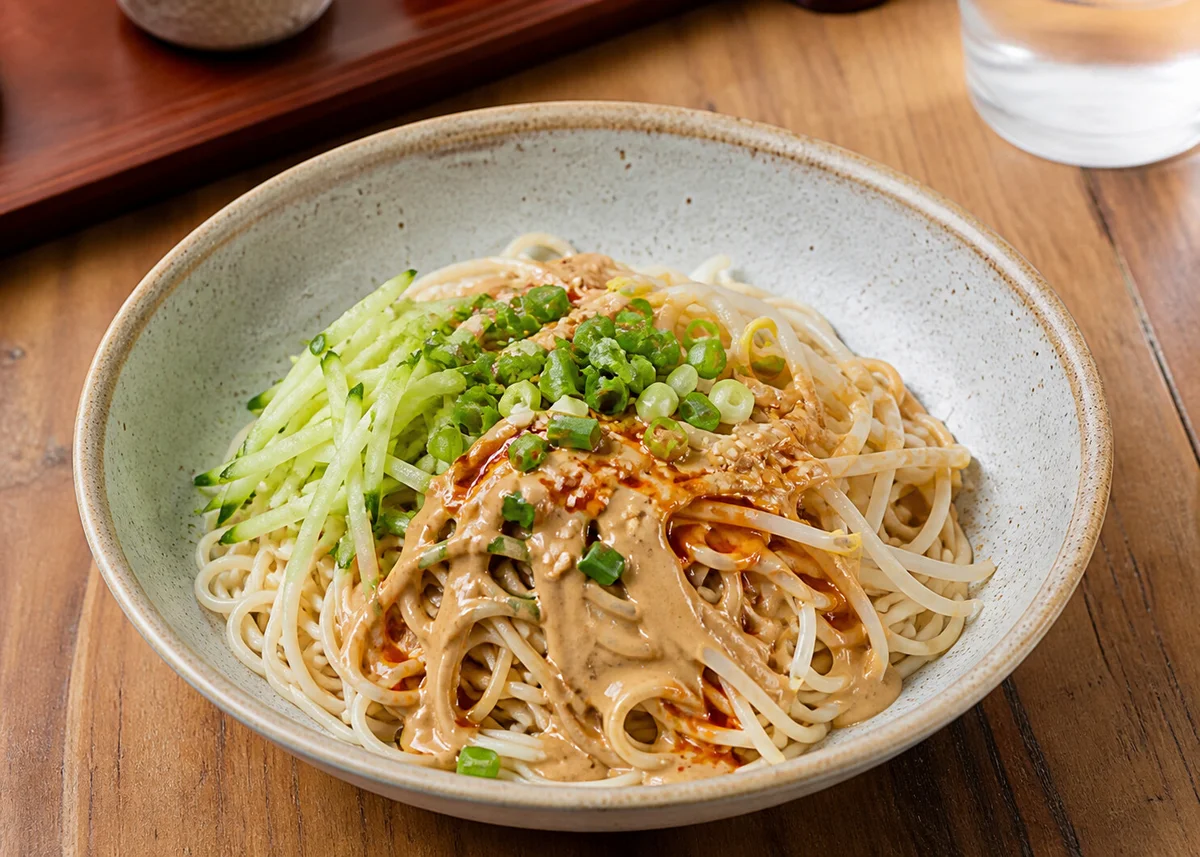
For visitors, liang mian is useful because it explains a quieter side of Shanghai eating. It is less famous than xiaolongbao and less glossy than hong shao rou, but it is exactly the kind of dish people look for when the city is hot and a heavy meal feels like too much.
Shanghai cold noodles start with cooked noodles that are cooled and loosened so they do not stick into a single mass. Many local versions use oil during cooling, then add sauce at the counter or table. The finished bowl should be flexible, lightly chewy, and easy to mix.
This overview is mainly about recognizing the dish and knowing when it belongs in a food day. For a closer look at sauce balance, cucumber, bean sprouts, vinegar, chili oil, and mixing technique, use the focused Shanghai cold noodles sauce and toppings guide.
The texture should feel cool and springy, not stiff from the refrigerator and not mushy from sitting too long. A good bowl is easy to lift with chopsticks, and the noodles should still feel like separate strands after mixing.
Compared with scallion oil noodles, cold noodles feel cooler and more practical in hot weather. Compared with crab roe noodles, they are deliberately modest. That contrast is useful: Shanghai noodle culture is not only about premium toppings, but also about everyday timing and comfort.
Order cold noodles when you want a simple lunch, a late-morning snack, or a light dinner in warm weather. The dish makes most sense when hot soup noodles feel tiring but you still want something more substantial than a snack.
If you are building a larger eating day, keep the cold noodle portion moderate. A bowl of liang mian can sit naturally beside a light soup, a small plate of smoked fish, or a vegetable side. If you are also planning a dumpling stop, save shengjianbao for another meal; hot pan-fried buns and cold noodles both deserve attention, but they do not need to compete in the same sitting.
Cold noodles are best as a warm-weather reset between richer Shanghai dishes. They can follow a breakfast of soy milk and youtiao, or come before a later dinner built around red-braised dishes, dumplings, or seasonal crab.
Do not treat liang mian as a famous-photo dish in the same way as soup dumplings. Its value is quieter: speed, cool texture, everyday comfort, and the way it shows Shanghai food beyond restaurant classics.
Cold noodles make the most sense in summer. The dish is tied to heat, quick service, and the need for something filling that does not arrive steaming hot. It is also a good choice when you have already tried richer Shanghai dishes and want a cleaner reset before the next meal.
Morning travelers can connect liang mian to the broader Shanghai breakfast world, even though cold noodles are not always a first breakfast order. The shared idea is speed and practicality: food that fits the city’s daily rhythm, not only restaurant occasions.
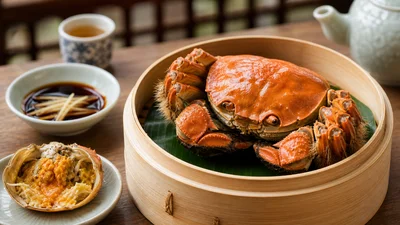
Shanghai hairy crab season includes autumn mature crabs and early-summer Liuyuehuang young crabs with softer…
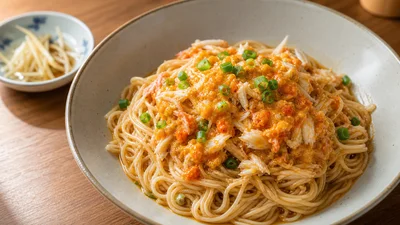
Shanghai crab roe noodles are rich seasonal noodles topped with crab roe and crab meat, usually ordered for c…
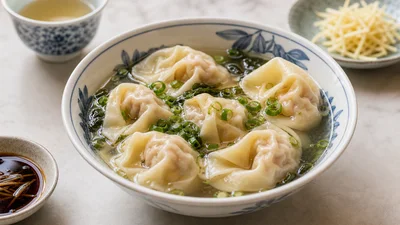
Shanghai wonton soup with soft wrappers, pork and vegetable filling, clear broth, egg strips, seaweed, scalli…
Comments (0)