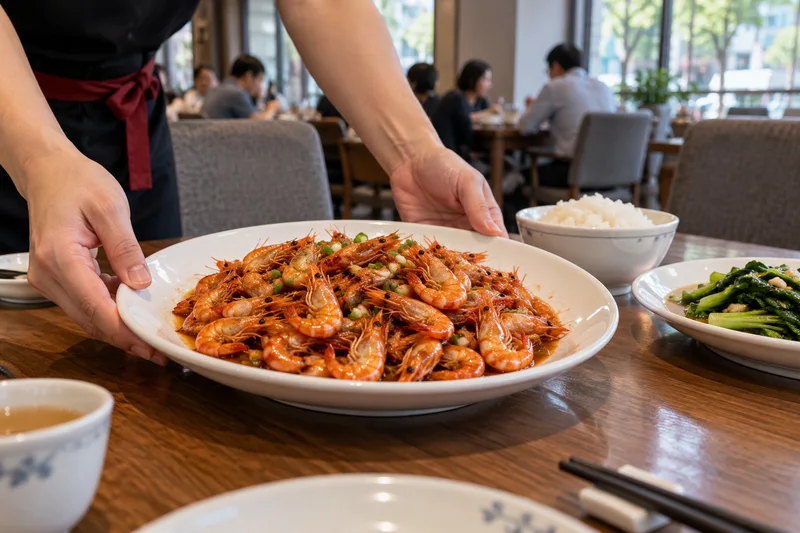
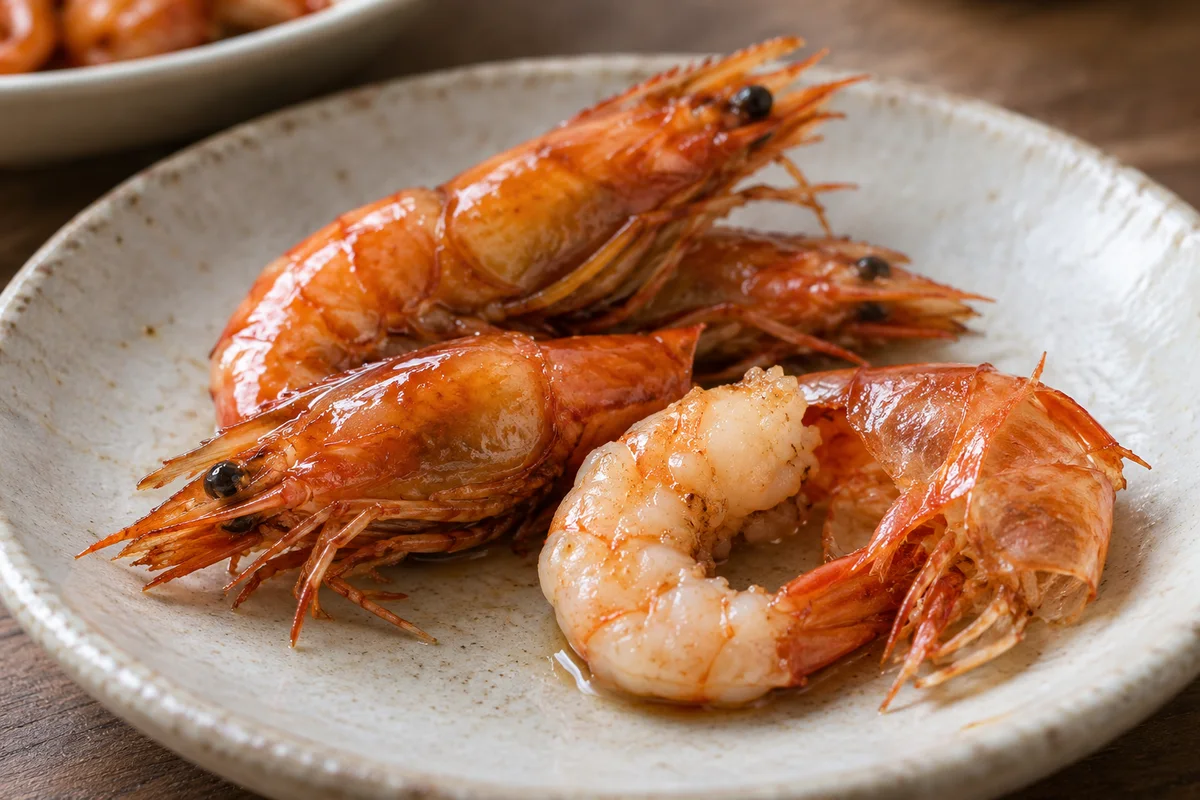
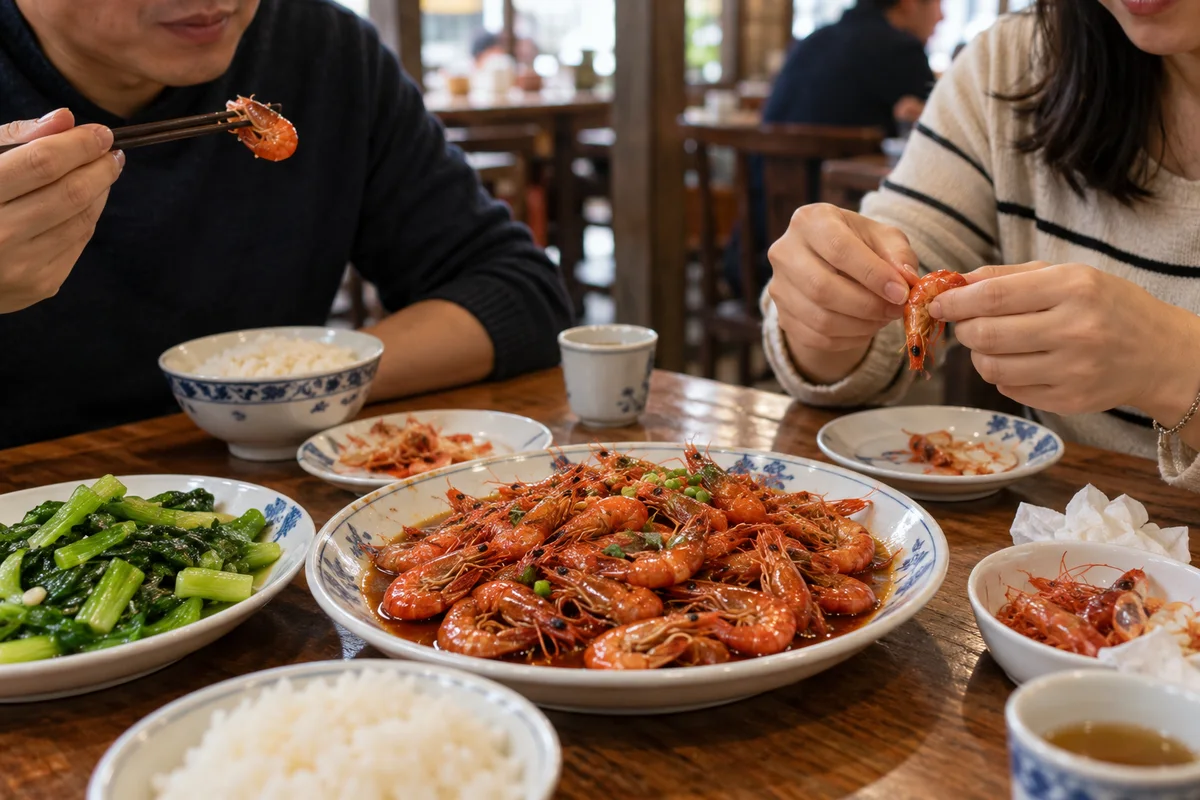
The first thing to notice about Shanghai you bao xia is what the kitchen leaves on. A platter arrives with reddish shells around the shrimp, often with the heads still attached. Under that shell is the meat you came for, but the shell also carries much of the seasoning. Eating the dish is a small sequence of tasting, peeling and reaching for rice, rather than finishing a forkful of peeled prawns in one motion.
油爆虾 is usually translated as quick-fried shrimp or oil-fried shrimp. It gives a visitor a useful route beyond the city's better-known dumplings and noodle bowls: a shared restaurant dish whose interest comes from the contrast between the surface and the flesh inside.
What the Name Tells You
Keep 油爆虾 on your phone if the English menu is vague. “Fried shrimp” can cover battered prawns, salt-and-pepper shrimp and other preparations, so the translation alone does not settle the order. Ask whether this is the Shanghai sweet-savory version served in its shells. Small river shrimp are a familiar choice for the dish, though species and size can vary with the kitchen.
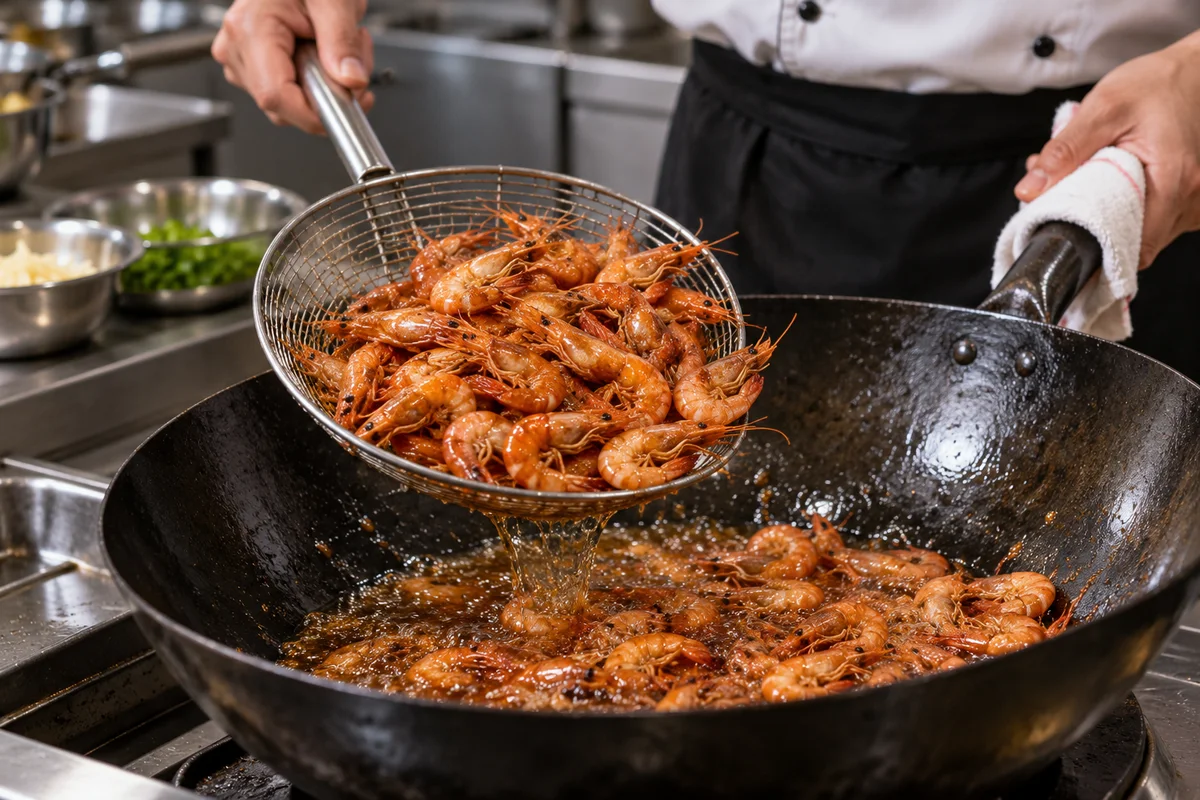
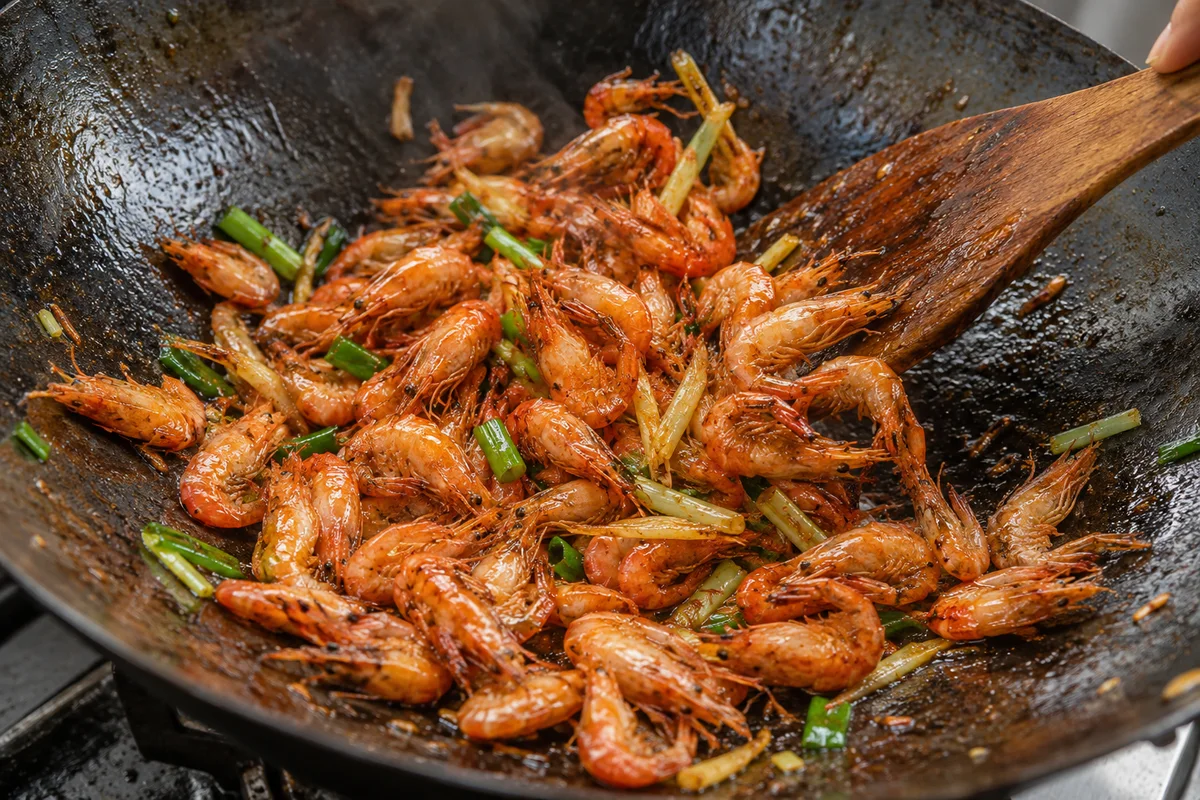
The Shanghai government's guide to traditional New Year foods describes quick-fried river shrimp with red, crisp shells and firm, juicy meat. Its holiday context is useful cultural background; it does not mean the dish is reserved for one date on the calendar.
At a restaurant, confirm today's presentation before relying on a photograph from elsewhere. A small shrimp and a larger prawn need different handling at the table. The same English heading may hide that difference, especially on a menu translated for several cuisines.
Shell-On Shrimp and Crystal Shrimp Are Different Orders
If your mental picture is a pale plate of peeled, curled shrimp, you are probably thinking of Shanghai crystal shrimp. You bao xia arrives with more color and more work for the diner. The contrast is useful when choosing: do you want a relatively gentle peeled preparation, or a seasoned shell-on platter that asks you to slow down?
A fried shell should not lead you to expect a thick crumb coating. The shrimp's own exterior supplies the structure. Nor should a bright red shell automatically be read as chili heat. Check with the server if you avoid spicy food; the name itself does not specify the kitchen's complete seasoning.
There is little reason for two diners to order both shrimp dishes by default. For a larger group interested in comparing them, the difference is worth exploring. Otherwise, choose the preparation you want and leave space for vegetables, rice and a contrasting dish.
Taste the Seasoning, Then the Meat
Begin with a single shrimp. Let it cool enough to handle and notice how much sauce clings to the shell. The sweet-savory impression should be considered together with the shrimp, not just from the sauce pooled on the platter. Peeling away the shell changes the balance, revealing a much plainer bite of flesh underneath.
Recipes differ in sweetness, salt and acidity. You can ask whether a less sweet finish is possible, but the restaurant may already have a prepared sauce. Making that request before ordering is more useful than assuming sugar can be removed once the dish reaches the table.
If you enjoy the contrast between a seasoned surface and the food within, the experience has something in common with Shanghai smoked fish. The ingredients and cooking are different, however, and both can bring a substantial sweet-savory note. One glazed dish is often enough for a small table.
Do You Eat the Shell?
You do not have to. Very small, crisp shrimp shells may be eaten by diners accustomed to them, but no menu name guarantees that every head, tail or shell segment will be pleasant to chew. Larger shrimp can have tougher shells and sharp points. Peeling is a perfectly reasonable way to enjoy the dish.
Work over your own small plate. Remove the head if present, loosen the body shell, and separate any hard tail pieces before eating the meat. Use your hands if that gives you better control, and ask for napkins and a dish for discarded shells. There is no need to demonstrate a particular chopstick technique at the expense of enjoying lunch.
For children or anyone who finds shell-on food difficult, ask whether a peeled shrimp dish would be easier. Do not assume a crisp appearance makes hard fragments suitable for swallowing. A serving plate should also stay separate from the plate where shells accumulate.
Four Questions That Improve the Order
- 这个是油爆虾吗? Zhege shi you bao xia ma? Is this you bao xia?
- 虾带壳吗? Xia dai ke ma? Are the shrimp served in their shells?
- 一份多大? Yi fen duo da? How large is one portion?
- 可以少甜一点吗? Keyi shao tian yi dian ma? Could it be a little less sweet?
Also check how the price is quoted. A listed plate price, a weight-based order and a photograph of a banquet platter do not imply the same quantity. Ask the server what the portion means for your group before adding other seafood. Shell-on weight includes parts you may set aside, so it is not directly comparable to the weight of peeled shrimp.
Build Dinner Around Contrast
Plain rice and a vegetable dish give you somewhere to go between seasoned shrimp. The rice keeps the sauce from becoming the only flavor in each mouthful; the greens change both texture and pace. These are simple ordering suggestions rather than a prescribed banquet sequence.
For an opening cold plate, sliced cold chicken offers a gentle savory start. If the group is already ordering hong shao rou, consider sharing smaller portions: both the pork and the shrimp can bring sweetness, and several rich sauces can make a modest meal feel repetitive.
For two people, ask the server whether one shrimp platter, rice and greens will be enough before automatically adding a second main. For a larger table, let the shrimp be one element among dishes with different textures. The meal will be more interesting if every plate has a clear purpose.
Eat Freshly Served, and Plan Takeaway Separately
If crisp shells are what attracted you, start while the platter is freshly served. Sauce, steam and time change the surface. A closed takeaway container can soften it further, even when the shrimp itself remains enjoyable. A restaurant meal and a box opened much later are different experiences.
Ask the kitchen how quickly a takeaway order should be eaten and what storage it needs. Carrying cooked seafood around during a long afternoon is a poor way to preserve either texture or quality. Follow the restaurant's handling advice rather than trying to rescue the original crispness with an improvised reheating method.
Before Ordering for Someone Else
This is a crustacean dish, so it is not suitable for someone avoiding shrimp. Other questions concern the sauce, cooking wine, frying oil and shared equipment. Soy-based seasoning may contain wheat, and a brief English menu entry does not provide a complete ingredient list.
The useful first-time order is straightforward: establish that the menu means Shanghai shell-on you bao xia, confirm the portion, make space for discarded shells, and taste one shrimp before deciding how you prefer to peel the rest. You do not need a complicated technique to appreciate the dish's central contrast: a seasoned red shell around a firm bite of shrimp.
Comments (0)