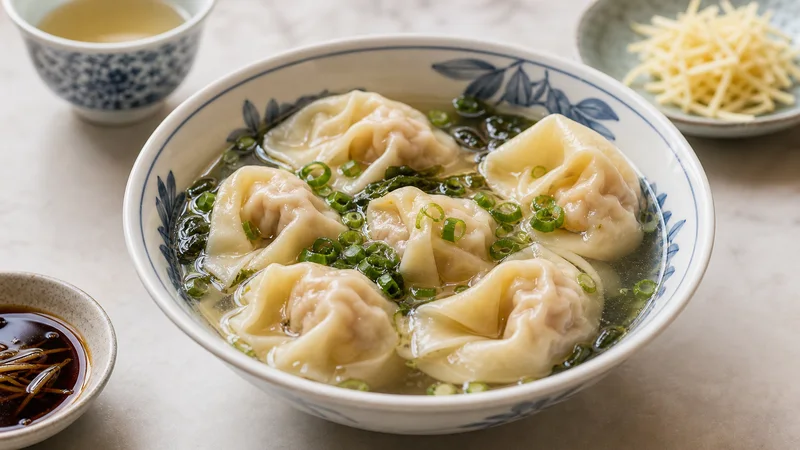
Shanghai wontons can be breakfast, lunch, or comfort food depending on size and filling. Small wontons are light and soft, usually served in a gentle soup. Large wontons are more substantial, often filled with pork, greens, shrimp, or shepherds purse, and can stand alone as a meal.
For visitors, wontons are useful because they are familiar enough to order easily but still show local habits: mild broth, soft wrappers, morning counters, and home-style fillings that do not need heavy seasoning.
Small Wontons for Breakfast
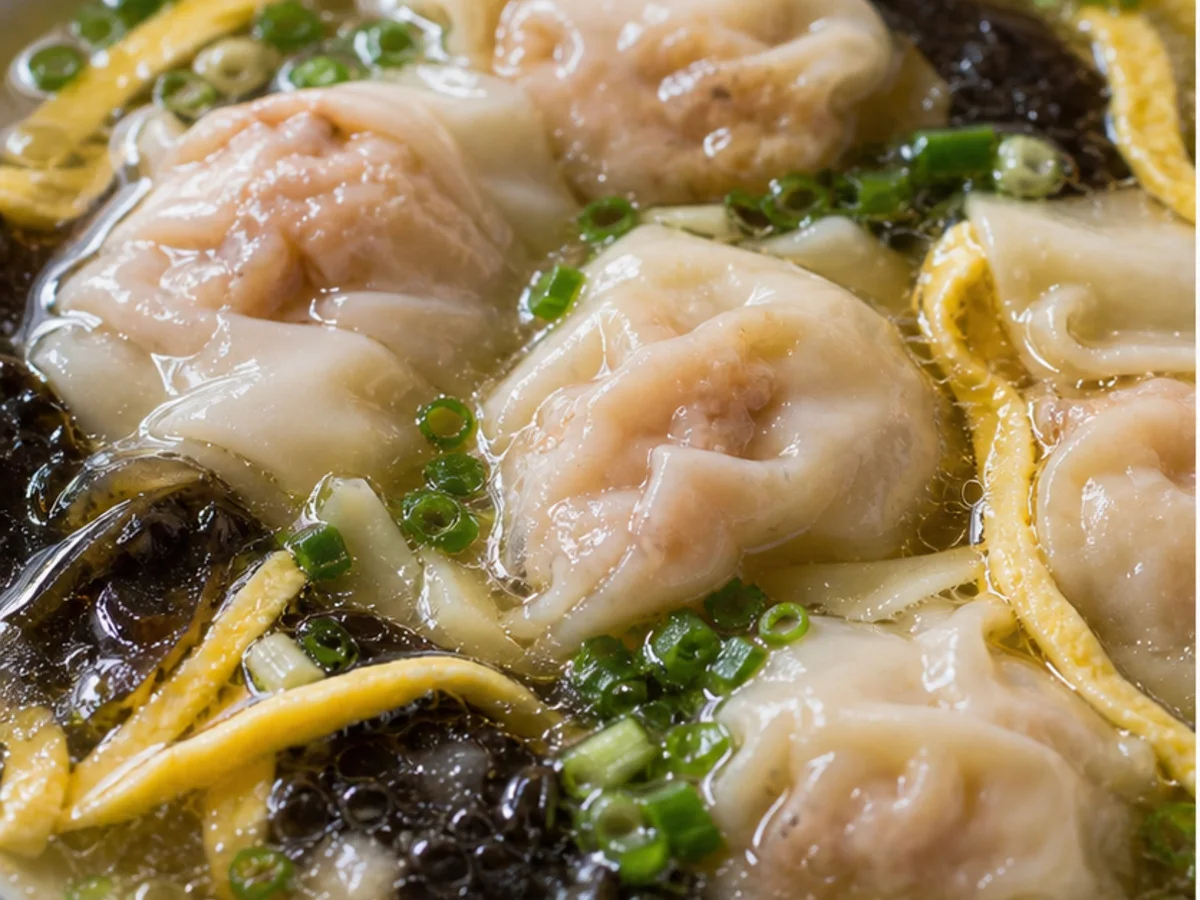
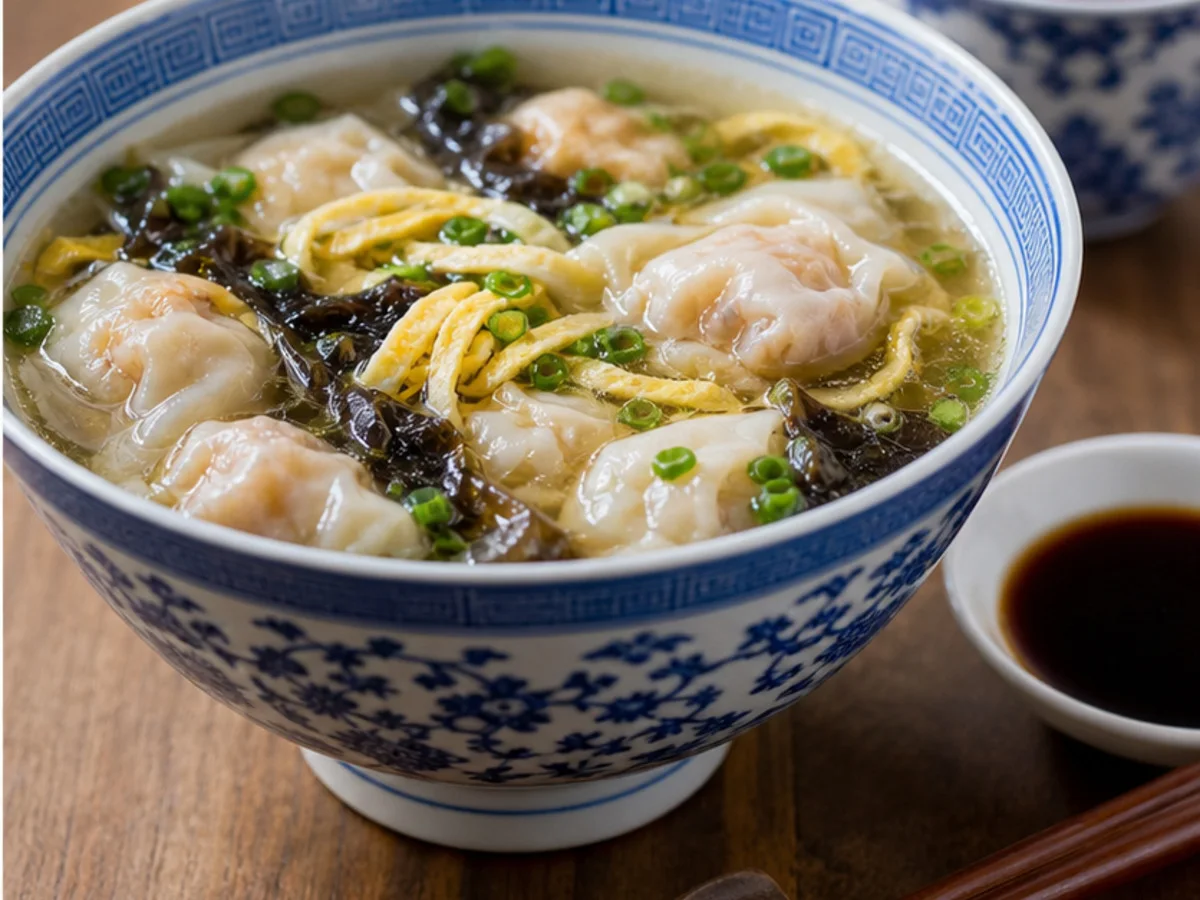
Small wontons usually come in a clear broth with scallions, egg strips, seaweed, dried shrimp flavor, or white pepper. They are a lighter choice inside a Shanghai breakfast route, especially if you want something warm without starting the day with fried buns.
Large Wontons as a Meal
Large wontons are more about filling. Vegetable-and-pork versions can taste home-style and satisfying, while shrimp versions feel cleaner and lighter. The wrapper should be soft but not falling apart, and the filling should be generous enough that the wonton does not feel like only dough.
Soup, Sauce, and Seasoning
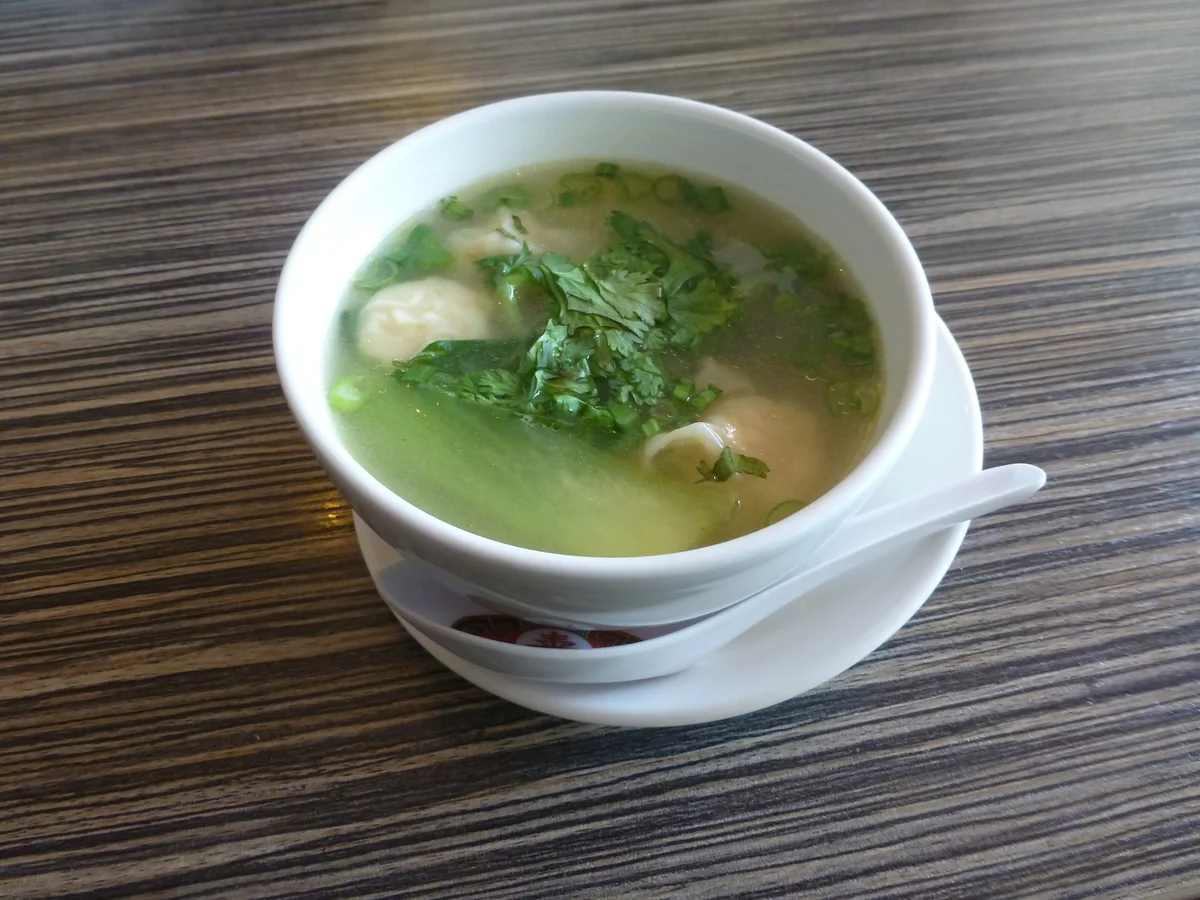
Shanghai wonton soup is usually mild. Do not expect the chili-heavy style of some other regions unless the menu says so. Taste the broth before adding vinegar, chili oil, or extra pepper. The first sip tells you whether the bowl is meant to stay delicate.
How to Choose Around Other Foods
If you want crunch and heat in the same morning, order shengjianbao another day rather than forcing both into one heavy breakfast. If you are at a noodle shop, wontons pair naturally with scallion oil noodles because one gives soup and the other gives aroma.
Good Signs
- Clear broth with a fresh garnish aroma.
- Wrappers that are tender but intact.
- Large wontons with visible filling structure.
- Small wontons that feel delicate rather than empty.
Comments (0)