Shanghai Crab Roe Noodles: Seasonal Crab Noodle Guide
A detailed guide to Shanghai crab roe noodles, covering rich crab roe topping, seasonal timing, ordering tips, pricing, and how the dish compares with simple noodles.
A practical English guide to ordering Shanghai crab roe noodles, including xiefen mian, crab roe and crab meat topping, price expectations, seasonality, noodle texture, vinegar, g…
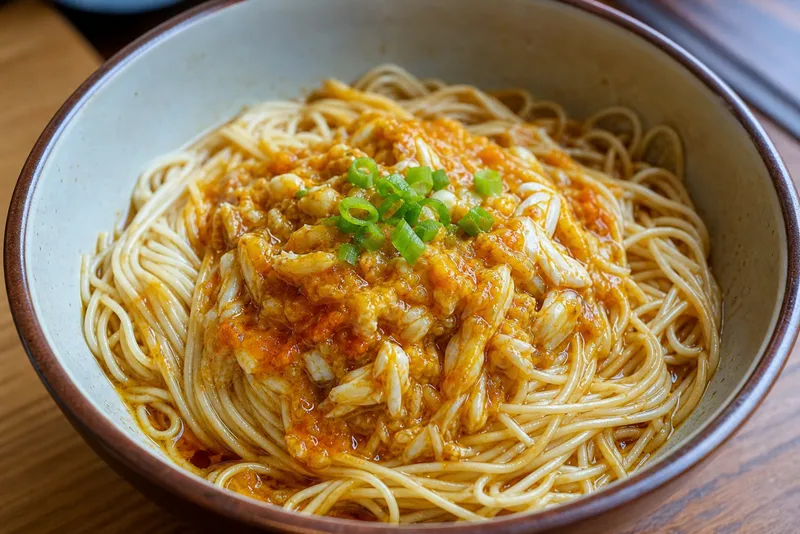
Shanghai crab roe noodles can look modest at first: a bowl of noodles, a glossy crab topping, and not much else. The point is not portion size. The point is concentrated crab flavor, especially when the topping combines crab roe, crab meat, and oil into a rich sauce that coats plain noodles.
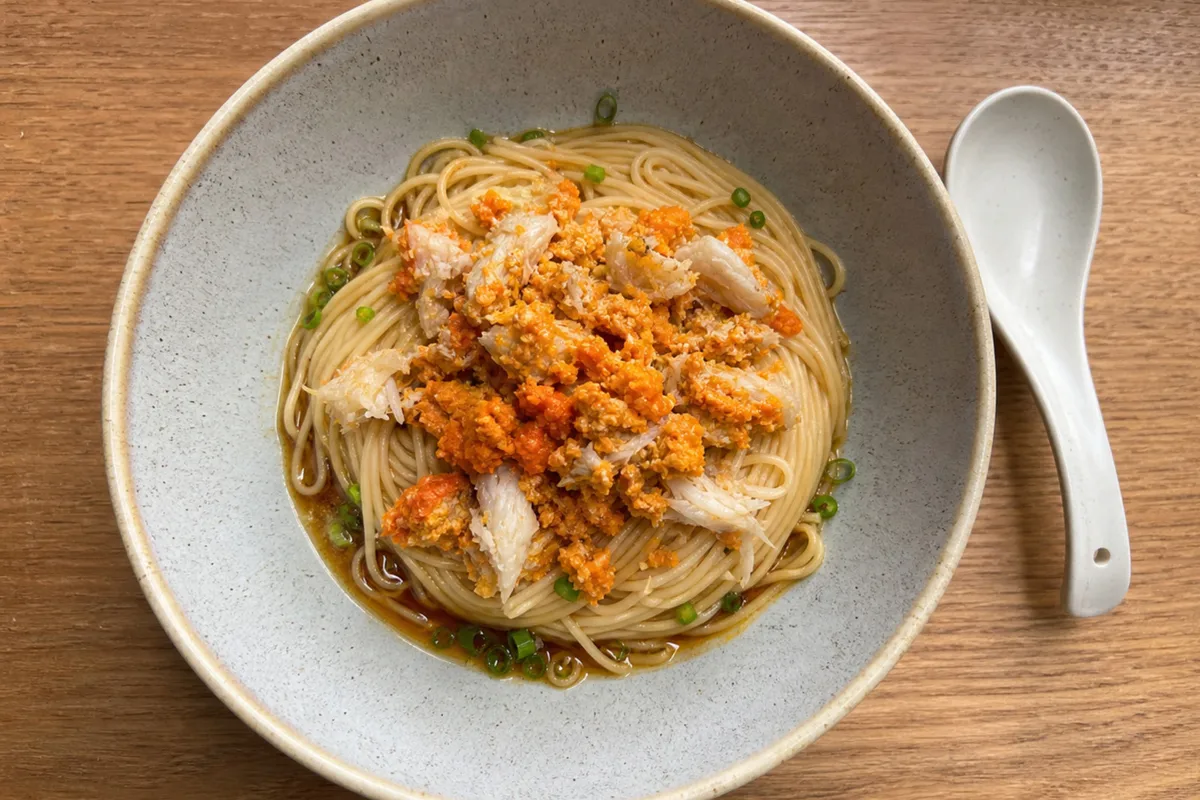
This guide is for visitors who already know the basic idea from the Shanghai crab roe noodles guide and want a more practical ordering view: what xiefen mian should taste like, why the price is higher, how to judge the topping, and what to pair with the bowl.
Crab roe noodles are expensive because the topping is labor-intensive and seasonal. The valuable part is not the wheat noodle itself but the crab roe and crab meat that have been picked, cooked, and seasoned into a concentrated topping.
A low price is not always a bargain. It may mean less crab roe, more oil, or a topping stretched with other ingredients. A high price is not automatically better either; the bowl still needs clean crab aroma, balanced seasoning, and noodles that do not collapse under the sauce.
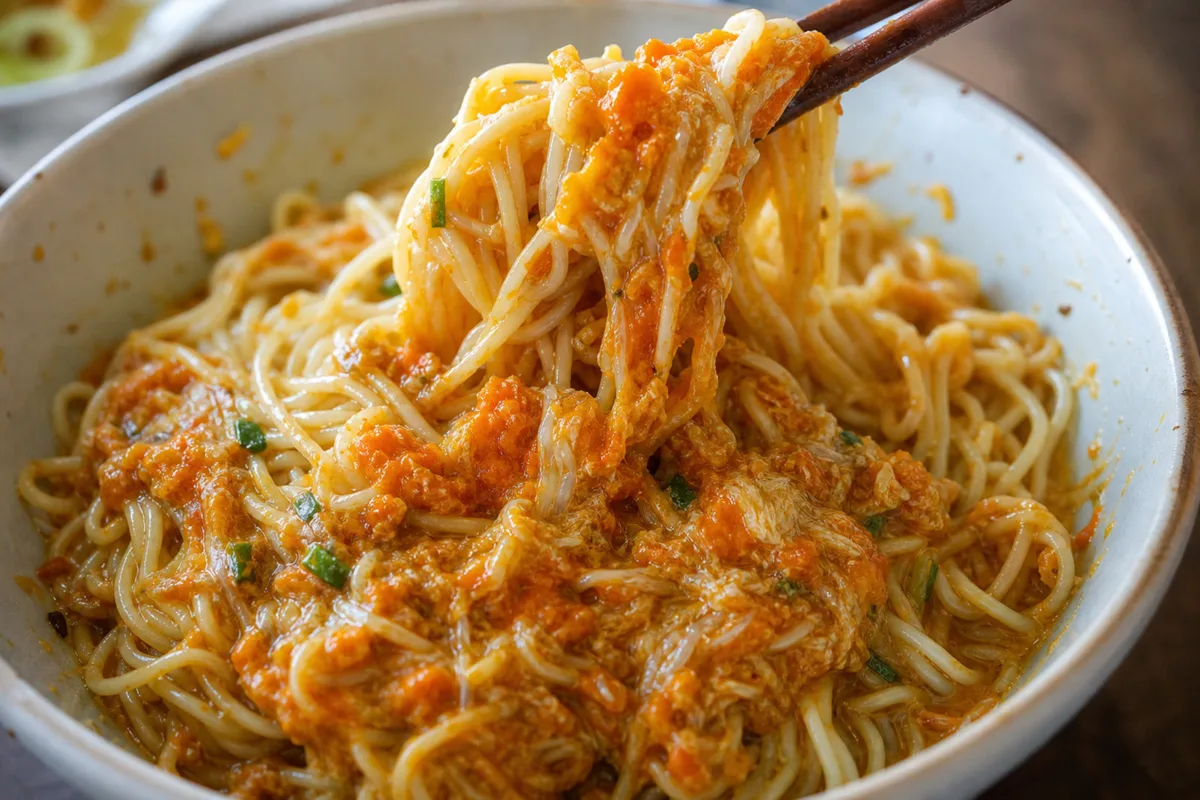
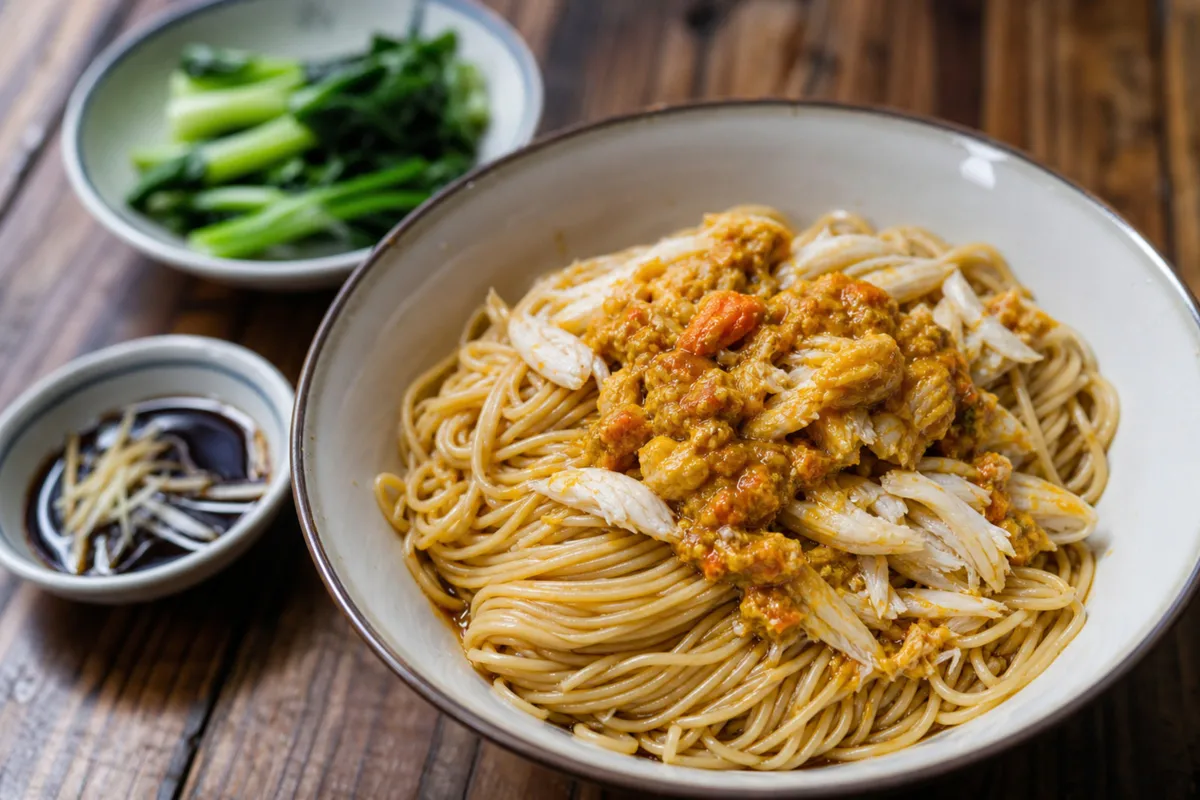
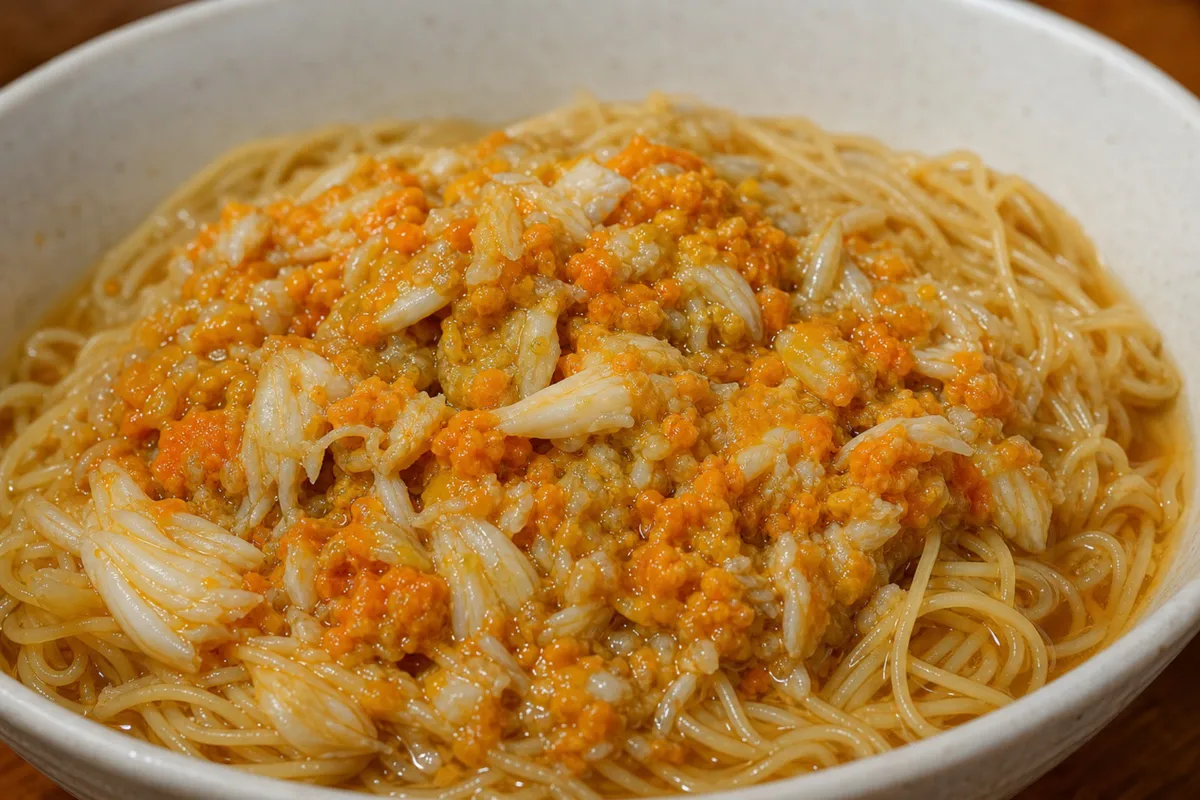
The topping should look glossy and dense, with orange-gold crab roe and pale crab meat visible. It should cling to the noodles after mixing. If the sauce looks thin and watery, the crab flavor may disappear after the first few bites.
Good crab roe topping tastes rich, savory, and slightly sweet from the crab itself. It should not taste only salty, oily, or fishy. A small amount can flavor the whole bowl when the noodles are mixed properly.
Do not judge the bowl from the first unmixed spoonful. Crab roe noodles need mixing. Pull the noodles up from the bottom, fold the topping through the strands, and give the oil and roe time to coat the surface.
This is different from a soup noodle. It is closer to a dry-tossed dish, but richer than scallion oil noodles. Scallion oil noodles are about fragrance and restraint; crab roe noodles are about seasonal intensity.
Crab roe noodles make the most sense around crab season, especially when menus are already promoting hairy crab dishes. Some restaurants serve versions year-round, but the strongest reason to order the dish is seasonal crab richness.
If you want the full ritual, follow this bowl with the hairy crab guide. If you want an easier format, crab roe noodles are often more approachable because the crab work has already been done for you.
Many crab dishes in Shanghai benefit from ginger or vinegar because crab roe is rich. With noodles, add cautiously. Too much vinegar can flatten the crab aroma, while a little sharpness can keep the bowl from feeling heavy.
If ginger is served on the side, taste the noodles first. Then add a small amount only if the topping feels too rich or slightly fishy. The goal is balance, not covering the crab.
Keep the rest of the meal simple. A light vegetable, a small cold dish, or a mild soup works better than another rich sauce dish. If you also order hong shao rou or smoked fish, the table can become heavy quickly.
For a seasonal Shanghai meal, crab roe noodles pair naturally with rice cakes if the rice cakes are not also in a heavy crab sauce. Otherwise, choose wontons or greens to let the crab noodles stay the main rich dish.
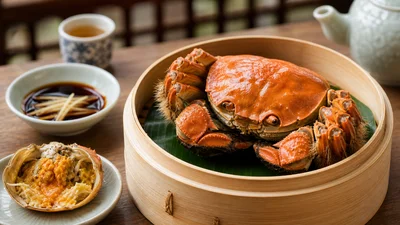
Shanghai hairy crab season includes autumn mature crabs and early-summer Liuyuehuang young crabs with softer…
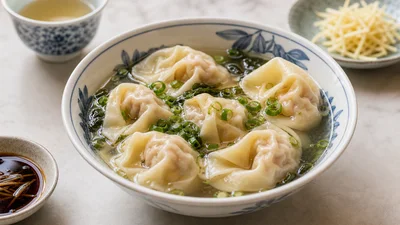
Shanghai wonton soup with soft wrappers, pork and vegetable filling, clear broth, egg strips, seaweed, scalli…
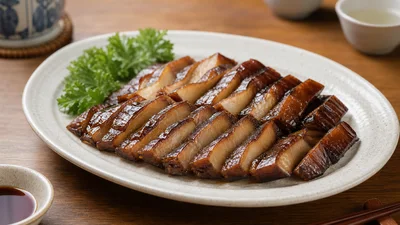
Shanghai smoked fish, or xun yu, is usually fried fish slices soaked in a dark sweet-savory sauce and served…
Comments (0)