Shanghai Shengjianbao: Crispy Bottoms, Hot Soup, and Four-Piece Orders
A focused English guide to Shanghai shengjianbao, covering crisp bottoms, hot soup, hunshui and qingshui styles, one-liang four-piece orders, vinegar, and safe eating tips.
A practical English guide to ordering Shanghai shengjianbao in breakfast shops, including fresh pan batches, crispy bottoms, sesame and scallion tops, hot soup, dipping vinegar, a…
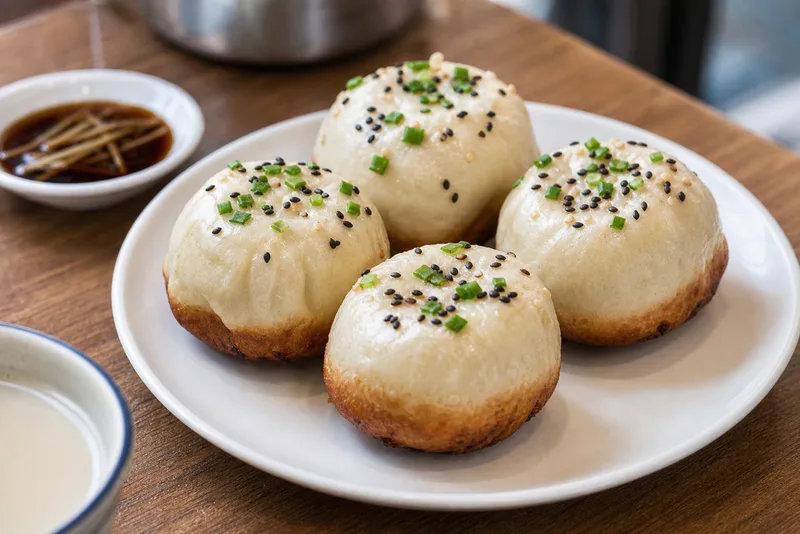
Shanghai shengjianbao are at their best when you can see the pan. The buns should have pale rounded tops, black sesame and scallions, and a browned base that was made by contact with the hot pan, not by reheating an old batch.
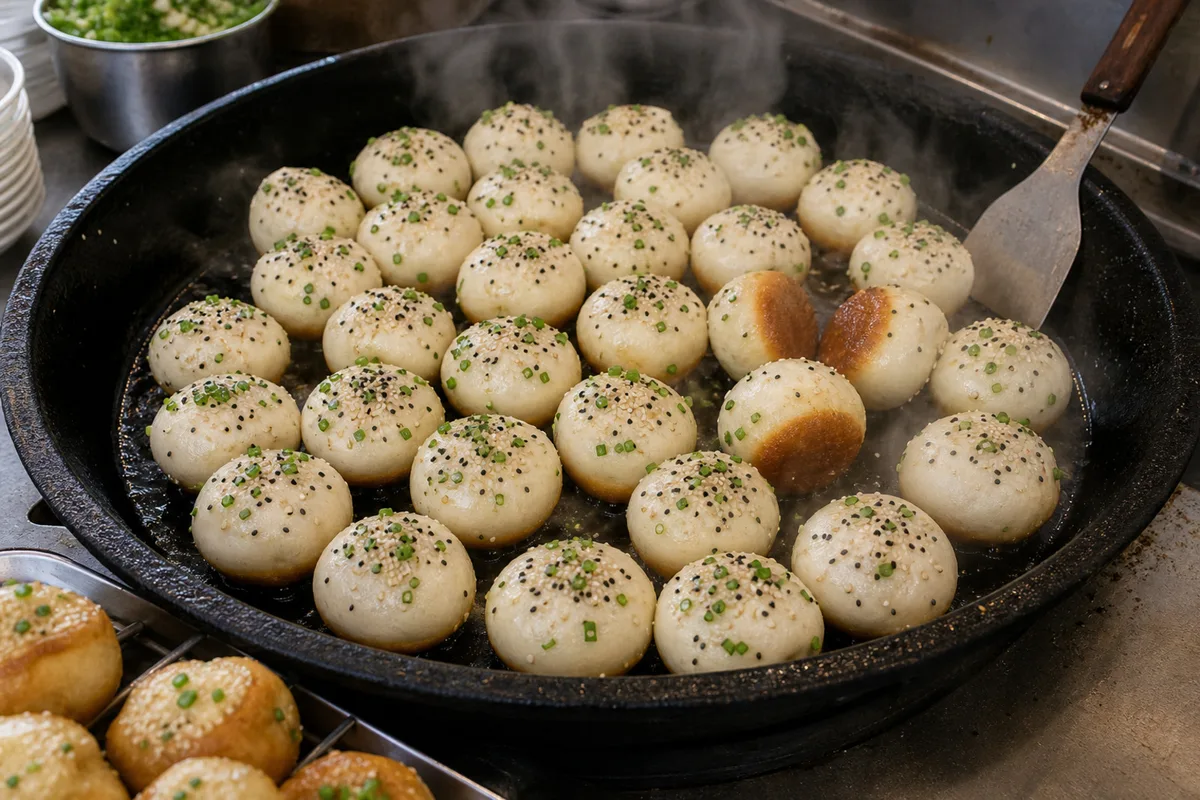
This guide is for visitors who already know the basics from the Shanghai shengjian mantou guide and want a more practical breakfast-shop view: how to spot a fresh batch, what the bottom should look like, how much to order, and what to eat with it.
A busy shengjian shop usually tells you more than a long menu. Fresh buns sit in a wide shallow pan, often packed close together, with steam rising and a cook checking the bottom before moving them to plates or takeaway boxes.
If the buns are already stacked and waiting under weak heat, the bottom can soften quickly. Shengjian are not only about filling; they are about the contrast between crisp base, soft top, and hot juice. That contrast fades as the batch sits.
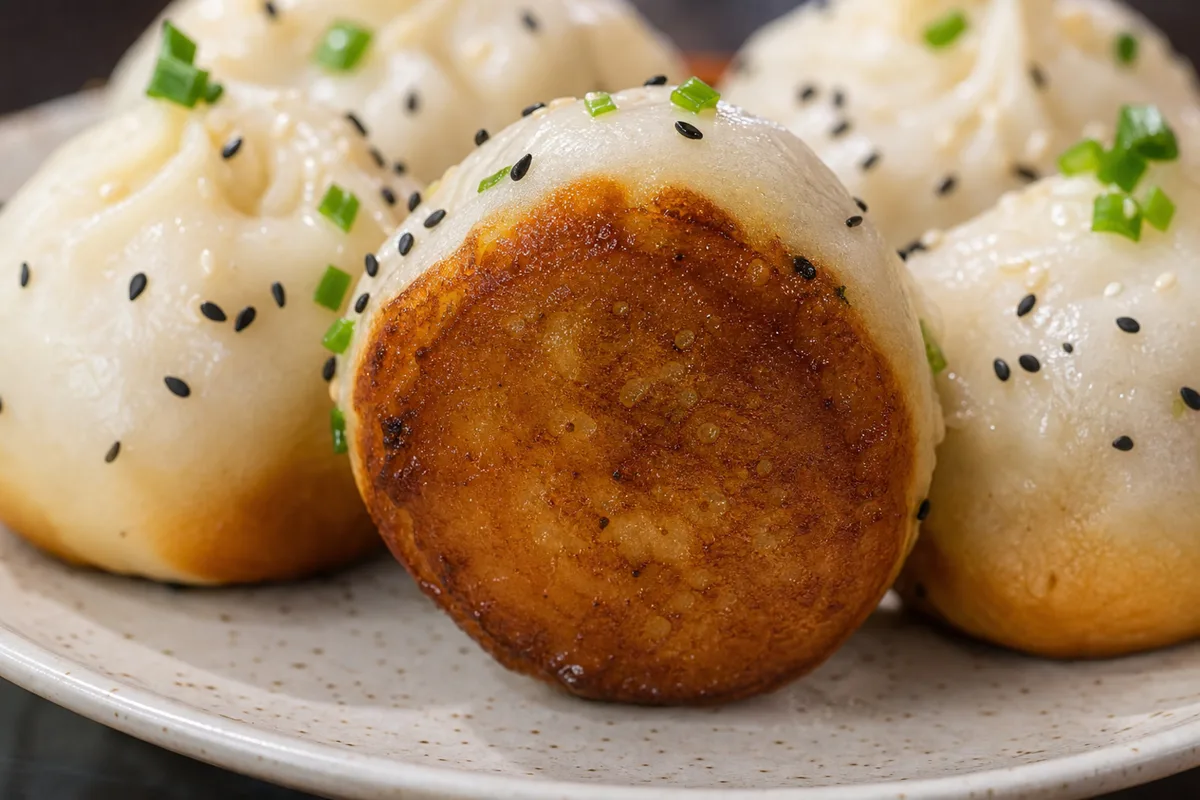
The base should be golden to deep brown, not pale and not burnt black. A good bottom looks thin, even, and crisp enough to crack lightly when bitten. It should not feel leathery or soaked with oil.
The top tells a different story. It should stay soft, rounded, and lightly chewy, with sesame and scallions adding aroma. If the top is dry and wrinkled while the bottom is limp, the bun has probably waited too long.
Four shengjian are usually enough for a focused snack, especially if you are also trying soy milk and youtiao or a bowl of Shanghai wontons. If shengjian are the whole meal, one person may want more, but the buns become heavy quickly.
When sharing, start with one order while it is hot. If the first batch has a strong crisp bottom and juicy filling, ordering another fresh plate is better than buying too many at once and letting them soften on the table.
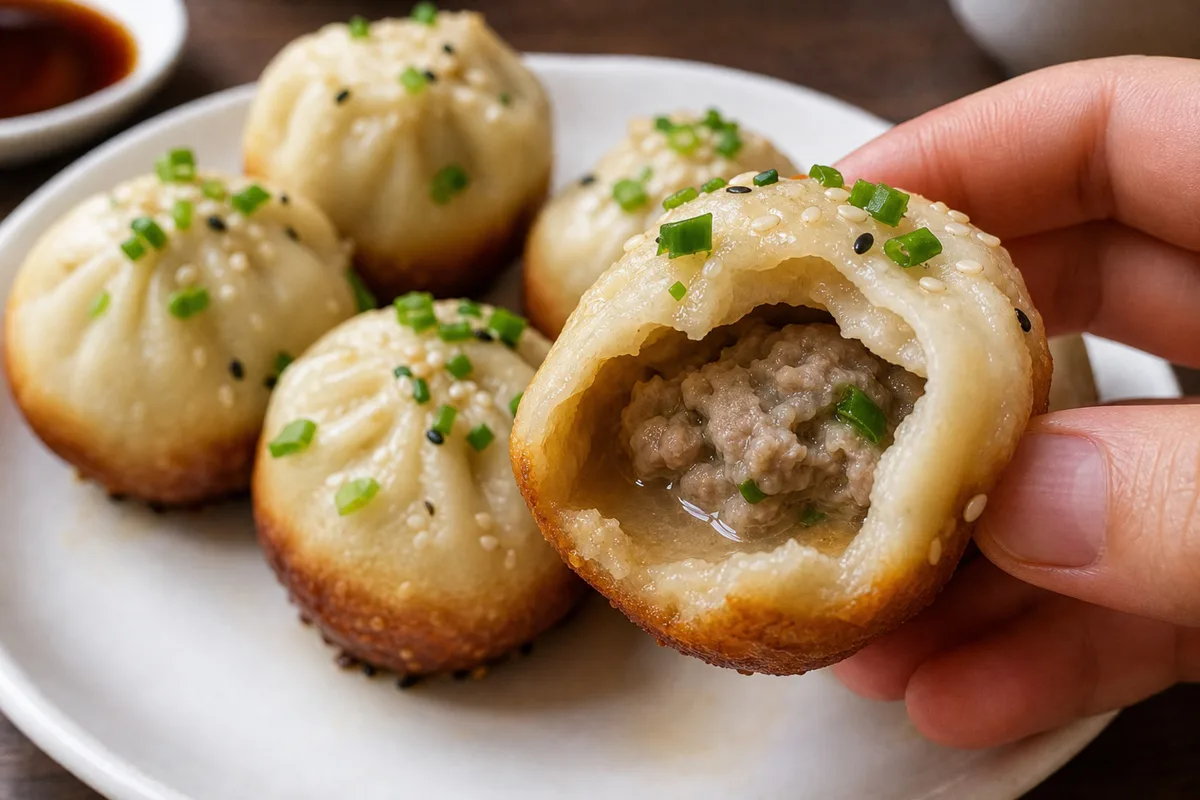
Shengjian filling can be very hot. Bite a small opening first, let steam escape, and sip carefully before taking a full bite. The bun is sturdier than xiaolongbao, but the soup can still surprise you.
Vinegar can help cut the richness, but it should not drown the bun. Dip the crisp bottom lightly or add a small touch after the first bite. Too much vinegar makes every bun taste the same and softens the texture you came for.
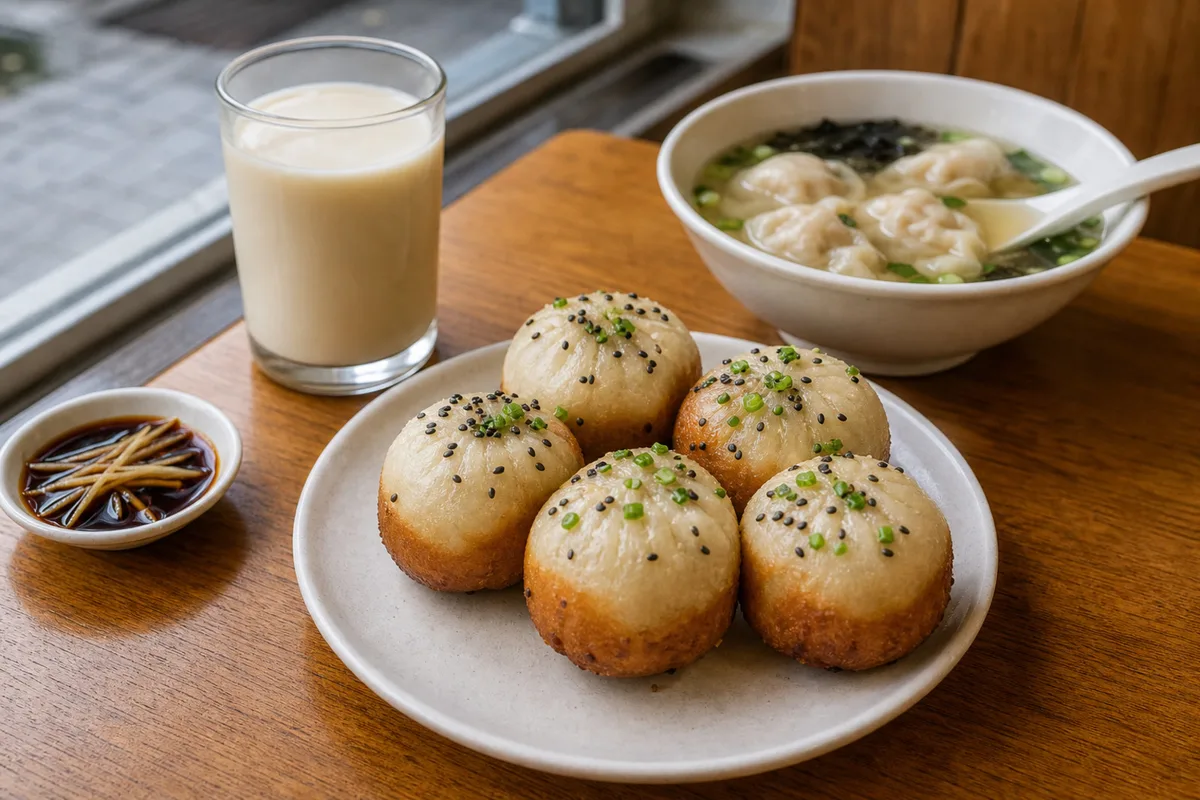
For breakfast, soy milk is the easiest pairing because it cools the mouth and balances the oil. Wonton soup works when you want broth on the table, but order a lighter bowl so the meal does not become too filling.
If you are building a longer Shanghai breakfast route, avoid stacking too many heavy staples at once. Shengjian plus cifan tuan can be satisfying, but it is a dense combination. Shengjian plus soy milk is simpler.
Good signs include a visible pan, quick turnover, buns being lifted with the crisp side protected, and a plate that reaches the table hot enough to require caution. The smell should be toasty and savory, not stale oil.
Weak signs include a pale base, soggy bottom, dry top, or buns that arrive lukewarm. In those cases, the shop may still be famous, but the batch in front of you is not showing the dish at its best.
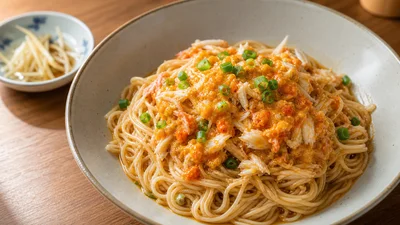
Shanghai crab roe noodles are rich seasonal noodles topped with crab roe and crab meat, usually ordered for c…
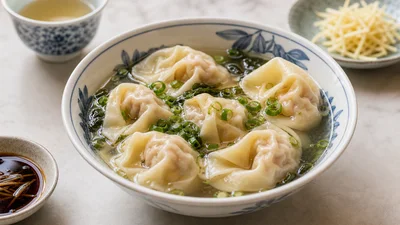
Shanghai wontons are soft folded dumplings served in clear broth, from tiny breakfast wontons to larger pork…
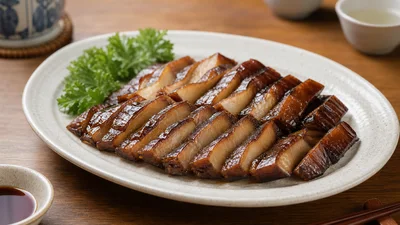
Shanghai smoked fish, or xun yu, is usually fried fish slices soaked in a dark sweet-savory sauce and served…
Comments (0)