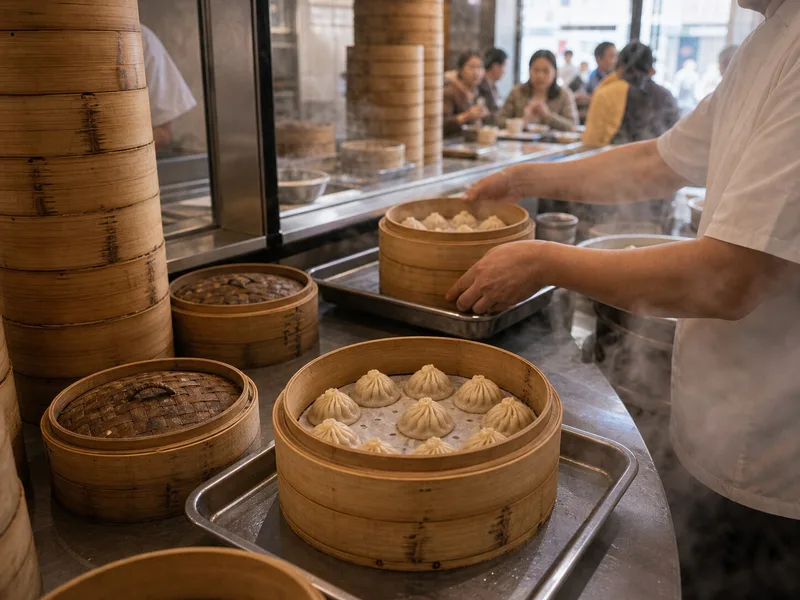
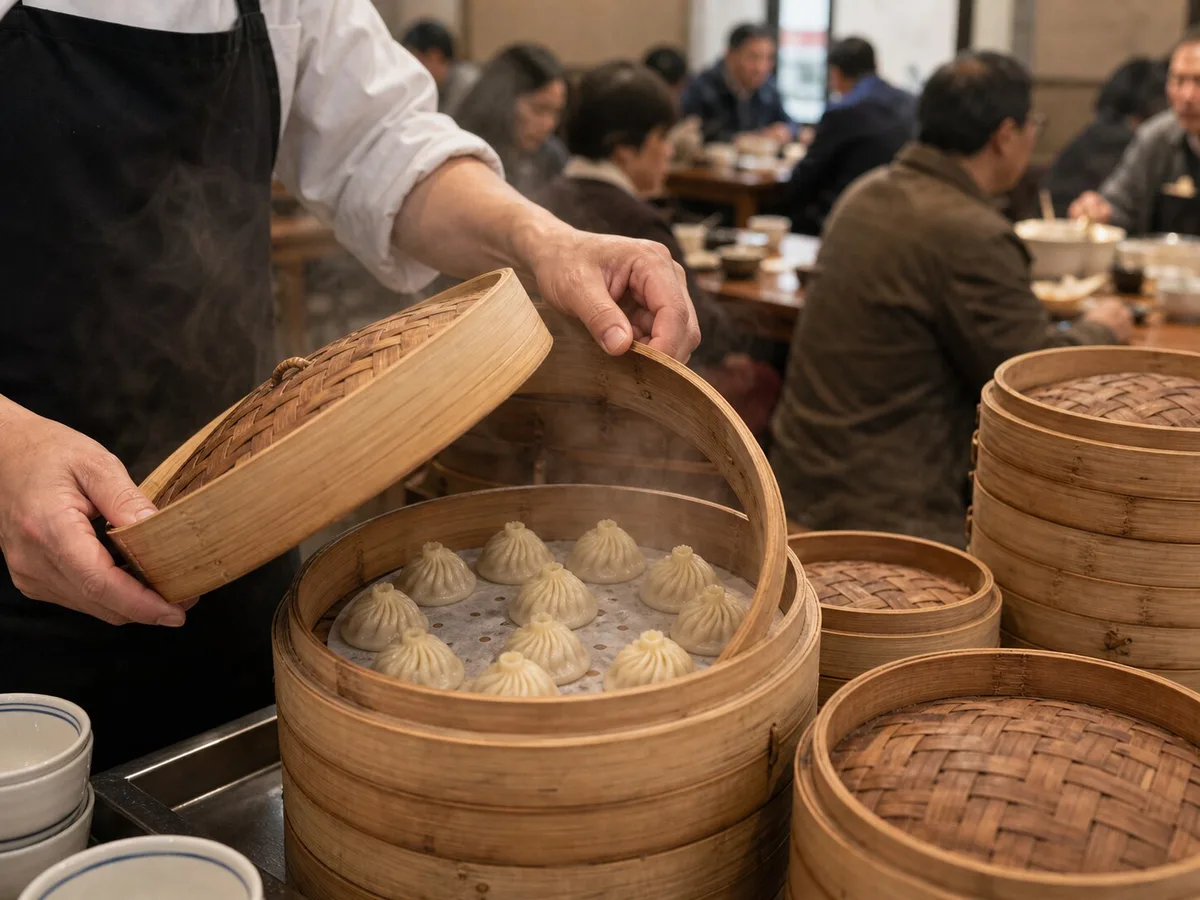
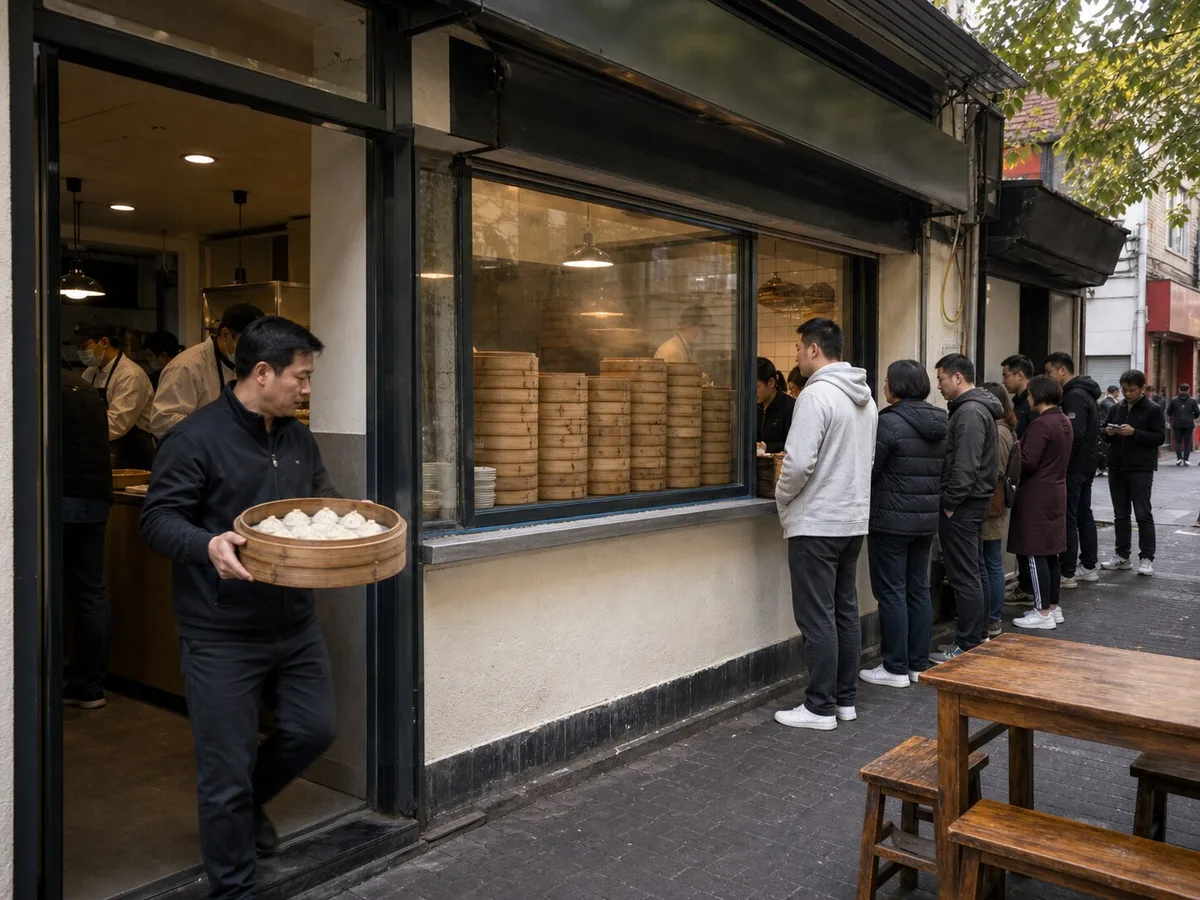
A good xiaolongbao shop has a rhythm. Bamboo steamers move from the kitchen to the table, lids lift while the dumplings are still hot, and the wrappers have not yet started to sag. For soup dumplings, this rhythm matters as much as the menu description.
This guide builds on the Nanxiang guide and the vinegar and ginger eating guide. Here the focus is choosing the shop and reading the steamer before the first bite.
Start With Steamer Turnover
Xiaolongbao are fragile because the wrapper holds hot broth. If a steamer sits too long, the wrappers can relax, stick, or leak before the dumplings reach your spoon. A shop with steady steamer turnover is usually more promising than a quiet room with untouched baskets.
Look for steamers moving in small batches rather than a huge display. Fresh xiaolongbao should arrive hot enough that you need patience, but not so late that the skins have collapsed into the liner.
Read the Wrapper Before Lifting
The wrapper should look thin but not transparent in a weak way. Pleated tops should be tidy, and the dumplings should sit apart from one another. If several dumplings are already fused together, lifting one cleanly becomes difficult.
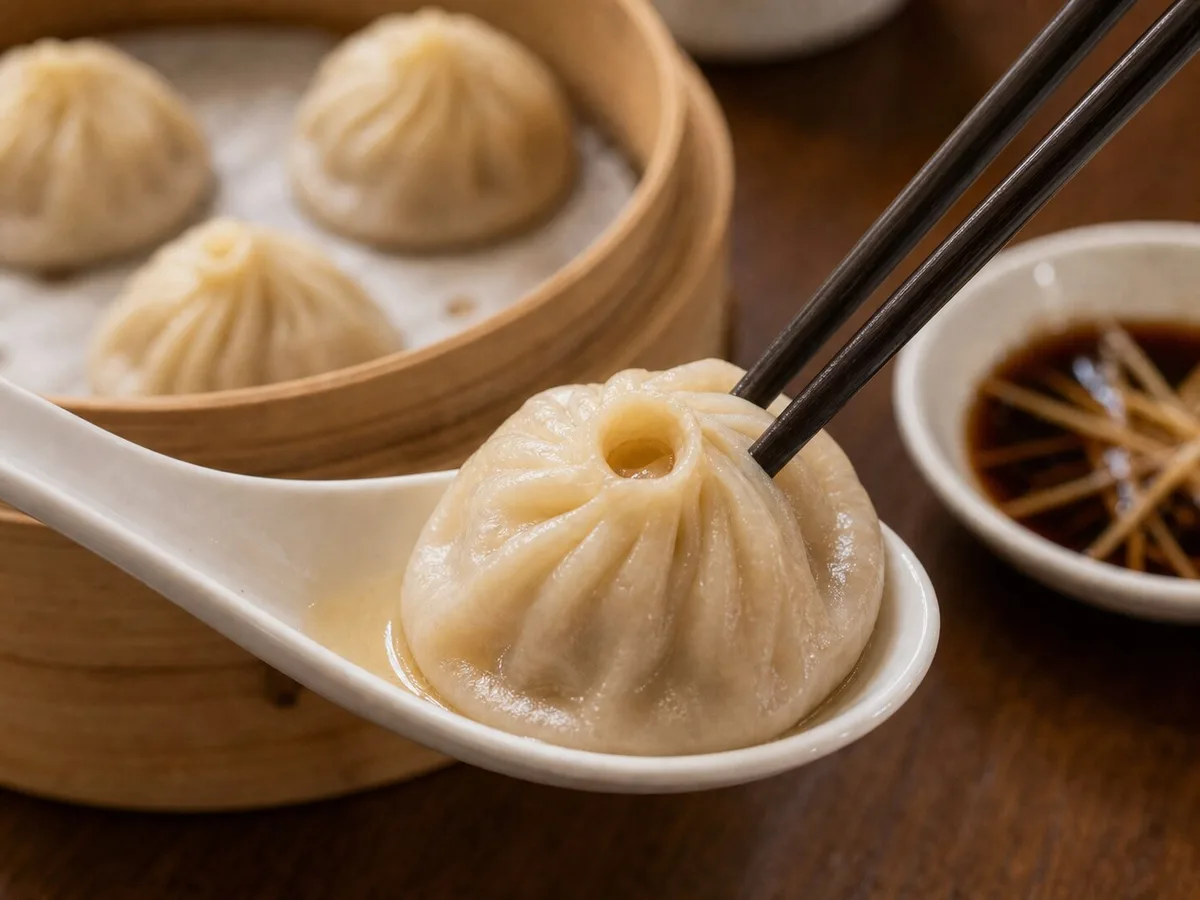
When you lift a dumpling, use chopsticks gently and support it with a spoon quickly. This is where xiaolongbao differ from shengjian mantou: shengjian can tolerate more pressure because of its thicker fried base, while xiaolongbao are all about keeping the soup inside.
What the Soup Should Tell You
The broth should taste warm, savory, and rounded, not oily or harsh. A good dumpling releases soup that feels connected to the pork filling. If the wrapper tears immediately and the soup floods the steamer, the dumpling may still taste fine, but the full eating sequence is lost.
Open one dumpling carefully on the spoon before adding too much vinegar. That first sip tells you more than the size of the dumpling or the number of pleats.
Use Vinegar After the First Read
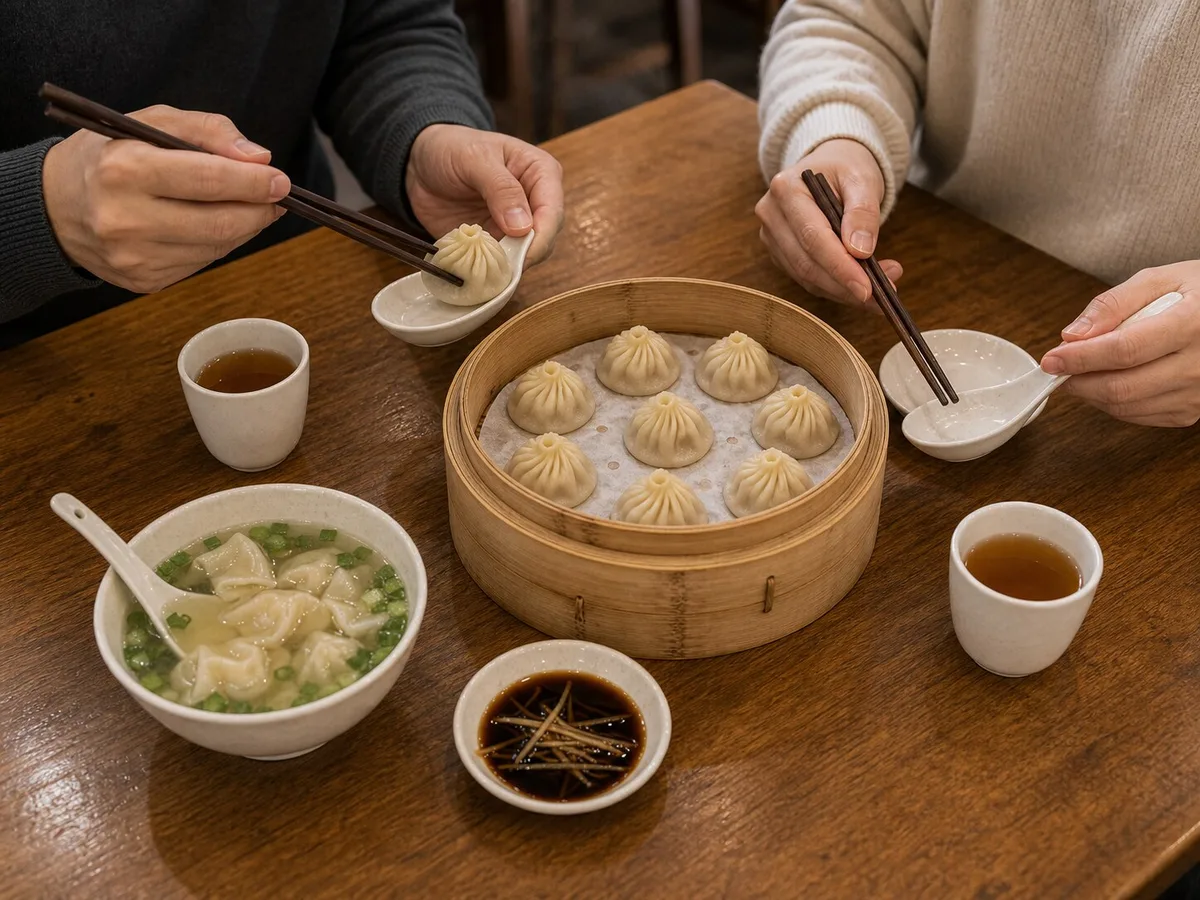
Dark vinegar and ginger are useful, but they should not hide the dumpling. Taste one bite with minimal seasoning, then adjust. A small amount of vinegar can brighten the pork and broth; too much makes every dumpling taste the same.
If you are comparing shops, keep the seasoning light at first. Otherwise you are judging the vinegar bowl more than the xiaolongbao.
What to Order Around It
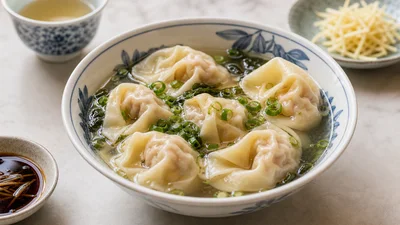
Xiaolongbao work best when the table leaves room for the soup dumpling texture. A light bowl from the Shanghai wontons topic can add broth without competing. Scallion oil noodles bring aroma if you want a fuller meal, but they can make the table heavier.
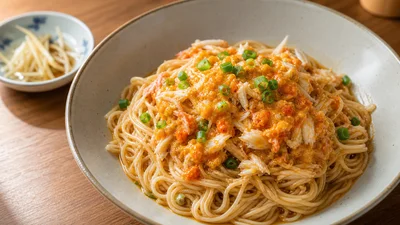
For breakfast or a casual food walk, xiaolongbao can sit beside Shanghai breakfast choices, but avoid stacking too many steamed, fried, and noodle dishes at once. If you are also trying crab flavors such as crab roe noodles, save them for another stop so each dish has space.
Common Mistakes
- Choosing a basket that has been sitting too long just because it looks neat.
- Lifting dumplings too quickly and tearing the wrapper before the spoon is ready.
- Adding vinegar before tasting the broth.
- Comparing xiaolongbao with fried shengjian as if they should have the same texture.
- Ordering too many heavy side dishes and losing the delicate soup-dumpling rhythm.
Comments (0)