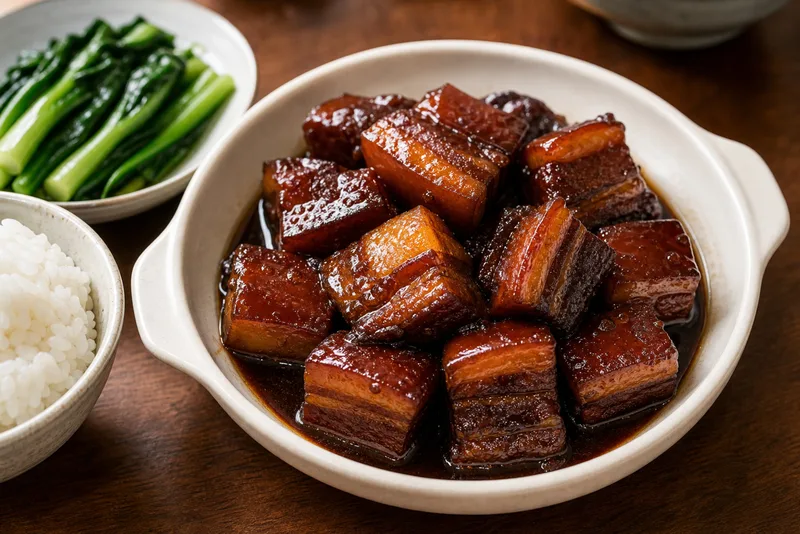
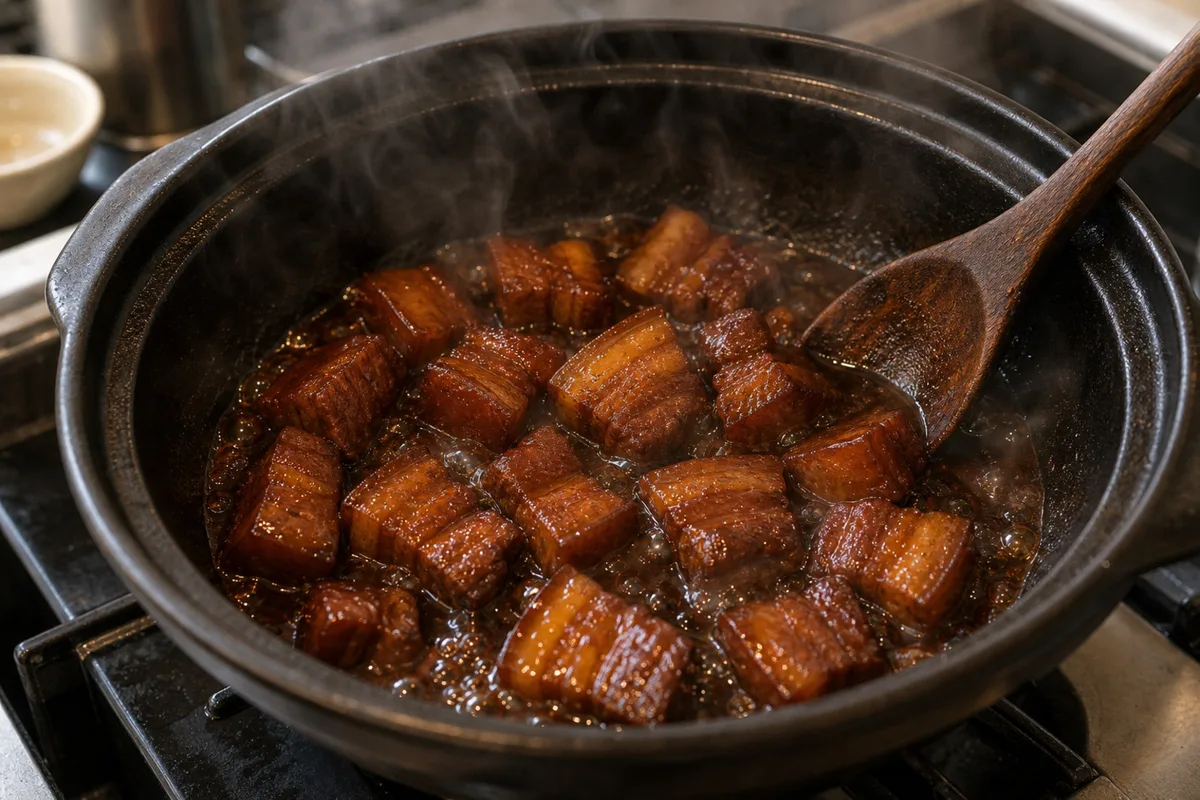
Shanghai hong shao rou is not a dish to order in isolation unless you are deliberately eating rice with it. The pork belly is rich, glossy, sweet-savory, and built for sharing. The best table gives the sauce somewhere to go and gives your palate a way to recover between bites.
This guide takes a different angle from the basic hong shao rou guide and the sauce and texture guide. It focuses on portion size, rice, greens, soup, and how to keep a Shanghai meal balanced around one very rich plate.
Think of It as a Shared Dish
Hong shao rou is usually easier to enjoy when two or more people share it. A small plate can flavor several bowls of rice because the sauce is concentrated. One person can finish it alone, but the richness builds quickly.
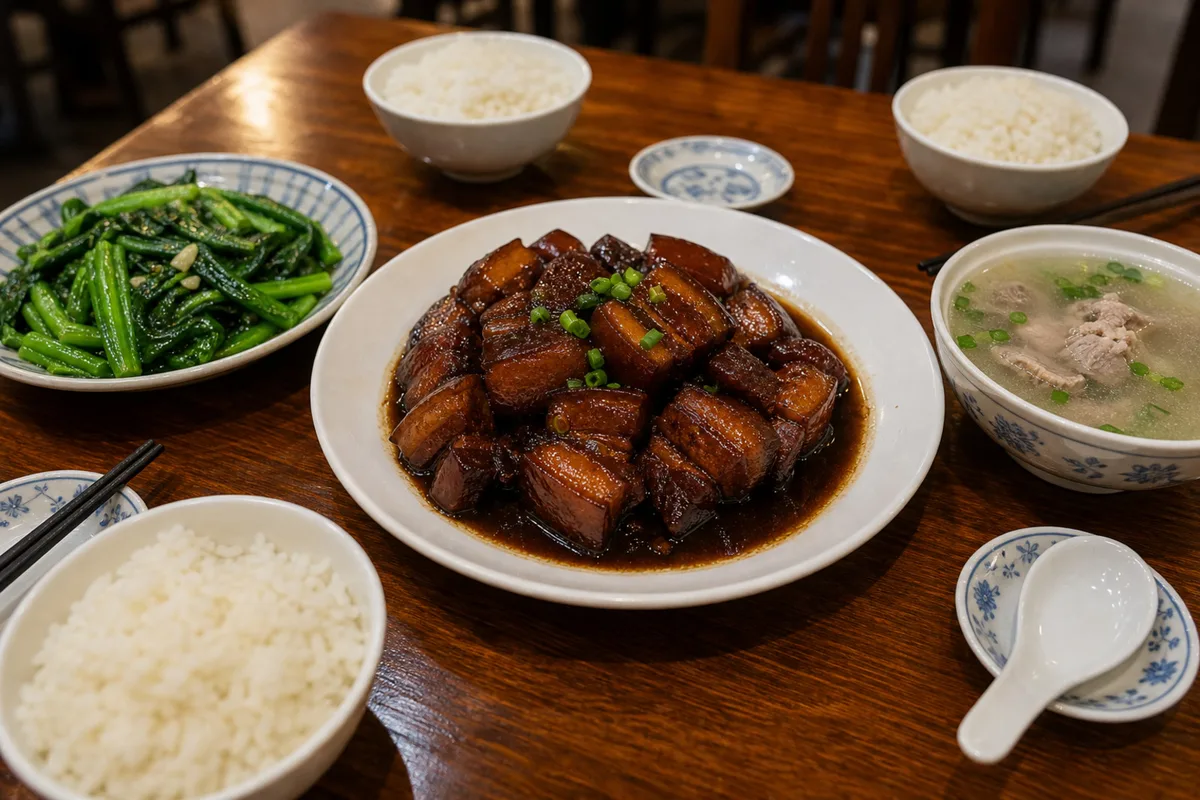
If you are ordering for a group, let hong shao rou be the main rich dish. Then build the rest of the table around contrast rather than adding several more heavy soy-sugar plates.
Rice Is Not Optional
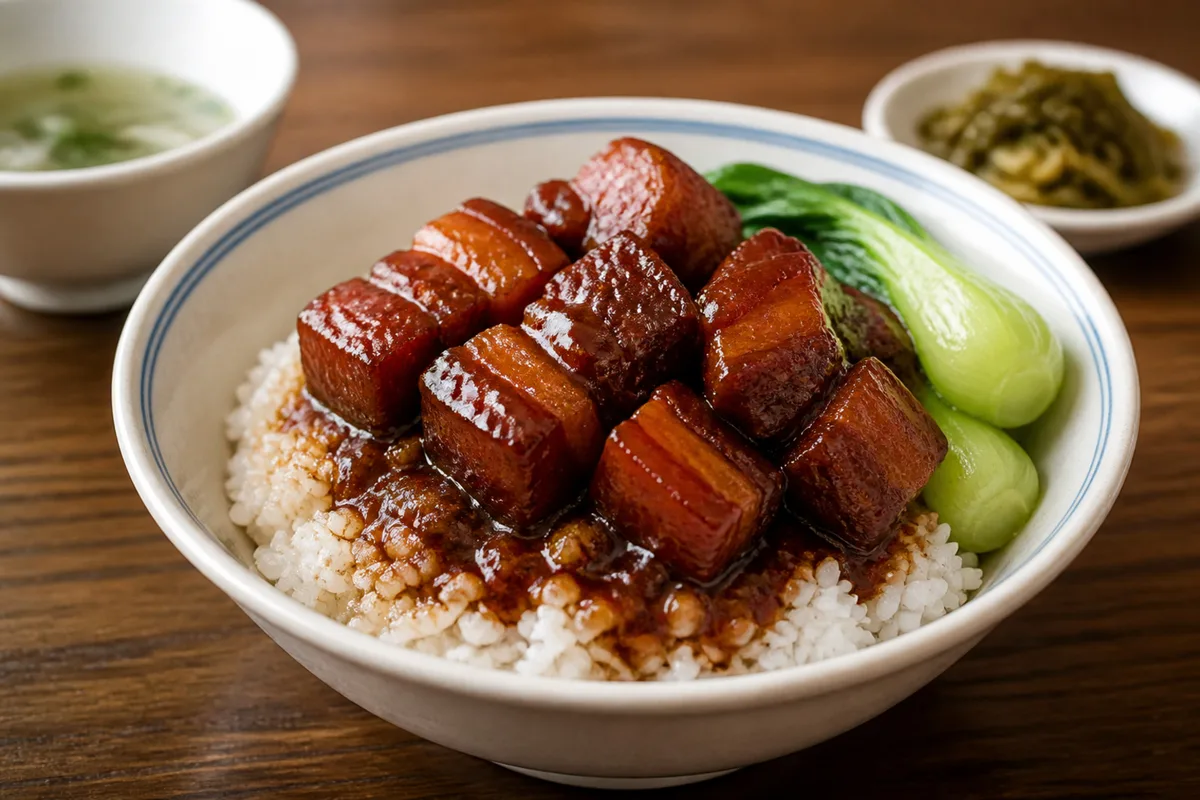
White rice is the simplest partner because it absorbs the sauce without fighting it. A cube of pork belly, a spoonful of sauce, and plain rice explain the dish better than tasting the meat by itself.
If the sauce is glossy and reduced, you do not need much. Too much sauce over rice can become sweet and salty, so start with a small amount and add more only after tasting.
Add Greens for Balance
Blanched greens, stir-fried greens, or a simple vegetable side can keep the meal from feeling flat. The point is not to compete with the pork, but to add freshness and a different texture.
Bok choy, leafy greens, or cucumber sides work better than another thick sauce dish. If the table already has rich noodles or fried snacks, hong shao rou can make the meal feel crowded.
What to Pair With It
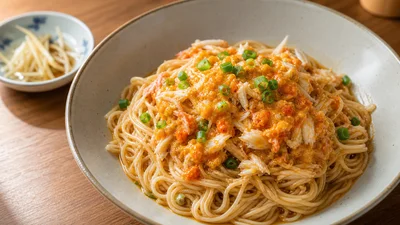
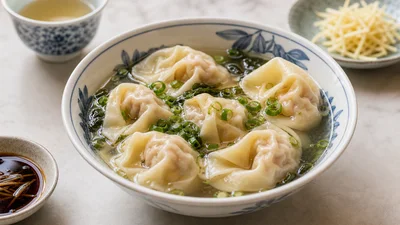
A light soup or wonton soup helps because it gives the table warmth without adding more sugar and soy. If you want noodles, scallion oil noodles are possible, but keep the portion small because both dishes rely on soy depth.
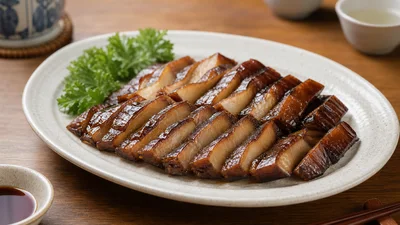
Shanghai smoked fish can be a good cold appetizer, but it is also sweet-savory. If you order both, add greens or a plain soup so the meal does not become one-note.
Portion Clues
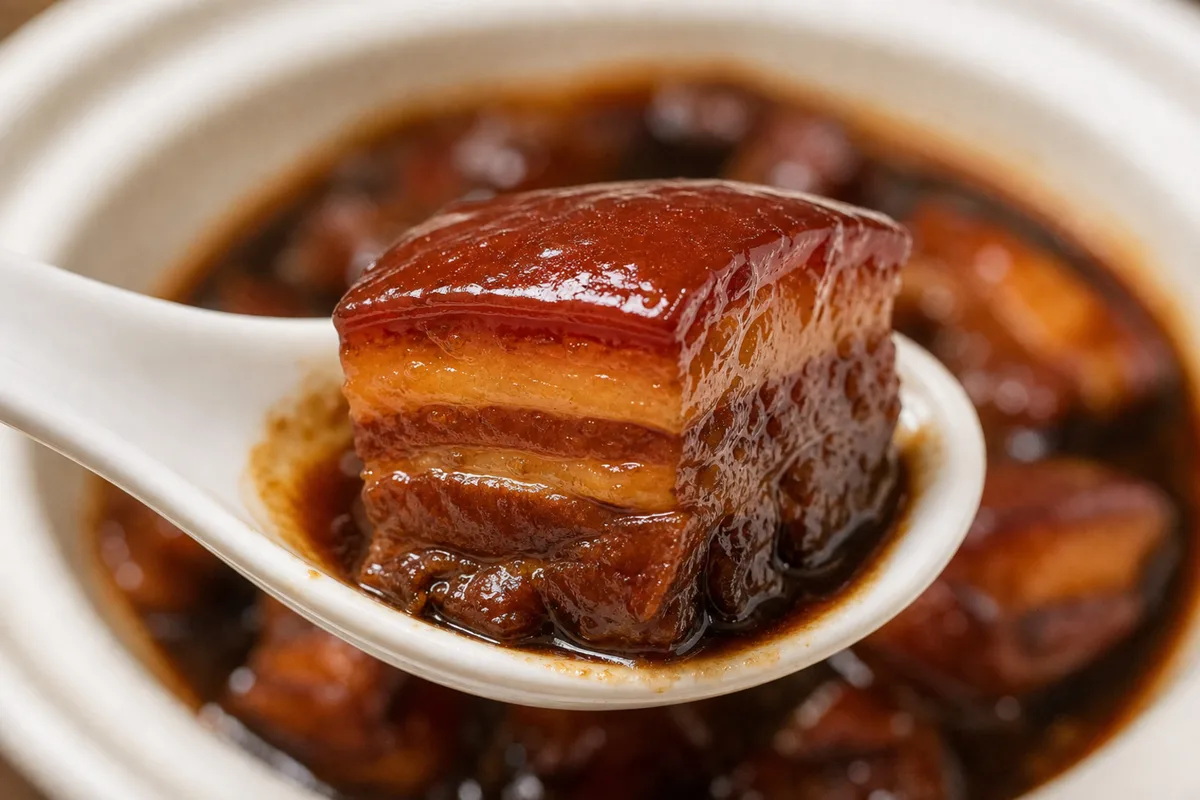
Look at the size of the cubes and the depth of the sauce. Large cubes with visible fat layers are satisfying but heavy. Smaller cubes can be easier to share because each person can take a few pieces without committing to a large portion.
A good plate should not look like pork floating in soup. The sauce should cling to the meat and leave enough glaze for rice. If the sauce is too watery, it may taste thin; if it is too sticky, it can feel candy-like.
How to Taste It
Start with one small piece and some rice. Notice whether the fat softens, whether the lean meat stays tender, and whether the sauce tastes rounded rather than only sweet. Then decide how much sauce to add to the rest of the rice.
Good hong shao rou should feel rich but controlled. If every bite feels sticky, salty, or greasy, use greens and soup to reset the table instead of chasing the dish with more heavy sides.
Common Ordering Mistakes
- Ordering hong shao rou without rice or another neutral base.
- Pairing it with too many other sweet-savory sauce dishes.
- Taking a large portion before tasting how rich the sauce is.
- Ignoring greens, soup, or light sides that help balance the table.
- Judging only the color instead of the fat, lean meat, and sauce texture together.
Comments (0)