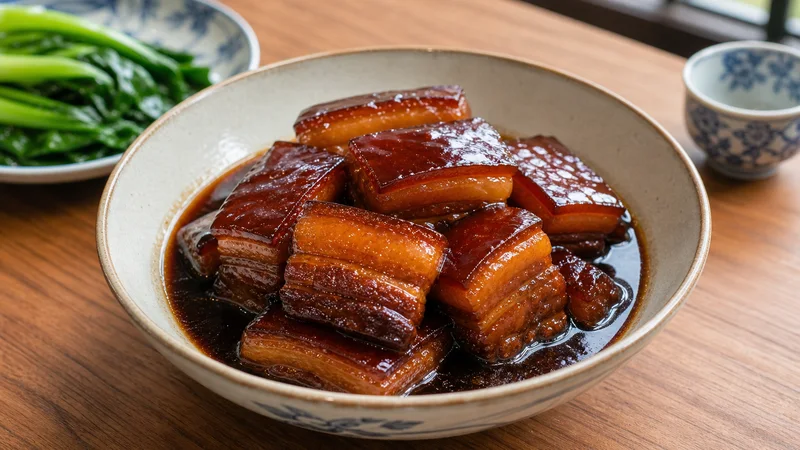
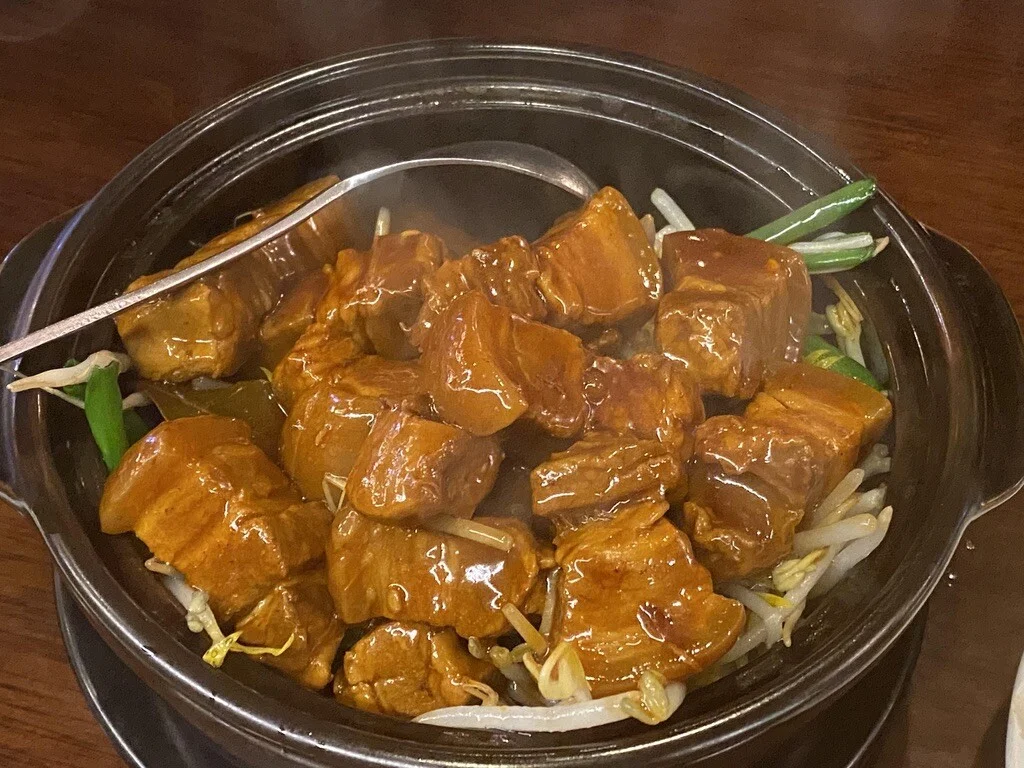
Shanghai braised pork belly, or hong shao rou, explains a side of Shanghai food that dumpling guides cannot. It is slow, glossy, sweet-savory, and meant for sharing. The dish is not about eating a large piece of meat quickly; it is about sauce, rice, and balance at the table.
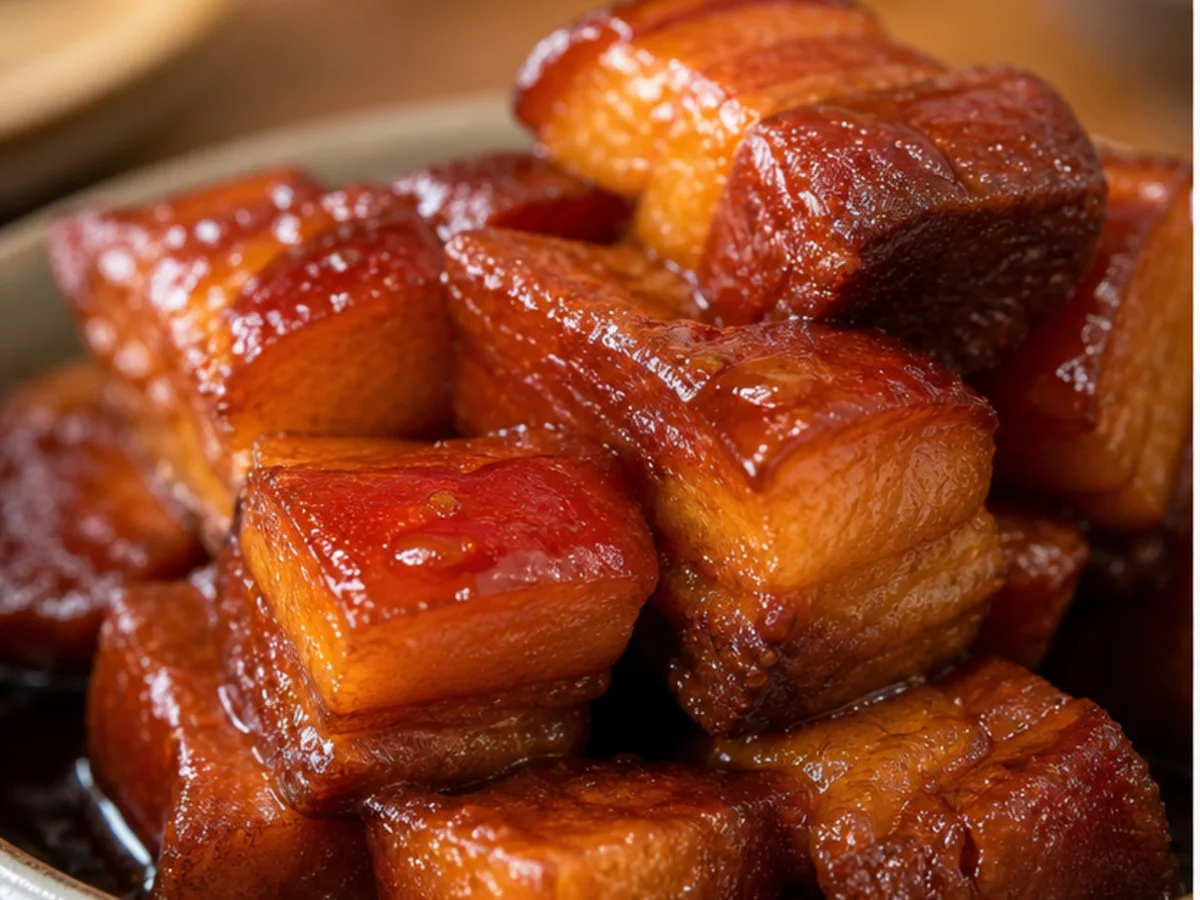
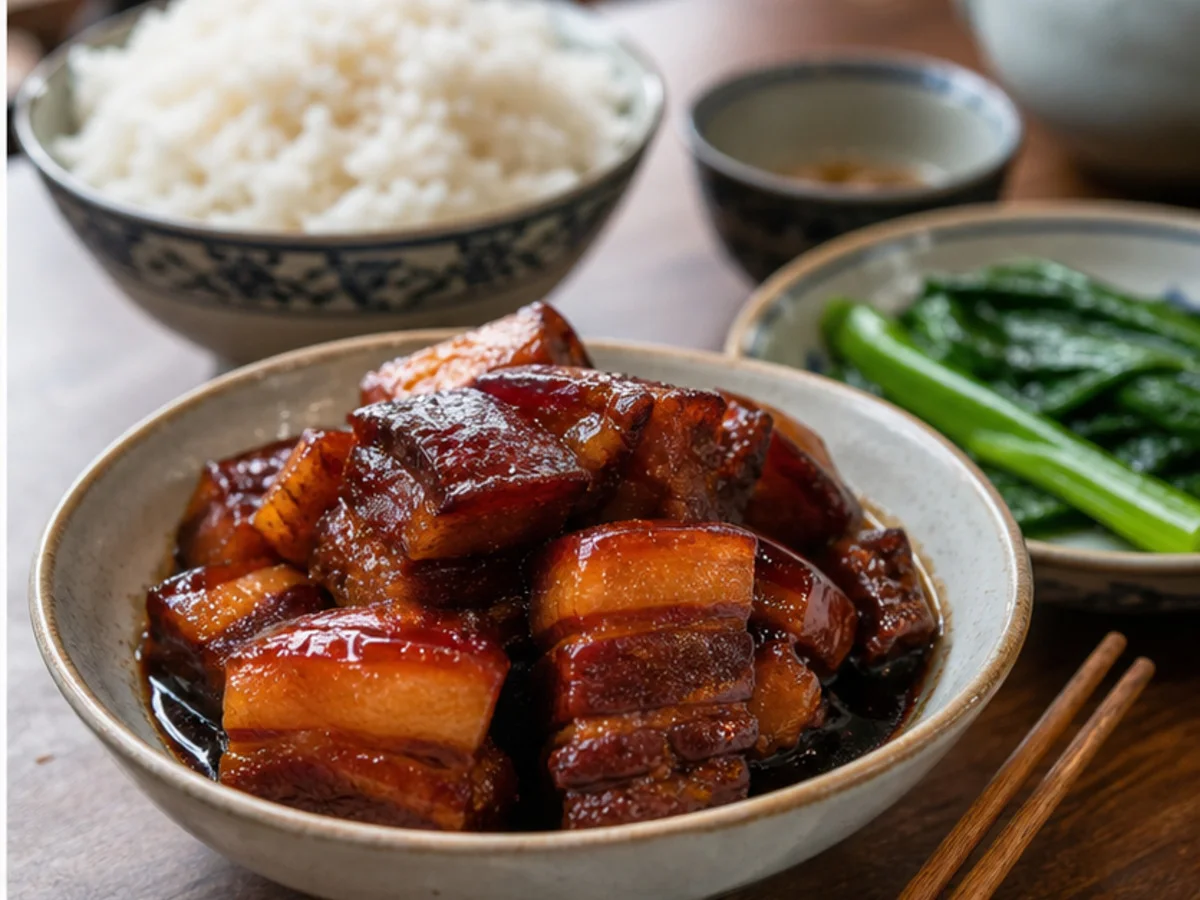
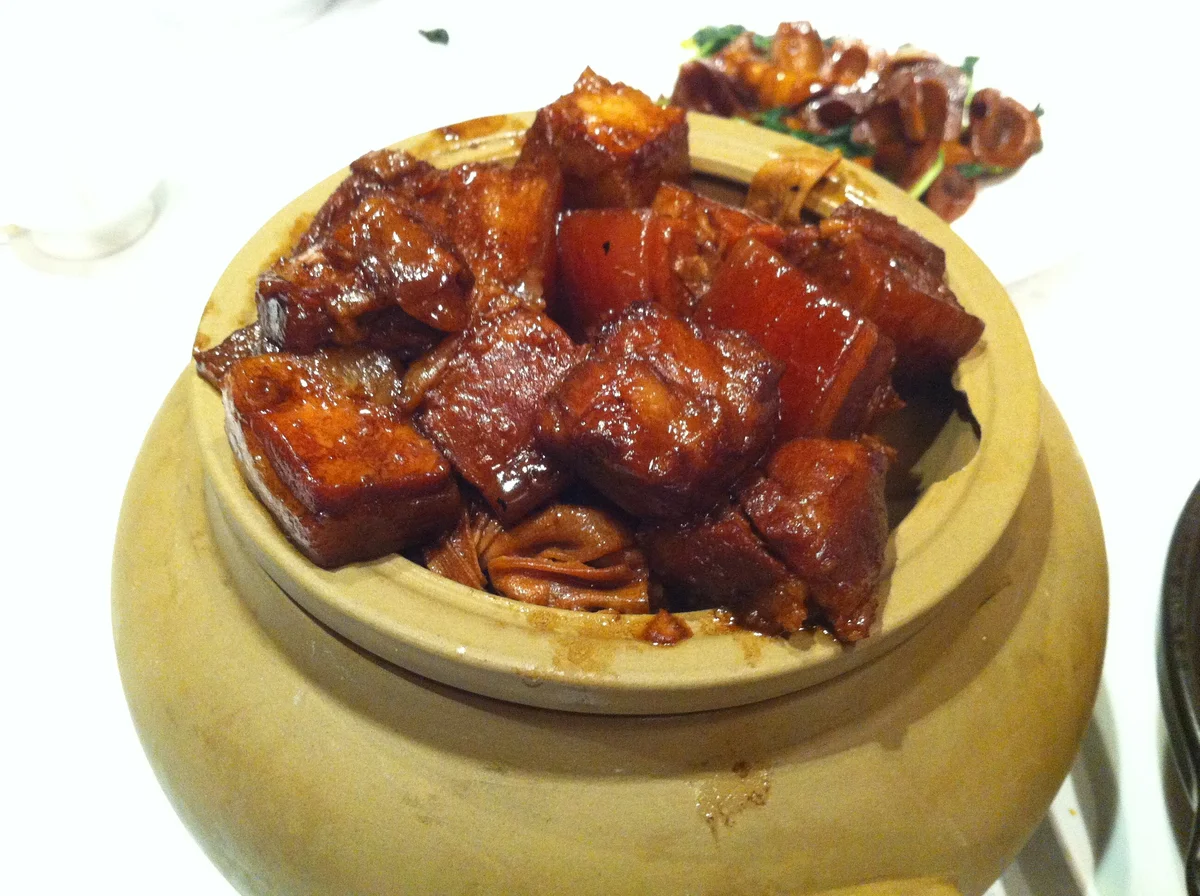
Good hong shao rou should look lacquered. The pieces should show skin, fat, and lean meat in layers, and the sauce should cling to the pork rather than run like soup. The sweetness should make the soy and rice wine feel round, not turn the plate into dessert.
Texture Is the Real Test
The fat should be soft enough to melt into the sauce, but the meat should still hold together. If the pork is rubbery, it has not cooked long enough. If it collapses into a sticky paste, it has gone too far. The best version sits between those failures: tender, structured, and glossy.
How to Order It as Part of a Meal
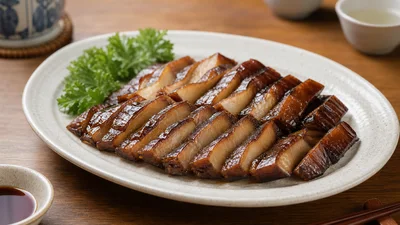
Order rice. The sauce is built for it. Then add something lighter: greens, clear soup, cucumber, or a simple vegetable dish. Shanghai smoked fish can work as a cold starter because it echoes the sweet-savory profile in a smaller format. Rice cakes are also a natural partner, but together they make a filling table, so balance them with vegetables.
Why Visitors Should Try It
Many travelers focus on xiaolongbao first, but hong shao rou shows the restaurant side of Shanghainese cooking: slow heat, soy sauce, sugar, rice wine, and a love of sheen. It helps explain why so many local dishes look polished rather than dry.
Common Mistakes
- Ordering it as a solo plate without rice.
- Choosing several other rich, glossy dishes at the same time.
- Expecting Sichuan-style heat; Shanghai versions are usually not spicy.
- Judging only by sweetness instead of texture and sauce balance.
Comments (0)