Shanghai scallion pancake is easy to buy and easy to misjudge. A good cong you bing is not just a flat fried bread. It should have crisp edges, visible scallion, a layered interior, and enough aroma to make the first bite feel fresh from the griddle.
This guide builds on the basic Shanghai scallion pancake guide and the layers and texture guide. Here the focus is the breakfast-stall moment: what to look for on the griddle, whether to buy a whole pancake or cut wedges, when to eat it, and what to pair with it.
Start With the Griddle
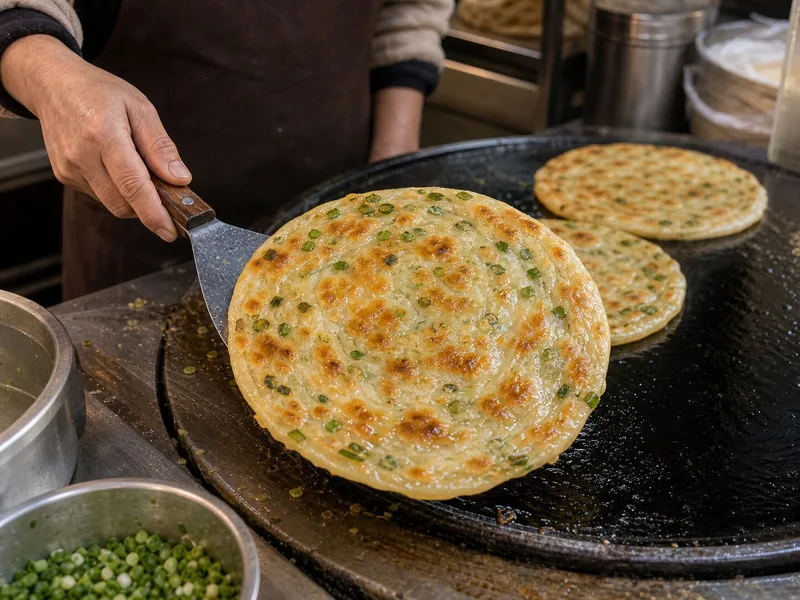
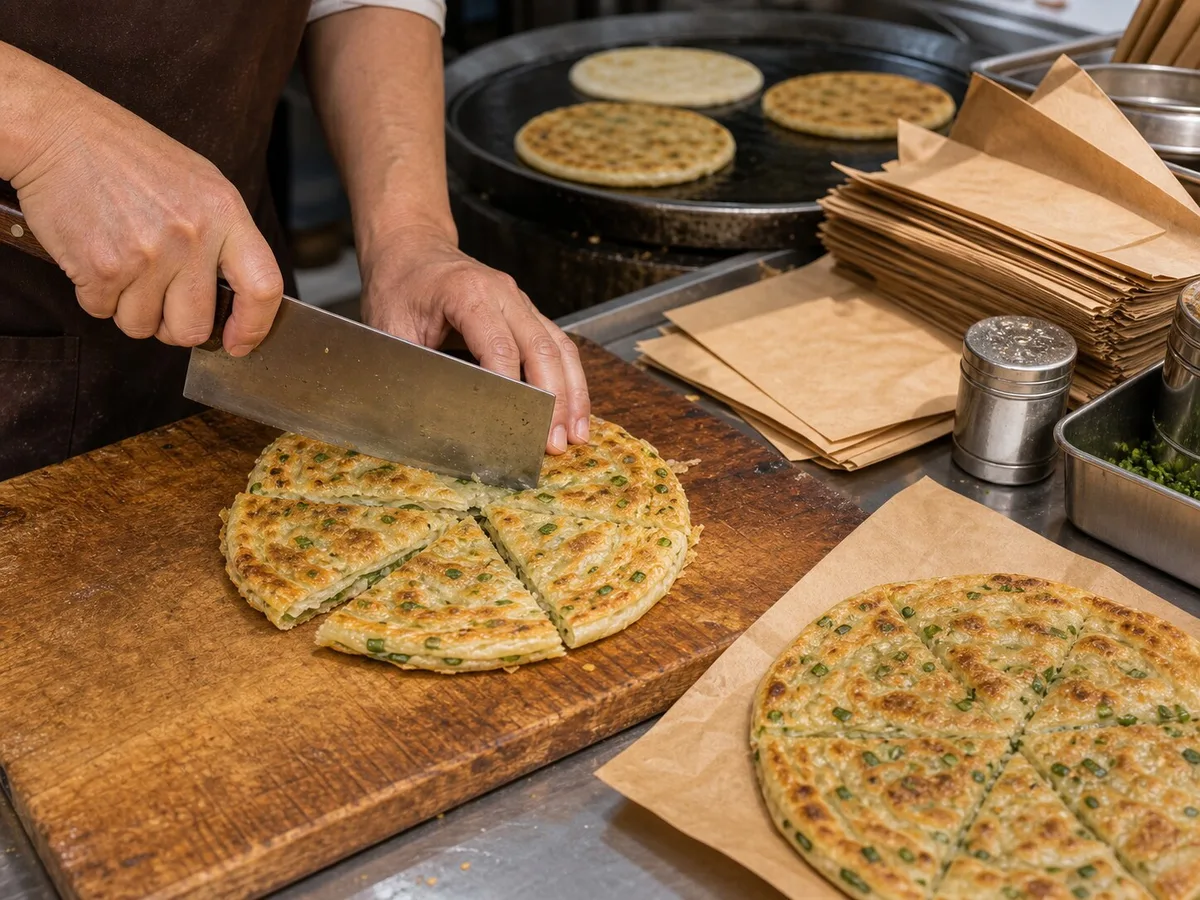
A useful stall has visible turnover. Pancakes should be cooking, resting briefly, or being cut for customers. If every pancake has been sitting in a stack for a long time, the crisp edge will fade and the layers will feel heavier.
Look at the color. A good pancake is golden with darker toasted spots, not pale and soft, and not deeply brown all over. The surface should show small blisters and scallion flecks instead of a flat, uniform crust.
Whole Pancake or Cut Wedges
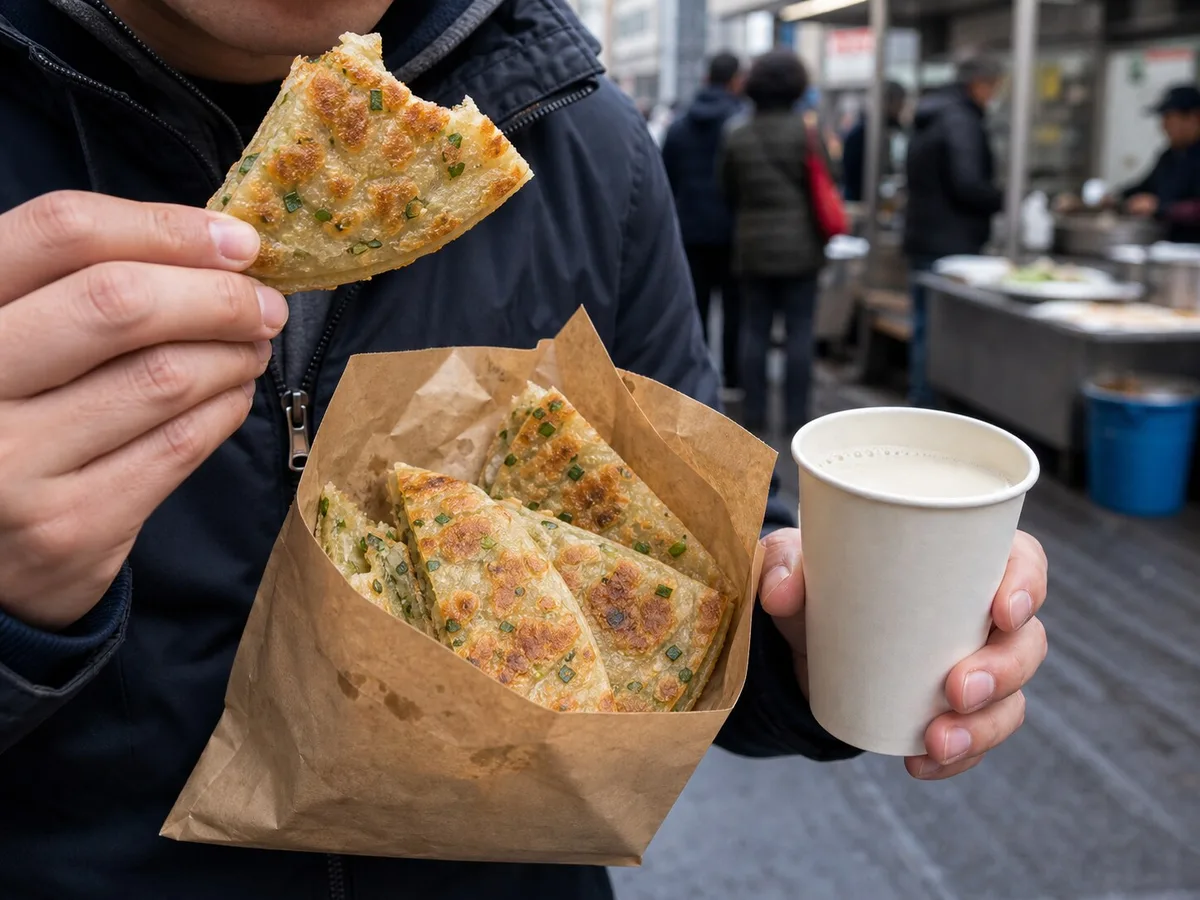
Some stalls sell a whole pancake, while others cut it into wedges or pieces. Cut wedges are easier if you are walking, sharing, or trying several breakfast foods. A whole pancake is better if you want the full texture before it cools.
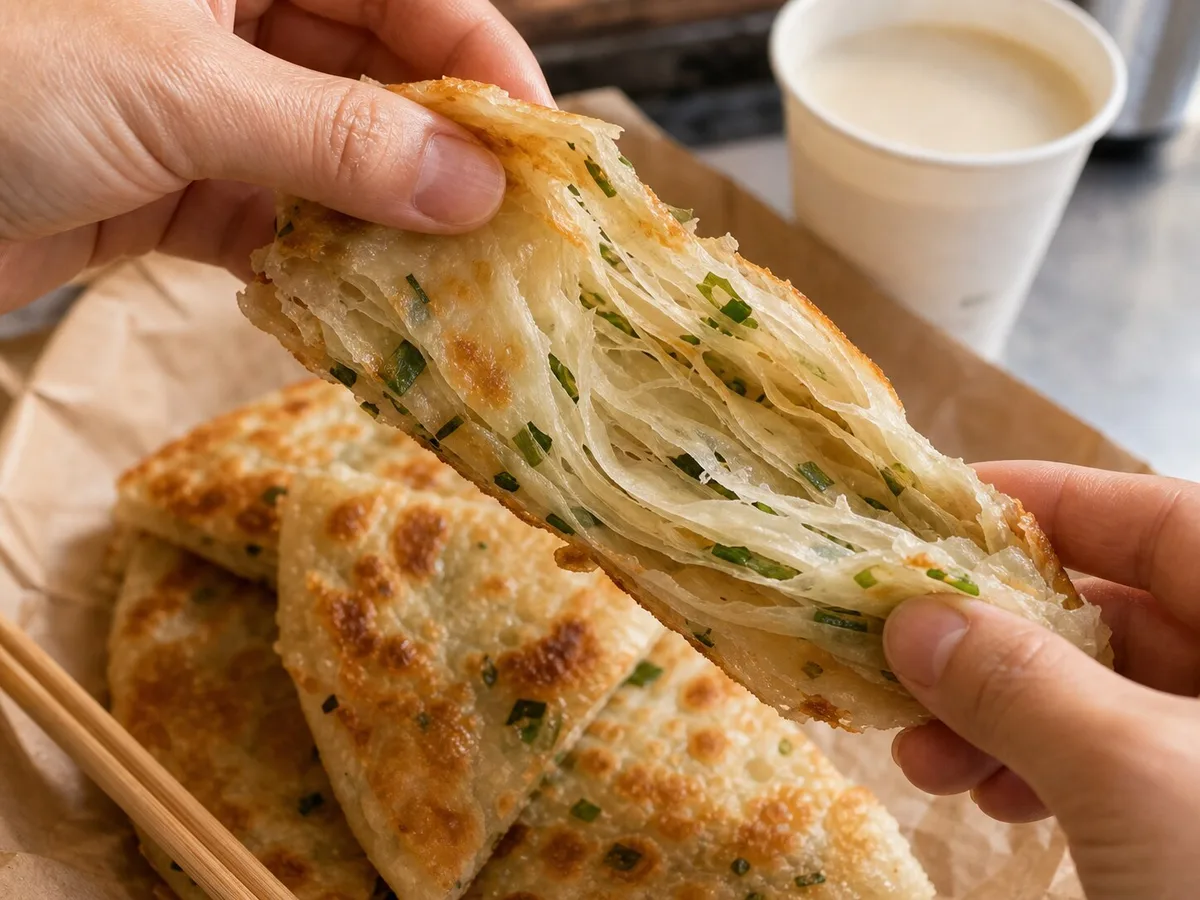
If the pancake is cut to order, watch the edge as the knife goes through. You should see layers separate slightly. If the wedge bends like a soft wrap, the pancake may be under-crisped or already tired.
How Freshness Changes the Bite
Scallion pancake has a short best window. Right after the griddle, the outside is crisp and the inside still has steam. After it sits, the oil settles into the layers and the pancake becomes heavier.
This does not mean every pancake must be eaten instantly, but timing matters. If you are carrying it away, keep the paper sleeve open slightly so steam does not soften the crust too quickly.
What Good Layers Look Like
The inside should pull apart into thin sheets, with scallion distributed through the dough rather than only sprinkled on top. A little chew is good, but the pancake should not feel dense like a plain flatbread.
The scallion flavor should be aromatic, not harsh. If the pancake tastes only oily, the dough and scallion are not doing enough work. If it tastes only salty, the seasoning is hiding weak texture.
Pairings That Make Sense
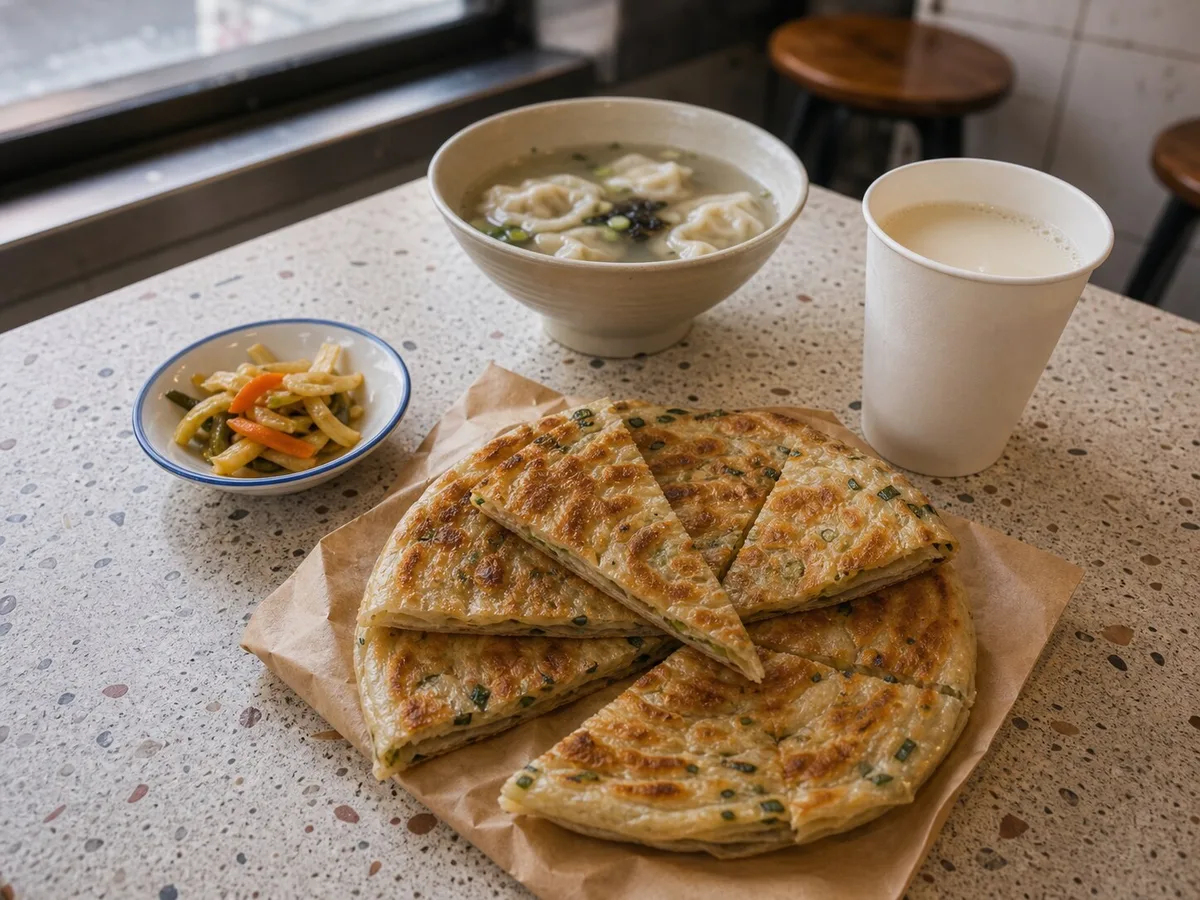
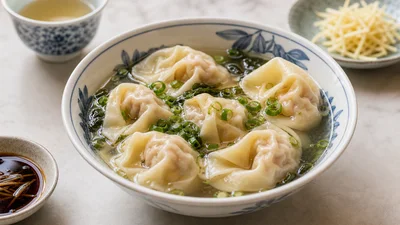
For breakfast, warm soy milk is the easiest partner. It softens the oil and makes the pancake feel like a complete morning order. A small bowl from the Shanghai wontons topic also works if you want broth beside the crisp pancake.
Do not stack too many fried items at once. If you already have scallion pancake, save shengjianbao for another morning or share both in smaller amounts. If you like the scallion aroma but want a quieter meal later, try scallion oil noodles.
How to Fit It Into a Food Route
Scallion pancake is a good first stop in a Shanghai breakfast route because quality is visible. You can judge color, layers, and freshness before committing to a larger order.
It is also a useful contrast with cifan tuan. Cifan tuan is sticky, dense, and portable; scallion pancake is crisp, fragrant, and best when shared soon after cooking. Trying both on different mornings teaches more than forcing them into one heavy breakfast.
Common Mistakes
- Buying a pancake that has been sitting too long in a closed bag.
- Judging only by size instead of color, layers, and aroma.
- Expecting it to taste like a sweet breakfast pancake.
- Pairing it with too many other fried foods in the same morning.
- Waiting too long before eating and losing the crisp edge.
Comments (0)