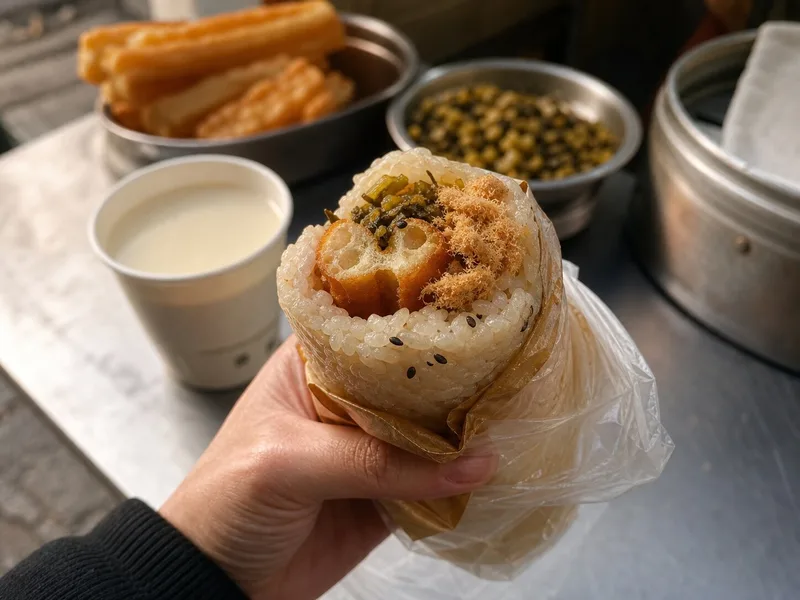
Cifan tuan is one of the most practical Shanghai breakfast foods for visitors. It is compact enough to carry, filling enough to count as breakfast, and local enough to teach how a morning stall builds flavor from simple things: sticky rice, youtiao, pickles, pork floss, sesame, and soy milk.
This guide is different from the fillings and texture guide. Here the focus is the breakfast-stall moment: what to ask for, how to tell whether the roll was made recently, when to choose savory or sweet, and how to fit it into a broader Shanghai breakfast route.
Start With the Stall
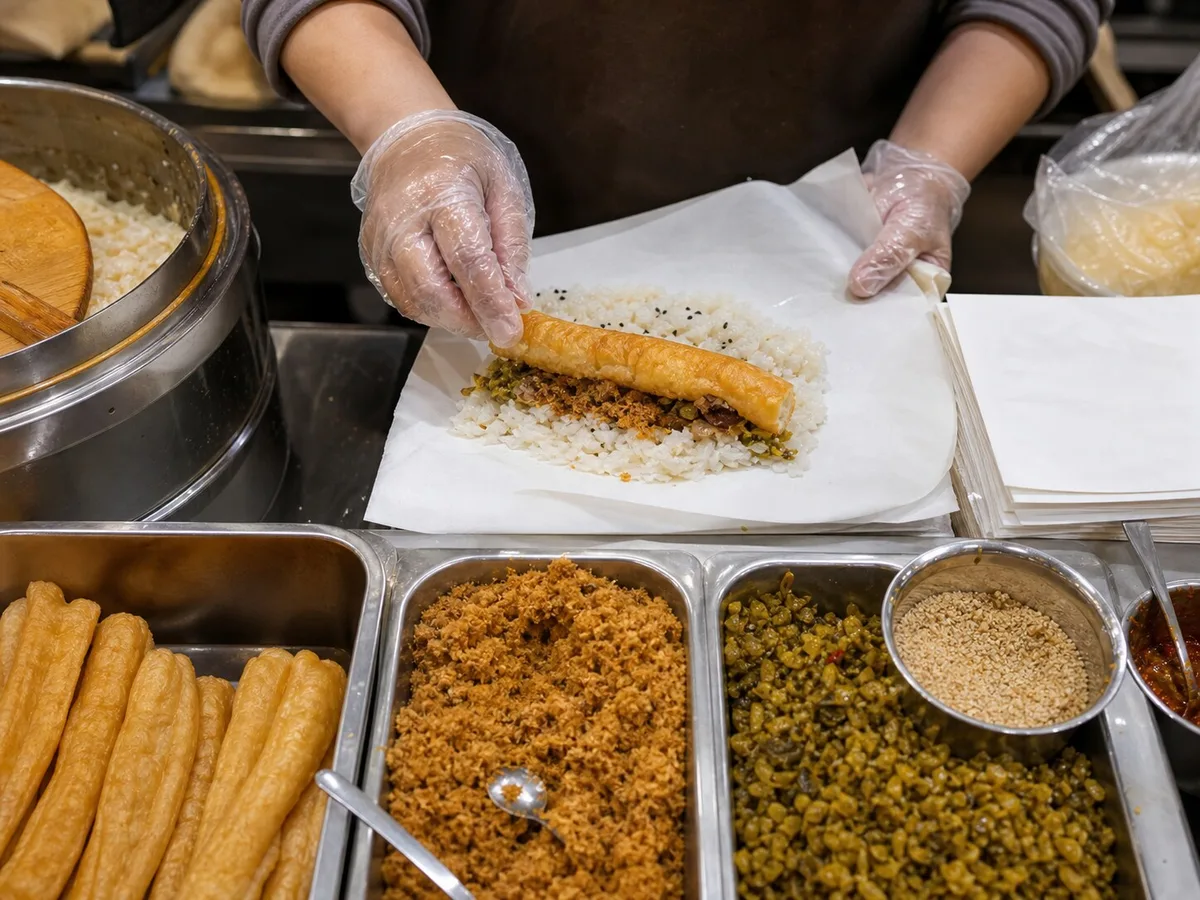
A good cifan tuan counter should look active. Rice is kept warm, youtiao is close at hand, fillings are visible, and rolls are assembled quickly instead of sitting fully wrapped for a long time.
Fresh assembly matters because the center changes fast. Youtiao gives the roll its main contrast, but it softens once it is buried in warm sticky rice. A roll made in front of you is usually livelier than one that has waited too long.
What to Ask For First
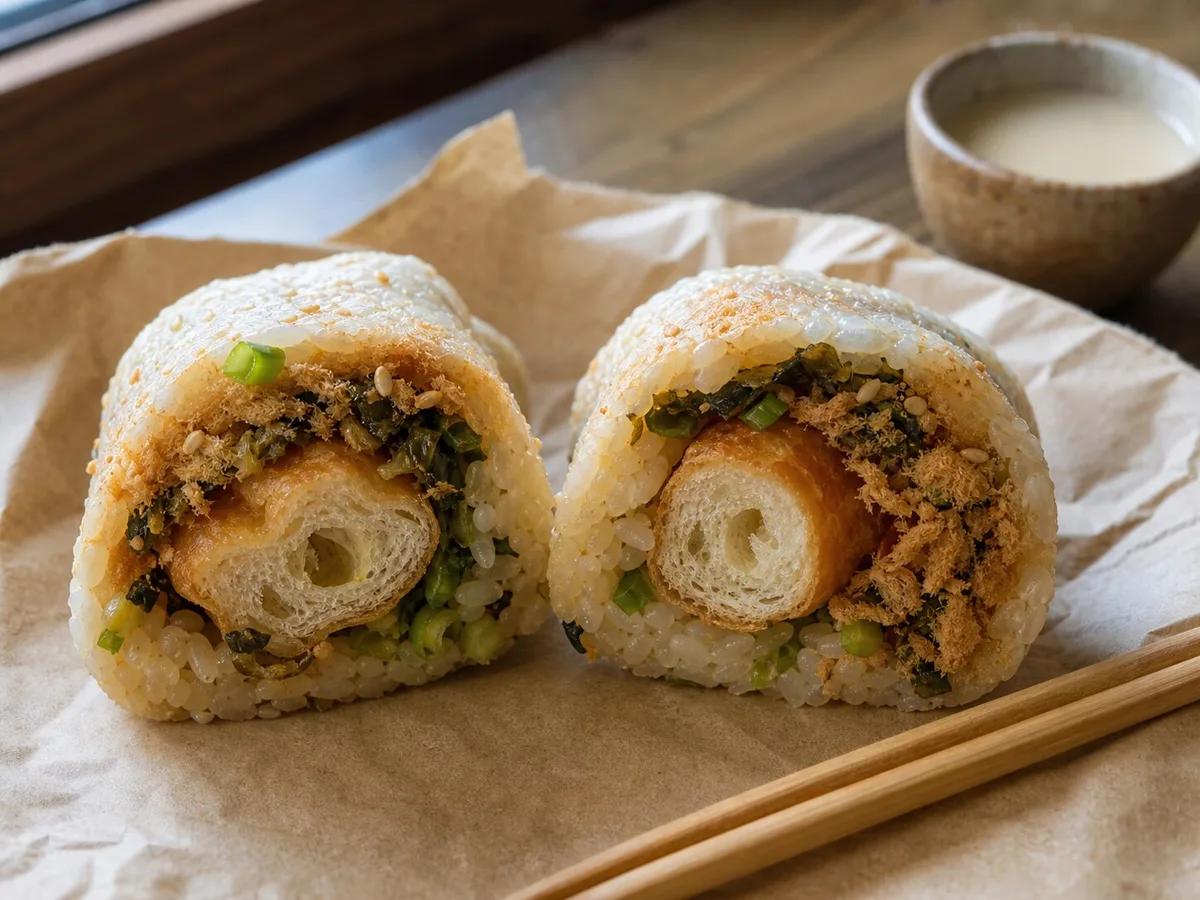
If you are trying cifan tuan for the first time, start with a savory roll. The usual combination of sticky rice, youtiao, pickled vegetables, pork floss, and sesame shows the dish more clearly than a very sweet version.
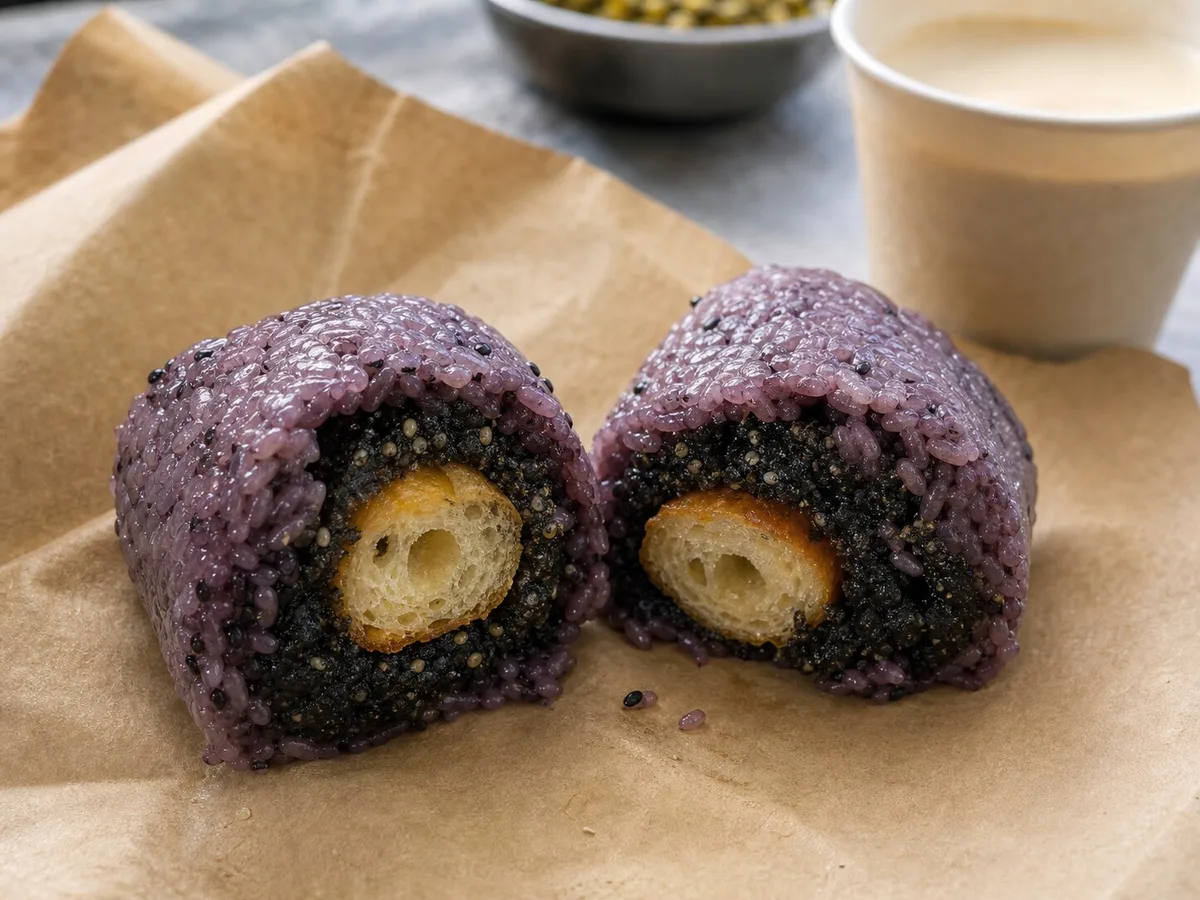
Sweet black sesame is still worth trying, especially on a second visit. It feels gentler and more dessert-like, and it pairs well with plain soy milk. Purple rice versions can be excellent too, but treat them as a variation rather than the automatic best choice.
How the Roll Should Feel
The rice should hold together without turning hard. You should be able to bite through the roll cleanly and still notice individual grains at the edge. If it feels like a solid block, the rice may be too compressed or the roll may have been waiting too long.
The filling should not disappear. In a good savory roll, the youtiao gives a hollow fried-dough bite, the pickles add a sharp note, and pork floss gives a soft salty-sweet layer. If every bite tastes only like rice, the balance is off.
Eat It Soon
Cifan tuan travels better than soup dumplings or wontons, but it is not a food to save for hours. The first part of the morning is when the rice is warm and the center still has texture.
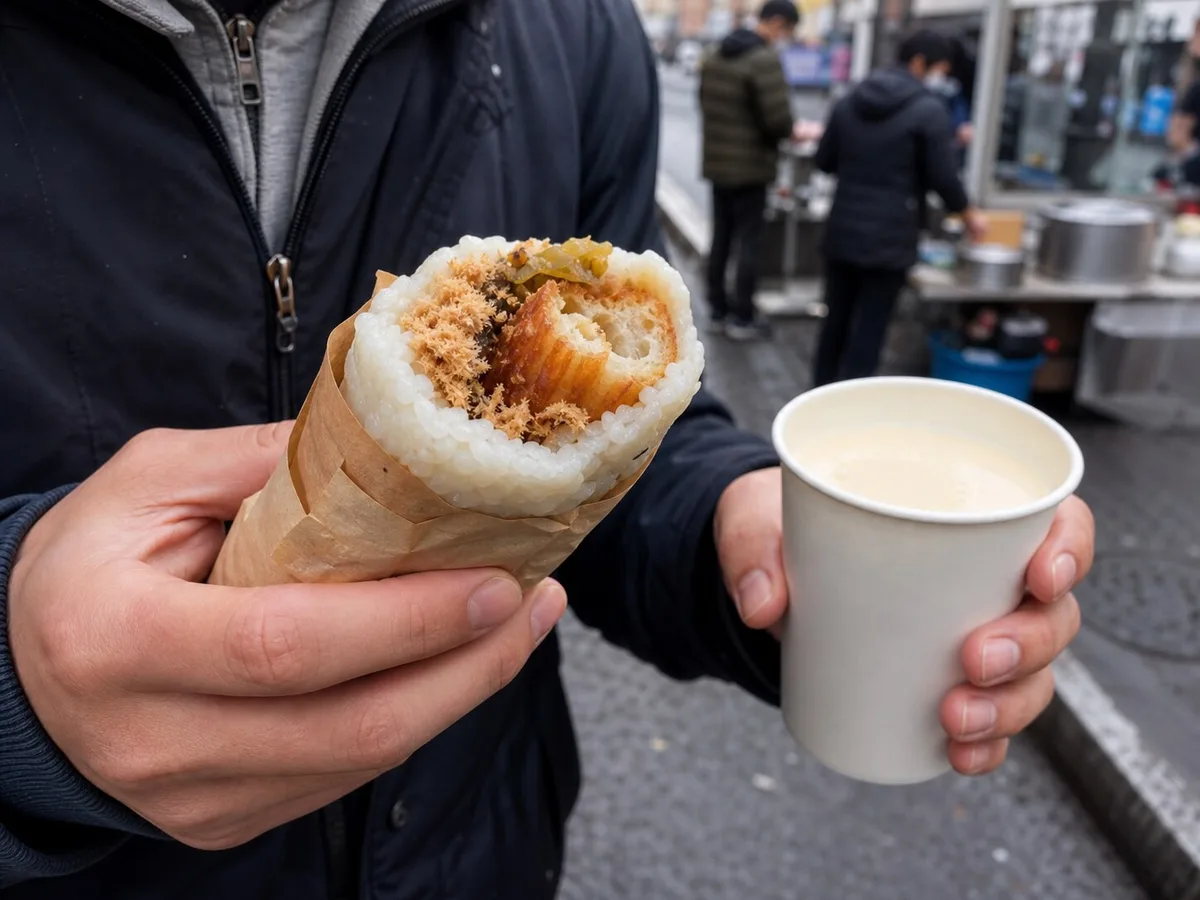
If you are walking, unwrap only the part you plan to eat and keep the rest covered. If you are sharing, cut or tear it soon after buying it so everyone gets a section with rice and filling, not only the plain end.
What to Drink With It
The simplest partner is warm doujiang from the soy milk and youtiao breakfast set. Plain soy milk softens the sticky rice and makes the fried center feel less heavy.
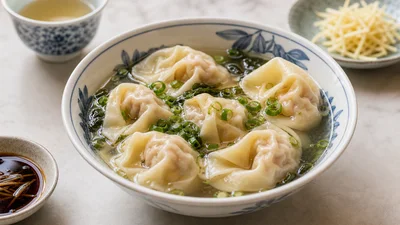
Try savory soy milk only if you want a fuller, spoonable breakfast. It can be delicious, but pairing a rich savory bowl with a large savory cifan tuan may be too much for one stop. If you want broth instead, save room for Shanghai wontons on another morning.
How to Fit It Into a Breakfast Route
One cifan tuan is often enough for one person. If you also want shengjianbao or scallion pancake, share the roll or split those foods across different mornings.
A useful two-day plan is simple: one morning for cifan tuan and soy milk, another morning for wontons or shengjianbao. You learn more from clear contrasts than from stacking every famous breakfast item into one oversized meal.
Common Ordering Mistakes
- Choosing the largest roll without checking whether the filling is balanced.
- Buying a fully wrapped roll that has clearly been waiting too long.
- Expecting the youtiao to stay crisp after a long walk.
- Ordering a heavy savory drink and a large savory roll when you wanted a light breakfast.
- Judging only by white rice or purple rice instead of freshness, filling, and texture.
Comments (0)