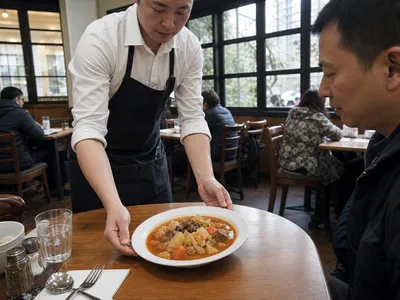
Shanghai-Style Borscht: Luosong Tang, Tomato Broth, and What to Order
A practical guide to Shanghai-style borscht, covering its tomato-rich broth, beef and vegetables, H…
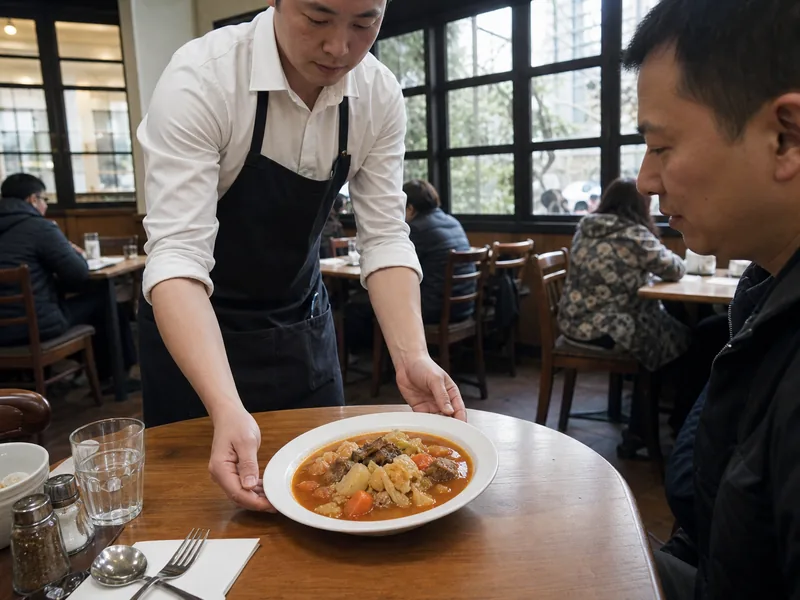
Shanghai-style borscht, or luosong tang, is a warm tomato-based beef and vegetable soup shaped by the city's Haipai restaurant tradition.
Shanghai-style borscht is called luosong tang (罗宋汤), a name many local menus use for the city's adaptation of Russian soup. Instead of the beet-purple bowl that travelers may expect, the Shanghai version is usually red-orange from tomatoes. Beef, cabbage, onion, potato, and carrot make it substantial without turning it into a stew.
The soup belongs to Shanghai's Haipai food tradition: Western dishes were adjusted to local ingredients, kitchen methods, and preferences until they became part of the city's own dining culture. Recipes differ between old restaurants and family kitchens, but a rounded tomato flavor and tender beef are the most useful signals.
Beetroot is central to many Eastern European versions of borscht, but it is generally absent from the familiar Shanghai bowl. Tomato provides the color, gentle acidity, and a mild sweetness that works with softened cabbage and beef broth. Sour cream and dill are also not standard Shanghai garnishes.
A good bowl should taste tomato-rich rather than sugary or sharply sour. The broth may be light enough to sip or slightly thickened, while the vegetables should be soft but still identifiable. Beef can appear as small cubes or larger braised pieces. If the soup is greasy, intensely sweet, or cooked until every vegetable disappears, its balance is weaker.
The best-known pairing is a Shanghai deep-fried pork chop, because the soup's tomato acidity refreshes the palate after the crisp cutlet. For a broader shared meal, a cool plate of kaofu or a lighter dish such as crystal shrimp adds contrast without repeating the soup's richness.
Look for 罗宋汤 or ask for luosong tang. Restaurant versions often contain beef stock even when few meat pieces are visible, and some kitchens use butter, flour, or commercial sauces. Diners avoiding beef, dairy, wheat, or particular seasonings should confirm ingredients rather than relying on the soup's vegetable-heavy appearance.
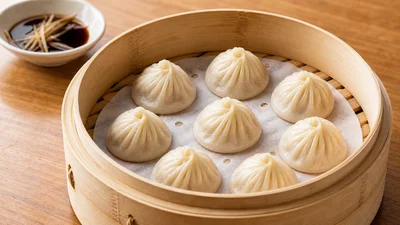
Shanghai xiaolongbao are delicate steamed soup dumplings with thin wrappers, hot broth, pork filling, and a b…
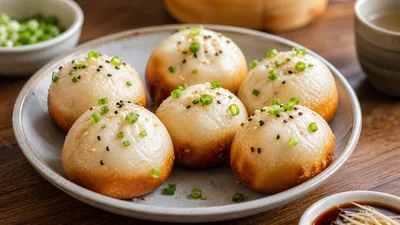
Shanghai shengjian mantou are pan-fried soup buns with soft tops, crisp golden bottoms, sesame, scallions, an…
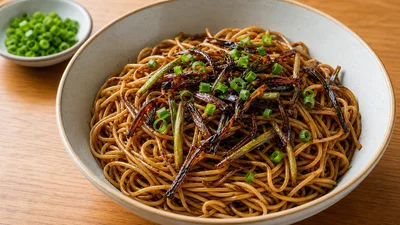
Shanghai scallion oil noodles are thin wheat noodles mixed while hot with fried scallions and soy-based sauce…